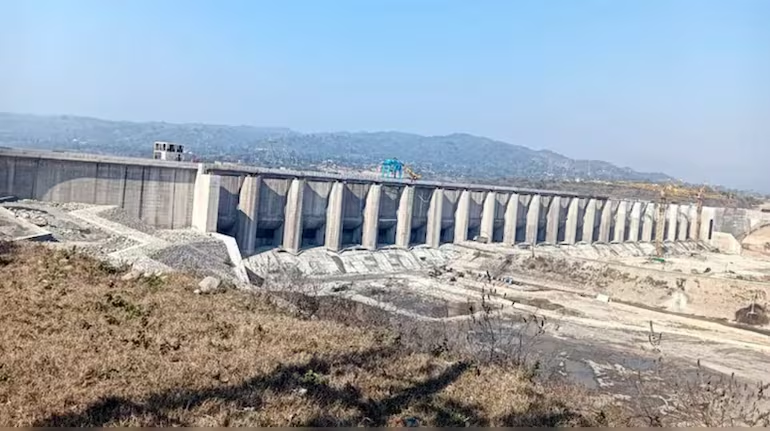
- Shahpur Kandi Dam, to be built on the Ravi river, lies in the Pathankot district of Punjab and is situated downstream of the existing Ranjit Sagar Dam. This means water released from Ranjit Sagar Dam will be utilized by Shahpur Kandi for electricity generation.
- It was declared a national project in 2008 with a total cost of around ₹3400 crore (80% funded by Punjab and 20% funded by central government).
- The Shahpur Kandi Dam includes a 55.5-metre-high concrete gravity dam, installed hydropower capacity of 206 MW and a 7.7 km long hydel channel. These features allow the project to function both as a hydropower station and a water storage–irrigation system.
- The project will provide irrigation to around 5,000 hectares in Punjab and nearly 32,000 hectares in Jammu and Kashmir’s Samba and Kathua districts.
- India is close to completing the Shahpur Kandi Dam. Once operational, the project will stop surplus water of the Ravi River from flowing into Pakistan during the rainy season and instead use it for irrigation and power generation within India.
- This will directly benefit the Indian farmers and improve India’s control over its share of Indus basin waters, strengthening both resource utilisation and national interests.
FAQs
Q1. Where is Shahpur Kandi Dam located?
It is on the Ravi River in Pathankot district of Punjab, downstream of the Ranjit Sagar Dam.
Q2. What are the main features of Shahpur Kandi Dam?
A 55.5 m high concrete gravity dam, 206 MW hydropower capacity, and a 7.7 km hydel channel.
Q3. What irrigation benefits will Shahpur Kandi Dam provide?
It will irrigate ~5,000 hectares in Punjab and ~32,000 hectares in Jammu & Kashmir (Samba & Kathua districts).
Q4. Why is the project of Shahpur Kandi Dam strategically important?
It will stop surplus Ravi waters from flowing into Pakistan during monsoons and use them for India’s irrigation and power generation.
Q5. What is the status and funding of Shahpur Kandi Dam?
Declared a national project in 2008, with a cost of ~₹3400 crore (80% Punjab, 20% Centre), and is now close to completion.