| Important questions for UPSC Pre/ Mains/ Interview:
1. What is the latest Supreme Court development on Section 17A? 2. Why was Section 17A introduced in 2018? 3. How did Justice K. V. Viswanathan view Section 17A? 4. What solution did Justice Viswanathan propose? 5. Why did Justice B. V. Nagarathna opposes Section 17A? 6. How does Section 17A raise equality concerns? 7. Why did Justice Nagarathna reject judicial restructuring of Section 17A? 8. How do earlier Supreme Court rulings affect this debate? 9. What lies at the core of the disagreement? |
Context
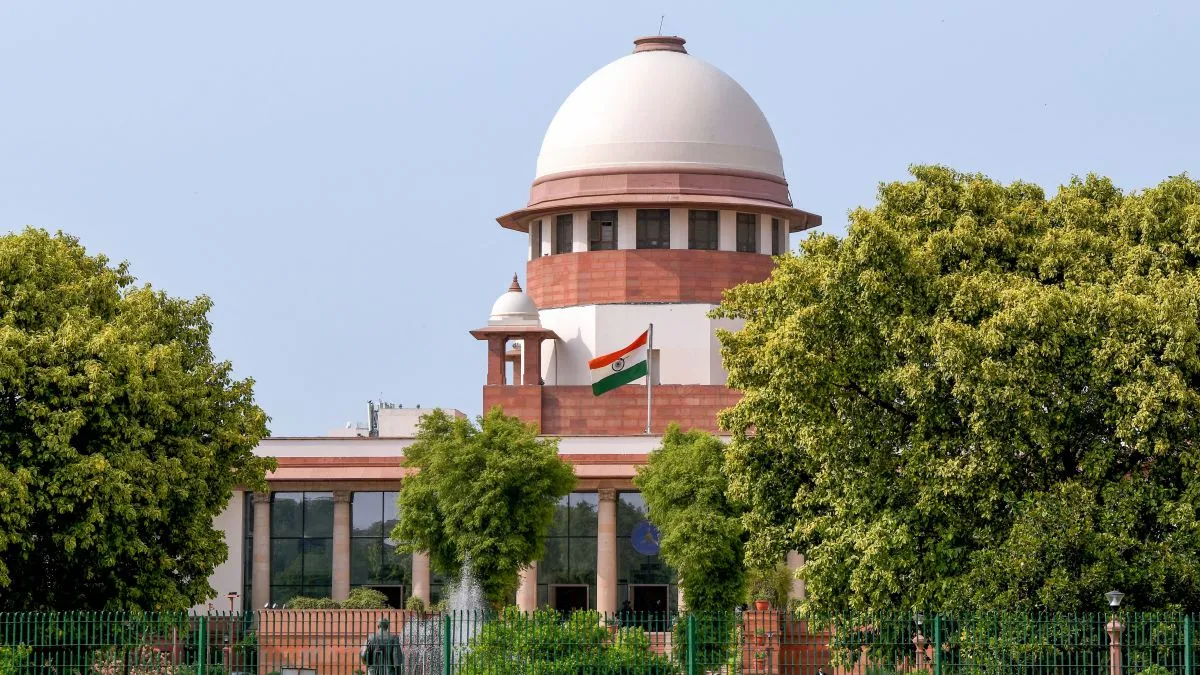
Section 17A of the Prevention of Corruption Act, inserted in 2018, requires prior government approval before investigating public servants for decisions taken in official capacity. A recent split verdict by the Supreme Court of India has brought its constitutional validity under renewed scrutiny.
Q1. What is the latest Supreme Court development on Section 17A?
- A two-judge Bench of the Supreme Court delivered a split verdict on the constitutionality of Section 17A.
- Due to differing opinions, the matter has been referred to the Chief Justice of India for the constitution of a larger Bench.
- The case highlights the tension between:
- Effective anti-corruption investigations, and
- Protection of honest public servants from harassment.
Q2. Why was Section 17A introduced in 2018?
- Section 17A was enacted to address policy paralysis in governance.
- The government argued that:
- Fear of investigation discourages officers from taking bold or innovative decisions.
- The provision aims to protect officials from:
- Frivolous or malicious enquiries related to bona fide decisions taken during official duties.
Q3. How did Justice K. V. Viswanathan view Section 17A?
- K V Viswanathan emphasised the need to protect honest civil servants.
- He referred to Sardar Vallabhbhai Patel’s description of civil servants as the “Steel Frame of India.”
- He warned that without safeguards:
- Officers may adopt a risk-averse “play-it-safe” approach.
- However, he acknowledged a constitutional flaw:
- Approval for investigation rests with the government itself, affecting independence.
Q4. What solution did Justice Viswanathan propose?
- He adopted a constructive interpretation to save the provision.
- He ruled that:
- Prior approval should continue, but
- The approval process must include independent scrutiny.
- He proposed routing complaints through:
- Lokpal at the Centre.
- Lokayuktas in the States.
- If the Lokpal finds a prima facie case:
- The government must grant approval for investigation.
- This, he argued, balances accountability with administrative efficiency.
Q5. Why did Justice B. V. Nagarathna opposes Section 17A?
- B V Nagarathna held that Section 17A undermines the very purpose of the anti-corruption law.
- She argued that:
- Blocking enquiries at the threshold shields corrupt officials.
- She rejected the idea that the government can act impartially in granting approvals.
- She highlighted conflicts of interest when allegations involve:
- Senior officials or ministers.
Q6. How does Section 17A raise equality concerns?
- Justice Nagarathna found the provision violative of Article 14.
- Section 17A protects only officials involved in:
- “Recommendations or decisions”.
- Lower-level officials performing clerical or procedural roles:
- Do not receive similar protection.
- This creates arbitrary and unequal classification among public servants.
Q7. Why did Justice Nagarathna reject judicial restructuring of Section 17A?
- She opposed replacing “Government” with “Lokpal” through judicial interpretation.
- She termed this judicial legislation, beyond the court’s authority.
- According to her:
- Courts cannot rewrite statutes to cure defects.
- She also rejected the claim that Section 17A filters frivolous cases:
- Without a preliminary enquiry, allegations cannot be assessed.
Q8. How do earlier Supreme Court rulings affect this debate?
- Two landmark cases are central:
- Vineet Narain v. Union of India
- Subramanian Swamy v. CBI
- Both struck down prior approval requirements that restricted corruption probes.
- Justice Nagarathna viewed Section 17A as:
- “Old wine in a new bottle”.
- Justice Viswanathan distinguished earlier rulings by arguing:
- Section 17A applies uniformly to all public servants.
- Executive control can be neutralised through independent screening.
Q9. What lies at the core of the disagreement?
- Justice Nagarathna sees Section 17A as fundamentally unconstitutional.
- Justice Viswanathan believes institutional redesign can cure its defects.
- The larger Bench must decide whether:
- Protection of honest officers justifies prior approval, or
- Any such barrier fatally undermines anti-corruption enforcement.
Conclusion
The split verdict on Section 17A reflects a deeper constitutional dilemma between administrative protection and accountability. The final ruling will shape India’s anti-corruption framework and the balance between executive power and independent investigation.