Context
A recent geological study has indicated a significant build-up of tectonic stress along the San Andreas Fault in Southern California, suggesting an increased potential for future seismic activity in the region.
About San Andreas Fault
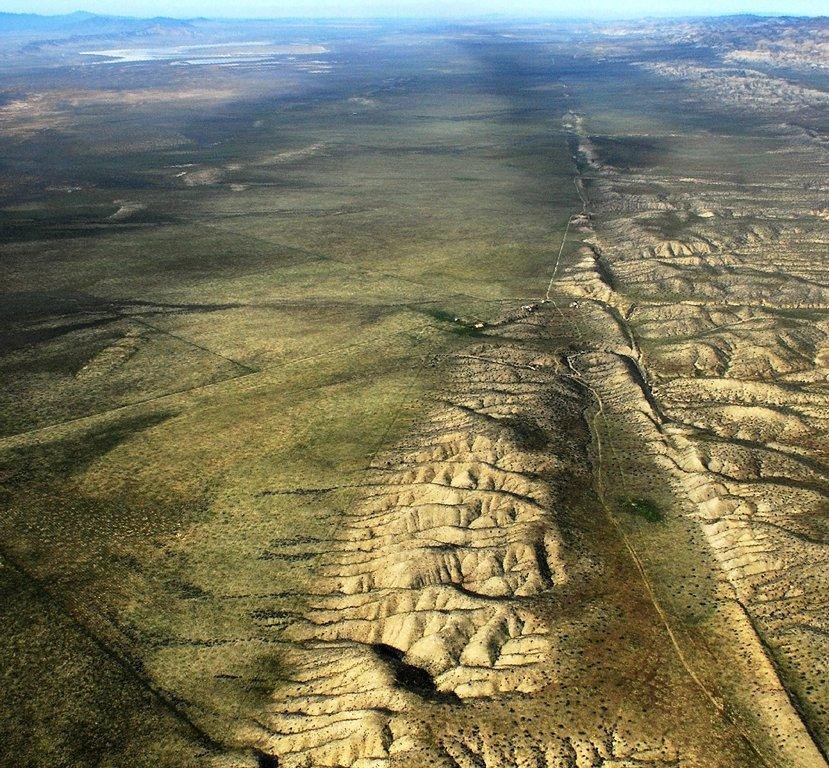
- The San Andreas Fault is a major transform fault system located along the western margin of North America, primarily in California.
- It developed around 30 million years ago and marks the boundary between the Pacific Plate and the North American Plate.
- It is among the world’s most extensively studied fault systems.
Key Features
- The fault extends for nearly 1,300 km, from the Gulf of California to the Pacific coast near San Francisco.
- Prolonged movement along the fault has significantly shaped the regional landscape, including the formation of the Baja California Peninsula.
Nature of Movement
- The San Andreas Fault is a strike-slip fault, characterised by predominantly horizontal movement.
- The Pacific Plate moves northward relative to the North American Plate.
- Continuous stress accumulation and release along the fault make California highly prone to earthquakes.
Strike-Slip Faults
- Strike-slip faults form where tectonic plates slide past each other horizontally with little vertical displacement.
- The San Andreas Fault is one of the best-known examples of this type of fault.