Context
Sambar Deer have been recorded for first time in high-altitude protected areas of Chamba, Himachal Pradesh via camera traps, underscoring the importance of wildlife monitoring and habitat conservation.
What is the Sambar Deer?
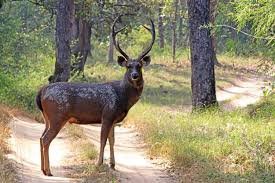
- Scientifically known as the ‘Rusa Unicolor’, it is one of the largest deer species found in Asia (native to the Indian subcontinent, southern China, and Southeast Asia) and is widely recognized for its large body size and strong antlers in males.
- It is found in India, Pakistan, Myanmar, Philippines, Sri Lanka, China, Malaysia, Taiwan and Indonesia (including islands such as Sumatra and Java).
- Subspecies (Races): Several subspecies or races of sambar deer have been identified. Example: Indian Sambar, Malayan Sambar, etc. These variations occur due to geographical differences across their range.
- Habitat Preferences: Sambar deer can survive in a variety of habitats such as forested hillsides (both steep and gently sloping), dense forests, swamp forests and open scrublands. They are often found near cultivated areas, gardens, and plantations, where food resources are available.
- Physical Characteristics:
- Size: It stands 1.2–1.4 metres tall at the shoulder, with some adult males weighing up to 550 kg.
- Body Appearance: The body is covered with long, coarse hair, ranging in color from yellowish-brown to dark grey, with a darker or chestnut-colored underside.
- Neck Hair: Longer, especially in males, giving them a mane-like appearance.
- Tail: It has a long black tail with a white underside that becomes visible when raised.
- Antlers: Only male Sambar Deer grow antlers, which can reach over 1 metre (about 42 inches) in length, usually with 3–4 tines (points), and are shed and regrown periodically.
- Males are usually heavier and darker in colour than females.
- Conservation Status: Vulnerable (IUCN Red List).
FAQs
Q1. What is the Sambar Deer?
It (Rusa unicolor) is one of the largest deer species in Asia, native to the Indian subcontinent, southern China, and Southeast Asia, and known for its large body size and strong antlers in males.
Q2. Where is the Sambar Deer found?
It is distributed across India, Pakistan, Myanmar, Philippines, Sri Lanka, China, Malaysia, Taiwan, and Indonesia (including islands such as Sumatra and Java).
Q3. Are there subspecies of the Sambar Deer?
Yes, several subspecies or races exist due to geographical differences, such as the Indian Sambar and Malayan Sambar.
Q4. What habitats do Sambar Deer prefer?
They thrive in diverse habitats including forested hillsides, dense forests, swamp forests, and open scrublands. They are also often found near cultivated areas, gardens, and plantations.
Q5. What is the conservation status of the Sambar Deer?
The Sambar Deer is listed as Vulnerable on the IUCN Red List, highlighting the need for habitat conservation and monitoring.