Why in the News?
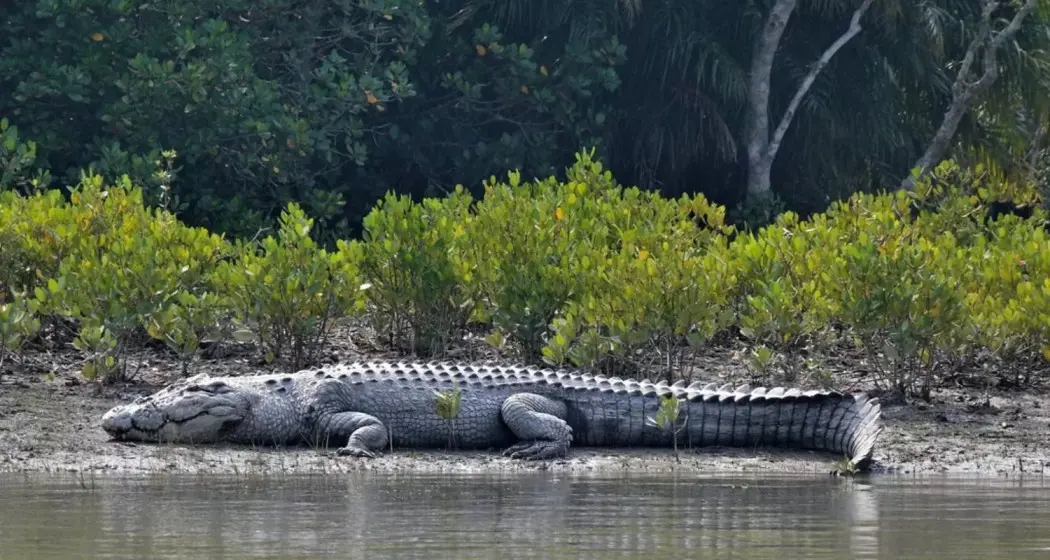
- A survey titled “Population Assessment and Habitat Ecology Study of Saltwater Crocodiles in Sundarbans 2025” by the West Bengal Forest Department reported an increase in the estimated population of saltwater crocodiles in the Sundarban Biosphere Reserve (SBR) compared to 2024.
- The survey observed significant growth in all demographic classes of crocodiles, particularly in hatchlings, which are rare and difficult to spot in the challenging terrain of the Sundarbans.
Key Highlights
- Population Growth in 2025
- Estimated population: 220 (minimum) to 242 (maximum) in 2025.
- Previous year (2024): 204–234 estimated crocodiles.
- 213 direct sightings recorded during the survey.
- Demographic Distribution
- Adults: 125 individuals.
- Juveniles: 88 individuals.
- Hatchlings: 23 individuals (up from just 2 in 2024).
- Reflects successful breeding and conservation measures.
- Ecological Role
- Saltwater crocodile (Crocodylus porosus) is the largest reptile and apex predator
- Classified as hypercarnivorous, maintaining ecosystem balance by feeding on carcasses and cleaning flowing water systems.
- Geographical Spread
- Found in Odisha, West Bengal (Sundarbans), and Andaman & Nicobar Islands.
- The survey area included swamplands, mangroves, and rivers of the Sundarban Biosphere Reserve.
- Methodology and Conservation Efforts
- Conducted through systematic surveys, GPS mapping, and habitat characterization.
- The Bhagabatpur Crocodile Project, started in 1976 in South 24 Parganas, has been instrumental in breeding and conservation.
- Encounter rate: 18 per km, i.e., one crocodile every 5.5 km of surveyed stretch.
| Related Constitutional Provisions
1. Article 48A – DPSP: The State shall endeavour to protect and improve the environment and to safeguard forests and wildlife of the country. 2. Article 51A(g) – Fundamental Duty: To protect and improve the natural environment including forests, lakes, rivers, and wildlife, and to have compassion for living creatures. 3. Article 21 – Right to Life a. Interpreted by the Supreme Court to include “Right to a healthy environment” as part of the right to life. 4. Seventh Schedule – Distribution of Powers a. Entry 17A (Forests) and Entry 17B (Protection of wild animals and birds) are in the Concurrent List, enabling both Centre and States to legislate on wildlife conservation. b. Relevance: Crocodile conservation programs are implemented under state initiatives (e.g., Bhagabatpur Crocodile Project) with central legislation like the Wildlife Protection Act, 1972. 5. Wildlife (Protection) Act, 1972 – It is the principal legislation in India for the protection of wild animals, birds, and their habitats. It provides for regulation, protection, and management of wildlife species and conservation of biodiversity. a. Saltwater crocodile being a Schedule I species enjoys the strictest protection under the Act. i. Habitat protection in Sundarban Biosphere Reserve. ii. Bhagabatpur Crocodile Project (breeding program). iii. Penal action against poaching or egg theft. |
Implications
- Positive Indicator for Biodiversity
- Increase in hatchlings suggests healthy reproduction and survival rates.
- Signals success of long-term conservation measures in the Sundarbans.
- Strengthened Ecosystem Services
- As apex predators, crocodiles regulate prey species and maintain aquatic ecosystem health.
- Their role in carcass removal helps prevent water contamination and disease spread.
- Boost to Conservation Programs
- Validates the Bhagabatpur Crocodile Project’s effectiveness in supporting species recovery.
- Provides a model for other coastal and riverine ecosystems.
- Tourism and Awareness Opportunities
- Growing crocodile population can boost eco-tourism in the Sundarbans.
- Increased sightings offer scope for community-based tourism programs and conservation education.
- Policy and Research Leverage
- Data from the study aids in policy planning for habitat protection.
- Encourages future studies on climate impact, prey availability, and human–wildlife dynamics.
Challenges and Way Forward
| Challenges | Why It Matters | Way Forward |
| Human–Crocodile Conflict | Increased population raises chances of attacks on fishermen and villagers. | Create early warning systems, community sensitization, and provide compensation schemes. |
| Habitat Degradation | Mangroves and water bodies face pressure from erosion, sea-level rise, and development. | Strengthen mangrove afforestation, restrict industrial activities, and monitor habitat health. |
| Climate Change Risks | Rising salinity and flooding patterns in Sundarbans affect crocodile habitats. | Integrate climate adaptation strategies and water management into conservation plans. |
| Illegal Poaching or Egg Theft | Increased demand for crocodile skin and eggs in some markets. | Strict enforcement under Wildlife Protection Act, 1972, and community patrol programs. |
| Limited Research on Ecology | Lack of detailed data on feeding patterns, migration, and reproduction. | Promote long-term ecological monitoring and collaborative studies with research institutions. |
Conclusion
The rise in the saltwater crocodile population in the Sundarbans reflects a successful conservation story backed by decades of effort, especially through breeding and habitat protection programs. While the trend is encouraging for biodiversity and ecosystem stability, challenges like human conflict, habitat threats, and climate impacts require proactive strategies. Sustainable management, local community involvement, and climate-resilient planning will be critical to ensure the continued survival of this iconic species.
| EnsureIAS Mains Question
Q. The recent population increase of saltwater crocodiles in the Sundarbans reflects the success of conservation measures under the Wildlife Protection Act, 1972. Critically analyze the effectiveness of legal, constitutional, and community-based initiatives for wildlife conservation in India. (250 Words) |
| EnsureIAS Prelims Question Q. With reference to the saltwater crocodile (Crocodylus porosus) in India, consider the following statements: 1. It is listed under Schedule I of the Wildlife Protection Act, 1972, providing the highest level of protection. 2. Its natural habitat in India includes mangroves, swamplands, and coastal areas of Odisha, West Bengal, and the Andaman & Nicobar Islands. 3. The Bhagabatpur Crocodile Project in Odisha was established in 1976 for its conservation and breeding. 4. The species plays an important ecological role as an apex predator in maintaining aquatic ecosystem balance. Which of the statements given above is/are correct? a. 1, 2 and 4 only Answer: a. 1, 2 and 4 only |