Important Questions for UPSC Prelims, Mains and Interview
|
Context
A recent High Court ruling has reaffirmed that while promotion is not guaranteed, every eligible government employee has a fundamental right to be fairly considered for promotion.
Q1. What is the constitutional basis of the “right to be considered for promotion” in public employment, and how has it evolved through judicial interpretation?
- The right to be considered for promotion is derived from Articles 14 and 16(1) of the Constitution, which ensure equality before law and equal opportunity in public employment.
- Courts have interpreted the term “employment” broadly to include not only initial appointment but also career advancement. Over time, judicial interpretation has expanded this principle to ensure that all eligible employees are given a fair chance for promotion.
- Thus, the right has evolved from a general equality principle to a specific enforceable guarantee that mandates fair and non-discriminatory consideration in promotions.
Q2. Why is there no fundamental right to promotion itself, and how do courts distinguish it from the right to fair consideration?
- Courts have clarified that promotion depends on multiple factors such as availability of vacancies, merit, and service rules, and therefore cannot be claimed as an absolute right.
- However, they distinguish this from the right to be considered for promotion, which is a fundamental right. Every eligible employee must be evaluated fairly whenever a promotion opportunity arises.
- Thus, while promotion is conditional and not guaranteed, the process of consideration must always be fair, transparent, and in accordance with rules.
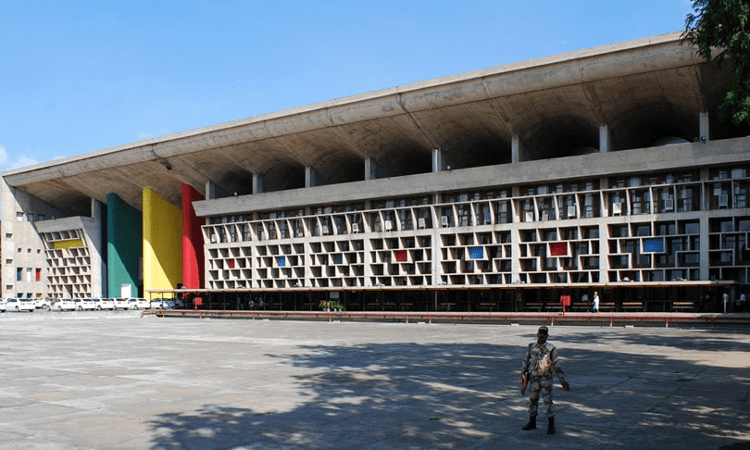
Q3. How did the recent Punjab and Haryana High Court judgment reinforce the principles of fairness and non-arbitrariness in promotions?
- The case involved a government employee who was excluded from the promotion process due to an incorrect interpretation of eligibility rules by authorities.
- The court found that the rules had been misapplied and that the employee was wrongly denied consideration by the Departmental Promotion Committee (DPC).
- It held that such exclusion violated his fundamental right and ordered a notional promotion with retrospective effect. The court also directed that DPC meetings be conducted regularly.
- This judgment reinforced that administrative decisions must be accurate, fair, and free from arbitrariness, and that errors cannot deprive employees of their constitutional rights.
Q4. What role do Departmental Promotion Committees (DPCs) play in ensuring fairness in promotion processes?
- Departmental Promotion Committees (DPCs) are responsible for evaluating eligible candidates and recommending promotions based on merit and service records.
- They act as institutional mechanisms to ensure objectivity, consistency, and adherence to prescribed rules in the promotion process.
- Regular and timely meetings of DPCs are essential to prevent delays that can hinder career progression. Courts have repeatedly emphasised that failure to convene DPCs on time can effectively deny employees their right to fair consideration.
Q5. How have Supreme Court judgments shaped the legal understanding of promotion rights in India?
- The Supreme Court has played a key role in clarifying the scope of promotion-related rights.
- In 1991, it held that while there is no fundamental right to promotion, eligible employees have a right to be considered whenever vacancies arise.
- In 1999, a Constitution Bench reaffirmed that this right applies to all employees within the zone of consideration.
- More recently, the Court clarified that although the right to consideration is fundamental, employees cannot claim promotion from the exact date a vacancy arises, as administrative delays may be justified in certain cases.
- These rulings have created a balanced framework that protects fairness without imposing unrealistic obligations on the administration.
Q6. What constitutes a violation of the right to be considered for promotion, and what remedies have courts provided?
- A violation occurs when an eligible employee is excluded from consideration due to arbitrary decisions, incorrect interpretation of rules, or failure to conduct timely promotion processes.
- Prolonged delays in holding DPC meetings or ignoring eligible candidates also amount to denial of this right.
- Courts have provided remedies such as directing reconsideration, granting notional promotions, and ordering retrospective benefits in appropriate cases.
- These remedies aim to restore fairness and compensate for lost career opportunities caused by administrative lapses.
Q7. What reforms are required in administrative practices to ensure timely and fair promotion processes in government services?
- Administrative systems need to ensure regular and time-bound conduct of DPC meetings to avoid unnecessary delays.
- Clear and consistent interpretation of service rules is essential to prevent wrongful exclusion of candidates.
- Digitisation and better record management can improve transparency and efficiency in evaluating candidates.
- Accountability mechanisms should be strengthened so that officials responsible for delays or errors are held answerable.
- A proactive approach that prioritises timely career progression will help align administrative practices with constitutional principles.
Conclusion
While promotion itself is not a guaranteed right, courts have firmly established that fair and timely consideration is a fundamental entitlement. Strengthening administrative practices is essential to uphold this constitutional guarantee in practice.