| Important Questions for UPSC Prelims/ Mains/ Interview
1. What are refurbished medical devices, and why are they important for India’s healthcare system? 2. What are the cost advantages of refurbished medical equipment? 3. Why does India remain dependent on imported medical technologies? 4. What is the current regulatory framework governing refurbished medical devices in India? 5. What regulatory contradictions have emerged in recent developments? 6. What concerns do domestic manufacturers raise regarding refurbished imports? 7. How does this issue intersect with Make in India and industrial policy? 8. What reforms are necessary to create a balanced regulatory framework? |
Context
Recently, the Department of Pharmaceuticals informed the Rajya Sabha that the Ministry of Health and Family Welfare (MoHFW) has constituted a committee to draft a policy for regulating refurbished medical devices. The proposed framework aims to define their scope, establish standards for safety and performance, assess remaining useful life, and recommend disposal mechanisms. The debate has shifted from whether such devices should be permitted to how they can be effectively regulated while balancing healthcare accessibility, patient safety, and industrial development goals.
Q1. What are refurbished medical devices, and why are they important for India’s healthcare system?
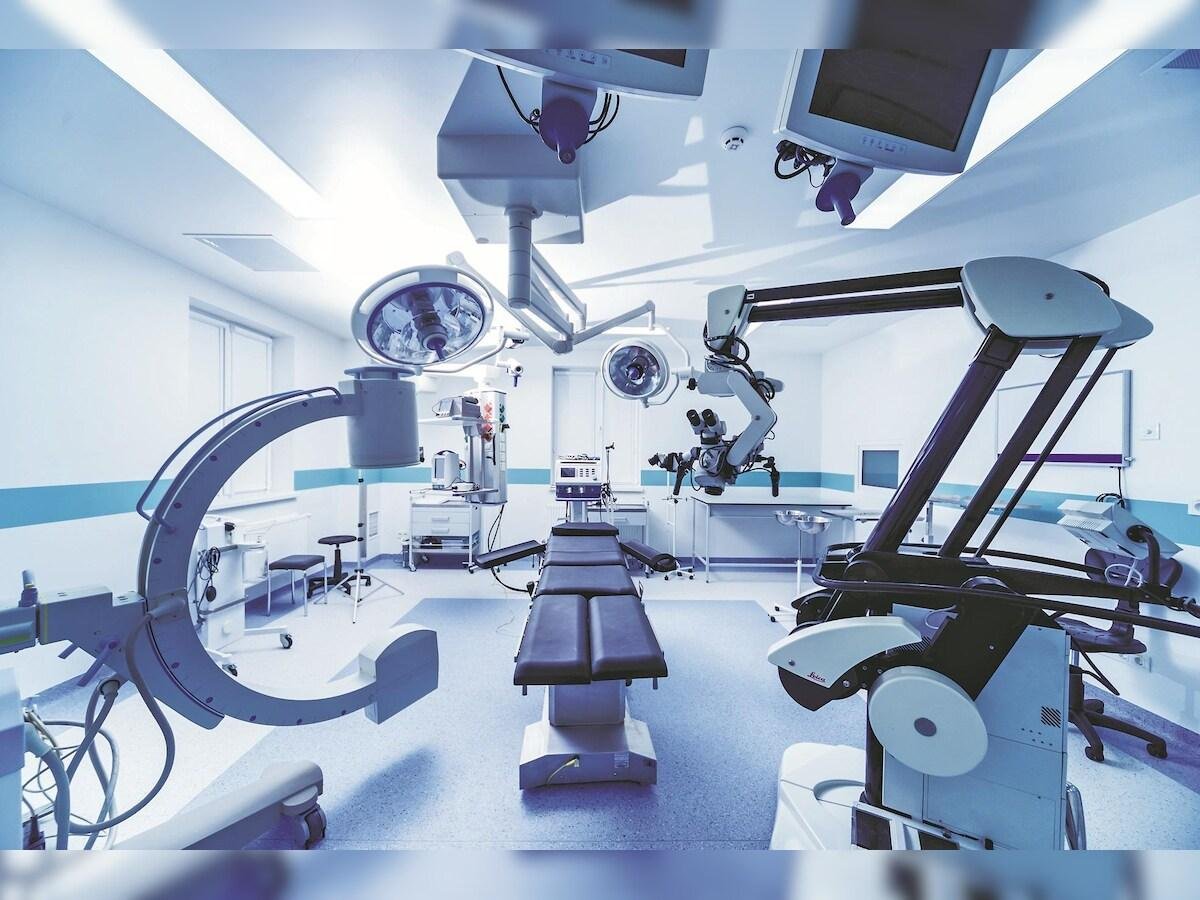
- Refurbished medical devices are previously used equipment restored to their original operating standards and resold at lower prices.
- These devices typically include high-value diagnostic and therapeutic technologies.
- MRI machines
- CT scanners
- PET-CT systems
- Advanced endoscopy units
- Robotic surgical systems
- They play a critical role in expanding access to advanced diagnostics, especially in non-metropolitan regions.
- In a resource-constrained healthcare system, they offer a bridge between affordability and technological access.
Q2. What are the cost advantages of refurbished medical equipment?
- Refurbished systems are significantly cheaper than new equipment.
- The price gap makes advanced healthcare infrastructure financially viable for smaller hospitals.
- MRI machines can cost less than half the price of new units.
- PET-CT systems may be available at a fraction of their original cost.
- CT scanners become accessible to standalone diagnostic centres.
- Lower capital expenditure supports decentralisation of healthcare services.
- District hospitals and Tier-2 and Tier-3 city facilities benefit from improved diagnostic capabilities.
- Reduced investment burden allows quicker expansion of healthcare infrastructure.
Q3. Why does India remain dependent on imported medical technologies?
- Advanced medical imaging technologies involve high technological complexity.
- Global supply chains for specialised components are dominated by a few multinational manufacturers.
- Domestic manufacturing capacity in high-end imaging equipment is still developing.
- Developed countries frequently upgrade equipment before the end of its functional life, creating a supply of reusable systems.
- Refurbished devices are commonly sourced from technologically advanced countries such as the United States, Germany, and Japan.
Q4. What is the current regulatory framework governing refurbished medical devices in India?
- India does not have a specific regulatory pathway under the Medical Devices Rules, 2017 for refurbished equipment.
- All medical devices were brought under phased regulation and notified as “drugs” under the Drugs and Cosmetics Act, but no separate licensing category exists for refurbished products.
- Imports are currently governed mainly under the Hazardous and Other Wastes (Management and Transboundary Movement) Rules, 2016.
- Import approvals require:
- No-objection certification from the Ministry of Environment, Forest and Climate Change.
- Technical input from the Central Drugs Standard Control Organisation (CDSCO).
- Import authorisation from the Directorate General of Foreign Trade.
- Earlier restrictions on certain critical-care devices were relaxed with strict scrutiny mechanisms.
Q5. What regulatory contradictions have emerged in recent developments?
- Environmental authorities have approved certain refurbished devices for reuse.
- However, CDSCO has indicated that such devices cannot be imported for sale due to the absence of licensing provisions under the Medical Devices Rules.
- This creates regulatory inconsistency between environmental approvals and medical device regulation.
- India lacks a statutory definition distinguishing “used,” “refurbished,” “reconditioned,” and “remanufactured” devices.
- Classification ambiguity leads to uncertainty in compliance, patient safety standards, and enforcement.
Q6. What concerns do domestic manufacturers raise regarding refurbished imports?
- Domestic industry associations argue that refurbished devices may carry risks.
- Unclear usage history
- Inconsistent performance
- Limited traceability
- Shorter operational lifespan
- They warn that unregulated imports could undermine indigenous manufacturing capacity.
- There are concerns that India may become a destination for end-of-life equipment.
- Competition from lower-priced refurbished imports may discourage investment in advanced domestic technology development.
- Informal and unauthorised trade in pre-owned equipment raises oversight challenges.
Q7. How does this issue intersect with Make in India and industrial policy?
- India seeks to promote domestic manufacturing under the Make in India
- Refurbished imports may compete with locally manufactured products at similar price levels.
- This could reduce incentives for long-term innovation and capital investment in medical technology.
- However, restricting imports may limit healthcare access in underserved regions.
- The debate reflects a broader policy dilemma between healthcare affordability and industrial self-reliance.
Q8. What reforms are necessary to create a balanced regulatory framework?
- A clear statutory definition of refurbished and remanufactured devices must be established.
- A dedicated licensing pathway under the Medical Devices Rules should be introduced.
- Safety and performance assessment mechanisms must be standardised.
- Certification of remaining useful life
- Mandatory quality testing
- Traceability documentation
- Disposal and waste management protocols must align with environmental sustainability standards.
- A calibrated import policy should ensure that refurbished devices complement rather than replace domestic manufacturing.
- Harmonisation between environmental, trade, and health regulators is essential for policy coherence.
Conclusion
The debate over refurbished medical devices is not a question of prohibition versus permission but one of balanced regulation. These devices offer significant cost advantages and expand access to advanced diagnostics, particularly in underserved regions. At the same time, regulatory ambiguity and industrial concerns highlight the need for a coherent and transparent framework. India must design a policy that ensures patient safety, prevents dumping of obsolete equipment, and supports domestic innovation while preserving healthcare affordability. A well-calibrated regulatory system can transform refurbished medical devices from a source of policy friction into a strategic asset for inclusive healthcare growth.