Context
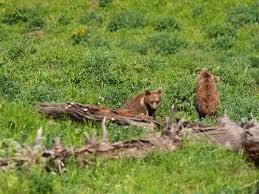
The recent sighting of a female Himalayan brown bear along with her cubs in the Rakchham-Chitkul Wildlife Sanctuary of Himachal Pradesh has renewed attention towards the conservation of this rare species and its high-altitude Himalayan habitat.
About Rakchham-Chitkul Wildlife Sanctuary
- Rakchham-Chitkul Wildlife Sanctuary, also known as the Sangla Wildlife Sanctuary, lies in the Kinnaur district of Himachal Pradesh.
- The sanctuary forms part of the Western Himalayan range and spreads across an area of nearly 30.98 sq. km.
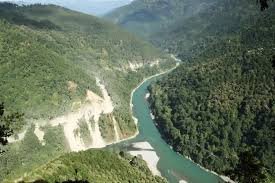
- Snow-covered mountains, alpine valleys and fast-flowing rivers dominate the landscape of the sanctuary.
- The sanctuary extends from about 3,200 metres to 5,486 metres above sea level, which creates diverse ecological conditions.
- Unlike many other protected areas in Himachal Pradesh, the sanctuary falls in a dry climatic zone and therefore receives very little monsoon rainfall.
- The region supports dry temperate forests, coniferous forests, sub-alpine vegetation, alpine scrublands and high-altitude pastures.
- Rhododendron, oak, pine and several medicinal herbs grow naturally in the sanctuary.
- The Lamkhanga Pass trekking route passes through the sanctuary and connects Kinnaur in Himachal Pradesh with the Gangotri region of Uttarakhand.
- The sanctuary also provides habitat to snow leopards, Himalayan black bears, musk deer and several Himalayan bird species.
Himalayan Brown Bear
- The scientific name of the Himalayan brown bear is Ursus arctos isabellinus.
- The species inhabits the high-altitude Himalayan region and ranks among the largest mammals found there.
- People also refer to it as the Himalayan Red Bear or Isabelline Bear, while locals in Ladakh call it “Denmo”.
- The Himalayan brown bear survives mainly in alpine and sub-alpine habitats above the timberline between 3,000 and 5,500 metres.
- The species occurs across the northwestern and central Himalayas, including India, Pakistan, Nepal, Bhutan and the Tibetan Autonomous Region of China.
- In India, the species survives in fragmented populations across Jammu and Kashmir, Himachal Pradesh and Uttarakhand.
- The bear develops thick reddish-brown or sandy-coloured fur that protects it from extreme cold conditions.
- Himalayan brown bears consume grasses, roots, bulbs, insects and small mammals such as marmots, pikas and voles.
- Male bears generally grow larger than females and weigh around 135 kg on average.
- During winter, the species hibernates inside dens to survive harsh climatic conditions.
- Researchers consider the Himalayan brown bear one of the oldest surviving brown bear lineages in the world.
- Some local legends connect the bear’s upright posture with stories of the mythical Yeti or “Abominable Snowman”.
- The IUCN Red List classifies the Himalayan brown bear as Critically Endangered.