Context
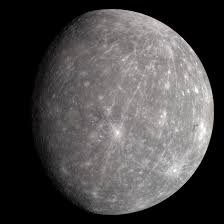
A recent study suggests that Mercury may have undergone greater contraction than previously estimated, with its diameter potentially decreasing by up to 23 km as the planet’s interior continues to cool.
Key Features of Planet Mercury
- Smallest planet in the Solar System and the closest to the Sun.
- One of the four terrestrial (rocky) planets — Mercury, Venus, Earth and Mars.
- Temperature: Surface temperatures range from about +450°C during the day to –180°C at night.
- Despite being closest to the Sun, Venus is the hottest planet because its thick atmosphere causes a strong greenhouse effect.
- Surface: An ancient, heavily cratered landscape showing evidence of past volcanic and tectonic activity.
- Impact Features: Contains the Caloris Basin, one of the largest impact basins in the Solar System.
- Polar Ice: Some polar craters remain permanently shadowed, allowing water ice to survive despite Mercury’s proximity to the Sun.
- Interior: Has a large, iron-rich core occupying a significant part of its interior.
- Visibility: Its proximity to the Sun makes it difficult to observe compared with other planets.
- Missions:
- NASA’s MESSENGER: First spacecraft to orbit Mercury, entering orbit in 2011 and operating until 2015.
- BepiColombo: A joint ESA–JAXA mission studying Mercury, with orbital operations expected to begin in 2026.
- Important Facts:
- It is about 38% the size of Earth and has about 38% of Earth’s gravity .
- Its one rotation takes 58 Earth days.
- Second densest planet in the Solar System after Earth due to its large iron-rich core.
- It completes one orbit around the Sun in 88 Earth days
- No natural satellite, whereas Earth has one Moon.
FAQs
Q1. What makes Mercury unique in size and position?
It is the smallest planet in the Solar System and the closest to the Sun.
Q2. How extreme are Mercury’s temperatures?
Daytime highs reach about +450°C, while nights drop to –180°C.
Q3. What are Mercury’s key surface and impact features?
Its ancient, cratered terrain shows volcanic/tectonic activity and hosts the Caloris Basin, one of the largest impact basins.
Q4. Does Mercury have water despite its proximity to the Sun?
Yes — permanently shadowed polar craters preserve water ice.
Q5. Which missions have explored Mercury?
NASA’s MESSENGER orbited from 2011–2015; ESA–JAXA’s BepiColombo will begin orbital studies in 2026.