Context
Recently, an adult male tiger aged around six to seven years was discovered dead near the Mala forest range of Pilibhit Tiger Reserve.
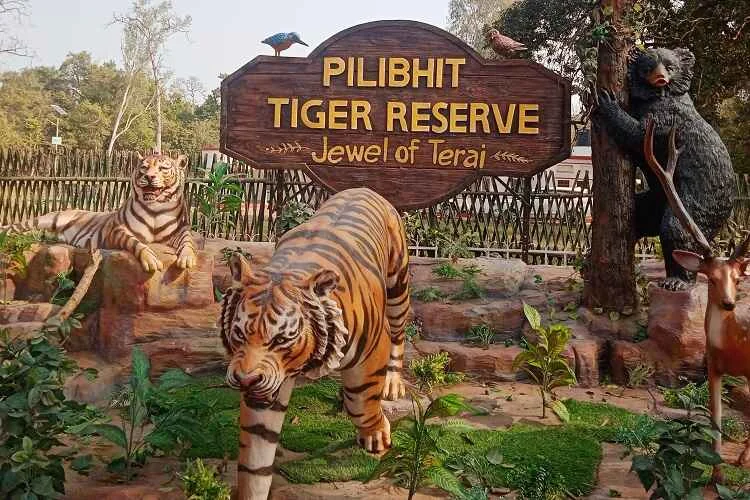
About Pilibhit Tiger Reserve
- Location: Uttar Pradesh – lies in Terai Arc Landscape (Upper Gangetic Plain biogeographic province). The reserve stretches along the India–Nepal international border.
- Rivers and Hydrology
- The Gomti River originates from Pilibhit Tiger Reserve.
- It also forms a catchment area for other rivers such as Sharda, Chuka and Mala Khannot.
- In addition, the Sharda Sagar Dam, which extends for about 22 km, lies along the boundary of the reserve.
- Climate and Soil: The region experiences a dry and hot climate. Its ecological characteristics reflect a mix of dry teak forest ecosystems and soils associated with the Vindhya mountain region.
- Vegetation Types: The reserve contains diverse forest ecosystems, including Tropical Moist Deciduous Forests, Tropical Dry Deciduous Forests, Seasonal Swamp Forests and Tropical Semi-evergreen Forests.
- Flora: The most dominant vegetation in the reserve is Sal forest. Dense Sal woodland covers nearly 76% of the reserve area. The forests show strong natural regeneration.
- The forest areas are interspersed with grasslands and meadows containing grasses such as Saccharum, Sclerostachya, Imperata, Themeda, Bothriochloa, Vetiveria, Apluda, Dichanthium, Digitaria and Cyperus. These grasses provide essential grazing areas for herbivores.
- Fauna: It supports rich wildlife diversity. Important species found here include Bengal Tiger (endangered), Swamp deer, Bengal florican, Hog deer and Leopard.
FAQs
Q1. Where is Pilibhit Tiger Reserve located?
Pilibhit Tiger Reserve is situated in Uttar Pradesh, along the India–Nepal border. It lies within the Terai Arc Landscape of the Upper Gangetic Plain biogeographic province.
Q2. Which rivers are associated with Pilibhit Tiger Reserve?
The reserve is hydrologically rich. The Gomti River originates here, and it also forms the catchment for rivers like Sharda, Chuka, and Mala Khannot. The Sharda Sagar Dam, stretching about 22 km, lies along its boundary.
Q3. What type of forests and vegetation are found in Pilibhit Tiger Reserve?
The reserve hosts diverse ecosystems including Tropical Moist Deciduous Forests, Tropical Dry Deciduous Forests, Seasonal Swamp Forests, and Tropical Semi‑evergreen Forests. Dense Sal forests cover nearly 76% of the area, interspersed with grasslands and meadows that support herbivores.
Q4. Which animals can be spotted in Pilibhit Tiger Reserve?
It is home to the Bengal Tiger (endangered), along with swamp deer, hog deer, leopards, and Bengal florican. The grasslands provide grazing for herbivores, supporting a balanced predator‑prey ecosystem.
Q5. Why is Pilibhit Tiger Reserve important for conservation?
The reserve plays a crucial role in tiger conservation within the Terai Arc Landscape. Its diverse habitats support endangered species, while its rivers and forests sustain ecological balance. It is also vital for maintaining biodiversity in northern India.