Context
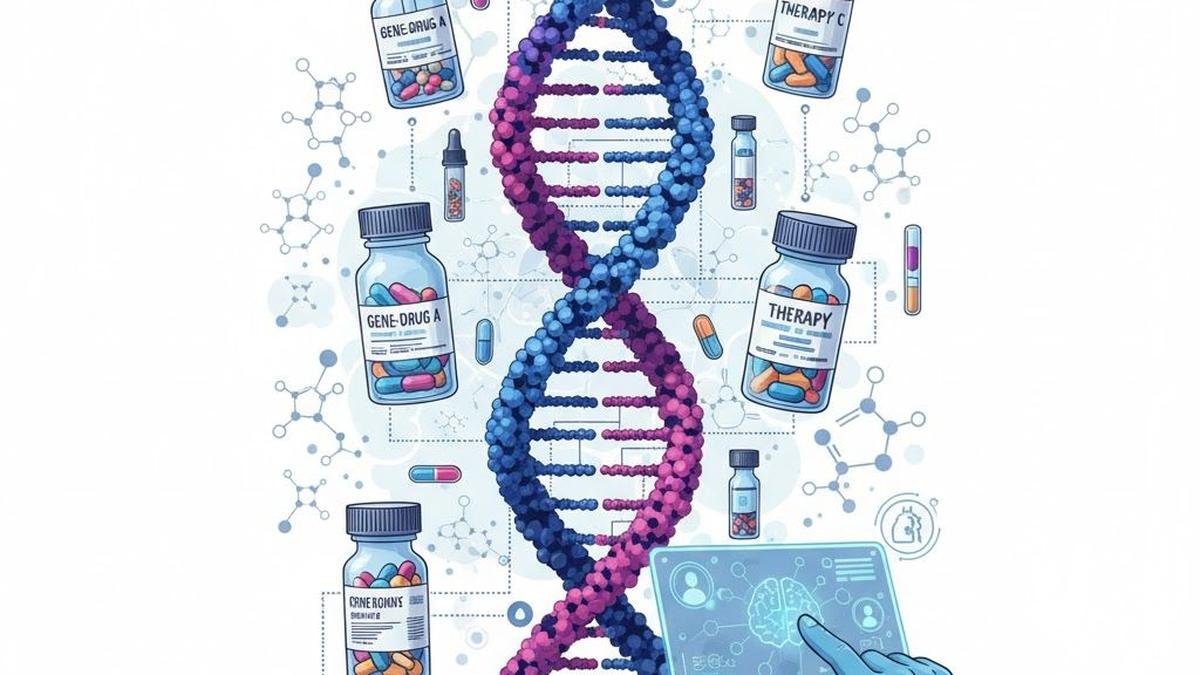
Medicine is moving from one-size-fits-all prescriptions to precision drug therapy based on a patient’s genetic profile. Policymakers, clinicians and health systems are debating how to adopt genetic-guided prescribing because it promises fewer adverse drug reactions, better outcomes, and long-term cost savings, yet faces practical, educational and policy barriers.
What is Pharmacogenomics?
Pharmacogenomics studies how a person’s genes affect the way their body processes and responds to medicines.
Key points:
- Our bodies use enzymes to metabolise (break down) most drugs.
- Many of these enzymes belong to the cytochrome P450 (CYP) Genetic differences change how active these enzymes are.
- People fall into metaboliser types: poor, intermediate, normal, or ultrarapid
- A poor metaboliser may accumulate toxic drug levels at standard doses.
- An ultrarapid metaboliser may clear the drug too fast and get no benefit.
- About 90% of people carry at least one actionable pharmacogenetic variant — so this is common, not rare.
- The goal is to use genetic information to choose the right drug and dose for each person, reducing trial-and-error.
Why Pharmacogenomics Matters?
- Reduces adverse drug reactions (ADRs): ADRs are a leading cause of hospitalisation and death; genetics explains a large part of these reactions.
- Improves drug effectiveness: Matching drug choice/dose to genes helps patients reach therapeutic levels faster.
- Saves costs long-term: Preventing serious side effects, hospital stays and ineffective treatment can offset testing costs.
- Enables personalised prevention: Instead of reactive care (“start low and go slow”), clinicians can plan safer, faster treatment paths.
- Transforms multiple specialties: Cardiology, psychiatry, oncology and anticoagulation are already showing clear benefits.
How Pharmacogenomics Works in Practice?
- Mechanism — enzymes and variants
- Most variability comes from drug-metabolising enzymes (notably CYP2C9, CYP2C19, CYP2D6).
- Gene variants reduce or increase enzymatic activity → alters drug levels and effects.
- Practical examples
- Warfarin (blood thinner): Variants in CYP2C9 and VKORC1 explain ~50% of dose differences. Pharmacogenomic dosing avoids bleeding and speeds time to safe therapy.
- Clopidogrel (antiplatelet): Needs activation by CYP2C19. Carriers of loss-of-function variants (e.g., CYP2C19*2) get less benefit and face higher risk of heart events after stents. Guidelines now recommend alternatives for poor metabolizers.
- Psychiatry: Many antidepressants and antipsychotics are metabolised by CYP2D6 / CYP2C19. Testing can reduce side effects and improve symptom control.
- Oncology: Tumour genetics and patient pharmacogenetics guide drug selection and dosing; some cancer drugs require genetic testing before use.
Economic Case (Cost vs benefit)
- Testing cost has fallen (panels roughly $200–500 today).
- Cost-effectiveness depends on: frequency of risky variants, severity/cost of side effects, availability of alternatives, and long-term drug use.
- Preventing even one major adverse event often pays for many tests. For chronic conditions, genetic-guided prescribing is often cost-effective.
Implementation Challenges
- Clinical knowledge gap: Many doctors and pharmacists lack training to order and interpret tests.
- Health-IT gaps: Electronic health records often lack decision-support to present genetic results at prescribing time.
- Reimbursement uncertainty: Insurers vary in what they cover; unclear payment models deter adoption.
- Regulatory and label variability: Some drug labels contain clear actions; others only note genetic information without actionable advice.
- Cultural and institutional resistance: Changing prescribing habits requires champions, protocols and administrative support.
- Equity concerns: Tests must be accessible to avoid widening health disparities.
- Data privacy: Genetic data raise privacy and consent issues that need strong protections.
How Systems Are Overcoming Barriers?
- Pre-emptive testing: Run genetic panels before drugs are needed; results stay in the record for future use.
- Guidelines & consortia: Groups like CPIC publish practical prescribing rules tied to genetic types.
- Integrated decision support: EHR alerts and prescribing tools that flag gene–drug interactions at the point of care.
- Education: Training programmes for prescribers and pharmacists.
- Pilot programmes: Demonstration projects in cardiology, psychiatry and anticoagulation show measurable benefit and cost savings.
Implications
- Patients can expect safer, faster, and more effective treatments.
- Clinicians must learn to use genetic data as part of routine prescribing.
- Health systems need to invest in IT, labs, reimbursement models, and workforce training.
- Regulators and payers must update coverage rules, lab accreditation, and drug labels to reflect actionable pharmacogenomic evidence.
- Ethics & equity: Policymakers must ensure testing access and protect genetic privacy.
Challenges & Way Forward
| Challenge | Way forward |
| Knowledge gap among clinicians | Integrate pharmacogenomics in medical, pharmacy curricula and CME; create clinical champions |
| Lack of EHR decision support | Mandate EHR alerts for key gene–drug pairs; standardise genetic data formats |
| Uncertain reimbursement | Develop payment models (one-time panel + reuse); public insurance coverage for high-impact tests |
| Variable lab quality & labels | Standardise lab accreditation; harmonise regulatory guidance and actionable labelling |
| Data privacy & consent | Enact strong data protection, clear consent for test usage and data sharing |
| Equity & access | Public funding for pre-emptive panels in primary-care settings; mobile lab outreach |
| Clinical integration gap | Start with high-impact fields (cardiology, psychiatry, oncology), expand using proven models |
| Public trust & awareness | Public education campaigns explaining benefits and safeguards |
Conclusion
Pharmacogenomics changes medicine’s logic: the prescription is written in our genes. It promises fewer adverse reactions, better-targeted therapy and cost savings — but realising this requires education, IT integration, payer support, data protection, and equitable access. Start with high-impact drugs–gene pairs (Warfarin, Clopidogrel, psychiatry panels), build clinical decision systems, fund pre-emptive testing where value is proven, and scale responsibly. For UPSC aspirants: pharmacogenomics is a policy issue combining health systems, technology, ethics, and regulation.
| EnsureIAS Mains Question
Q. Pharmacogenomics promises precision prescribing but faces policy and system-level barriers. Discuss how health systems (with special reference to India) should prioritise, finance and regulate pharmacogenomic testing to maximise clinical benefit, ensure equity, and protect genetic privacy. (250 Words) |
| EnsureIAS Prelims Question
Consider the following Statements: 1. A large part of pharmacogenomic variability in drug response is due to genetic differences in the CYP family of enzymes. 2. Pre-emptive pharmacogenomic testing means running genetic tests only after a patient experiences a serious adverse drug reaction. 3. Clinical use of pharmacogenomics can reduce adverse drug reactions and is often cost-effective for chronic medications. Which of the statements are correct? Answer: A — 1 and 3 only Statement-wise explanation: Statement 1 is correct: Many drug responses are explained by variation in cytochrome P450 (CYP) enzymes (CYP2C9, CYP2C19, CYP2D6 etc.). Statement 2 is incorrect: Pre-emptive testing means obtaining genetic data before a medication is needed so results are available at prescribing — not waiting for an adverse event. Statement 3 is correct: For several drug–gene pairs (especially in chronic care) pharmacogenomic-guided prescribing reduces adverse events and can be cost-effective over time. |