Context
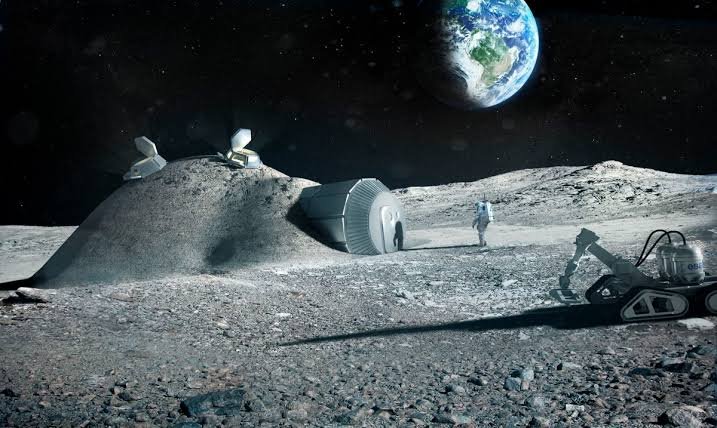
In September 2026, US President Donald Trump posted an image on Truth Social carrying the words “The Moon Is Ours.” The post revived discussion over whether any country can claim ownership over lunar territory.
Under the 1967 Outer Space Treaty (OST), outer space, including the Moon and other celestial bodies, cannot be subject to national appropriation through sovereignty, occupation or any other means.
Thus:
Exploration and use are permitted → Territorial ownership is not
What Is the Outer Space Treaty?
Its formal name is the Treaty on Principles Governing the Activities of States in the Exploration and Use of Outer Space, including the Moon and Other Celestial Bodies.
- It was opened for signature on 27 January 1967 and entered into force on 10 October 1967.
- It is the foundational treaty of international space law.
- The United States, United Kingdom and Soviet Union were the depositary governments.
- Recent UN material records 116 States Parties to the treaty.
- India signed it in 1967 and ratified it in 1982.
Core Principles
- Non-appropriation: No State can claim sovereignty over the Moon or other celestial bodies; space remains open to all.
- Peaceful use: WMDs cannot be placed in orbit, and military bases, weapons testing and manoeuvres are prohibited on celestial bodies.
- State responsibility: States remain responsible for both governmental and private space activities.
- Liability and environment: States may be liable for damage caused by space objects and must avoid harmful contamination.
Why Does the Treaty Matter Today?
- Commercialisation: Growing private participation raises questions over State supervision and commercial activity in space.
- Space security: The treaty restricts WMDs but leaves ambiguity over conventional and counter-space weapons.
- Resource governance: It bars territorial ownership, but rules for extracting and commercially using space resources remain contested.
Significance for India
India is a State Party to the OST and has growing interests through Chandrayaan, Gaganyaan and commercial space activities.
For India, predictable space rules matter because expanding lunar and commercial activity requires:
- freedom of access;
- responsible behaviour;
- protection of space assets;
- clear rules for private actors.
The treaty was drafted before reusable spacecraft, mega-constellations, private lunar missions and autonomous systems became important.
Way Forward
Future governance should therefore focus on:
- clearer norms for dual-use and counter-space activities;
- stronger transparency and notification mechanisms;
- rules that reconcile resource utilisation with non-appropriation.
FAQs
Q1. Can a country legally own the Moon?
No. The Outer Space Treaty prohibits national appropriation of the Moon by sovereignty, occupation or other means.
Q2. Does the treaty ban all military activity in outer space?
No. It specifically bans WMDs in orbit and prohibits military bases, weapons testing and manoeuvres on celestial bodies.
Q3. Are private companies covered by the treaty?
Their activities remain subject to authorisation and supervision by the relevant State.
Q4. Is India a party to the Outer Space Treaty?
Yes. India signed it in 1967 and ratified it in 1982.
Q5. What is the main modern legal challenge?
Applying a 1967 framework to private space activity, resource use and emerging counter-space technologies.