Osteoporosis Latest News
Osteoporosis is a bone-weakening disease that afflicts tens of millions of people, and much-needed new treatments could be on the way after researchers discovered a key mechanism behind how exercise strengthens bones.
What is the biological mechanism behind Osteoporosis?
Bones are dynamic, living tissues that undergo a continuous process called remodeling. This involves two main types of cells: Osteoclasts, which break down old bone tissue (resorption), and Osteoblasts, which build new bone (formation).
- The Imbalance: Osteoporosis occurs when the rate of bone breaking exceeds the rate of bone formation. This leads to a decrease in Bone Mineral Density (BMD).
- Structural Change: The internal structure of the bone, normally a strong honeycomb-like matrix, becomes increasingly porous and thin. This makes the bones brittle and highly susceptible to fractures.
Why is Osteoporosis called a “silent disease” and what are its clinical signs?
Osteoporosis often progresses without any noticeable symptoms until a fracture occurs. This makes early screening, such as the DEXA (Dual-Energy X-ray Absorptiometry) scan, critical for high-risk groups.
Common Symptoms and Signs:
- Pathological Fractures: Bones breaking from minor stresses, such as a cough or a small trip. The most common sites are the hip, wrist, and spine (vertebrae).
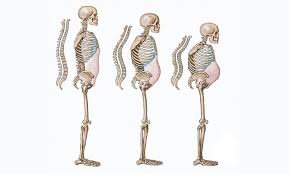
- Loss of Height: Caused by compression fractures in the vertebrae.
- Stooped Posture: Often referred to as Kyphosis or “Dowager’s hump,” resulting from the weakening of the spinal column.
- Chronic Back Pain: Usually signifies a collapsed or fractured vertebra.
What are the primary risk factors and current treatment strategies?
Risk Factors:
- Age and Gender: Post-menopausal women are at higher risk due to a sharp decline in estrogen, a hormone that protects bone mass.
- Nutritional Deficiencies: Chronic lack of Calcium and Vitamin D (essential for calcium absorption).
- Lifestyle: Sedentary behavior, smoking, and excessive alcohol consumption.
Management and Treatment:
- Lifestyle Modifications: Weight-bearing and resistance exercises are crucial as they stimulate bone-forming cells.
- Supplementation: Adequate intake of Calcium and Vitamin D3.
- Pharmacological Intervention: Drugs that slow down the activity of osteoclasts.
- Anabolic Agents: Newer drugs that actively stimulate osteoblasts to build bone.
- Hormone Replacement Therapy (HRT): Used in specific cases to counter post-menopausal bone loss.