Context
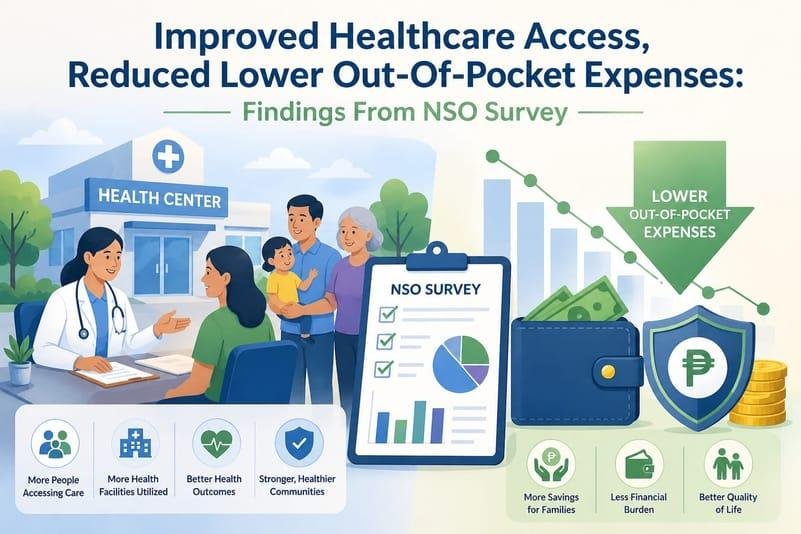
The National Statistical Office (NSO) in its 80th round survey on Household Social Consumption: Health (2025) highlights a mixed picture of India’s healthcare system. While health insurance coverage and access to healthcare have expanded significantly, financial hardship due to medical expenses continues to affect a large section of households. This reflects a gap between improved coverage and actual financial protection.
Key Findings of the Survey
- Expansion of Health Insurance Coverage
- Nearly half of Indian households are now covered under some form of health insurance.
- Rural: ~47%
- Urban: ~44%
- Growth is mainly driven by government-funded schemes such as:
- Ayushman Bharat – PMJAY
- State health insurance programmes
- ESIS and CGHS
- Indicates a strong shift towards publicly supported health assurance.
- Nearly half of Indian households are now covered under some form of health insurance.
- Improved Access to Healthcare
- Expansion of health infrastructure through Ayushman Arogya Mandirs.
- Better availability of free medicines and diagnostics in public facilities.
- Increased focus on early detection and management of non-communicable diseases like diabetes and hypertension.
- Institutional deliveries and basic healthcare access have improved compared to earlier surveys.
- Rising Out-of-Pocket Expenditure (OOPE)
- Despite insurance expansion, medical expenses borne by households remain high.
- Hospitalisation costs have increased significantly, especially in private hospitals.
- Even public hospitals involve indirect costs such as medicines, transport, and diagnostics.
- Financial burden continues to be a major cause of distress.
- Changing Pattern of Healthcare Utilisation
- No significant rise in hospitalisation rates.
- Decline in reliance on public hospitals for treatment and childbirth.
- Growing dependence on private healthcare providers, especially in urban areas.
- Insurance benefits are largely utilised in private hospitals.
- Equity Concerns
- Benefits of insurance schemes are unevenly distributed.
- Higher-income groups are more able to utilize insurance effectively.
- Poor households face barriers in accessing quality insured care.
- Public funds increasingly flow into the private healthcare sector through insurance reimbursements.
Challenges and Way Forward
| Challenges | Way Forward |
| 1. High out-of-pocket expenditure despite insurance coverage. | Strengthen public healthcare system to reduce dependency on private sector. |
| 2. Dominance of private hospitals leading to rising costs. | Regulate pricing and standardise treatment costs in private healthcare. |
| 3. Weak primary healthcare infrastructure in many regions. | Expand and adequately fund Ayushman Arogya Mandirs and primary care centres. |
| 4. Inequitable access to insurance benefits among income groups. | Improve targeting and awareness of government insurance schemes |
| 5. Indirect costs (medicine, diagnostics, transport) even in public hospitals. | Ensure free availability of essential drugs and diagnostic services. |
| 6. Fiscal burden on states due to insurance reimbursement models. | Move towards efficient, outcome-based health financing. |
| 7. Limited focus on preventive healthcare. | Strengthen preventive and promotive healthcare under National Health Mission. |
Conclusion
The NSO 80th round survey reflects that India’s health system is transitioning towards wider insurance coverage and improved access. However, persistent financial burden and rising dependence on private healthcare highlight structural weaknesses. A shift towards stronger public health infrastructure, effective regulation of private providers, and focus on preventive care is essential to achieve true Universal Health Coverage and reduce medical impoverishment.