Context
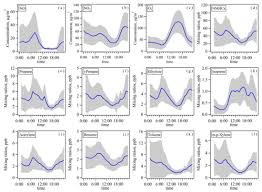
A study conducted by the Aryabhatta Research Institute of Observational Sciences (ARIES) monitored non-methane hydrocarbons (NMHCs) in Munsyari, Uttarakhand, between 2022 and 2023 to assess their sources, seasonal variations, and implications for regional air quality and atmospheric chemistry.
About Non-Methane Hydrocarbons (NMHCs)
- Non-Methane Hydrocarbons (NMHCs) are trace atmospheric hydrocarbons, excluding methane, and include compounds such as ethane, ethene, propane, propene, and isoprene.
- They are emitted from both natural and anthropogenic sources, including vegetation, fuel combustion, vehicular emissions, industrial activities, and biomass burning.
- Terrestrial ecosystems constitute the primary source of NMHCs, while marine environments contribute to a lesser extent. Their emissions vary according to climatic and environmental conditions.
- NMHCs are highly reactive volatile organic compounds (VOCs) that participate in atmospheric chemical processes and influence the concentration of hydroxyl radicals (OH), which play a crucial role in the atmosphere’s self-cleansing capacity.
- They act as important precursors for the formation of tropospheric ozone and secondary organic aerosols (SOA), thereby influencing air quality, atmospheric composition, and climate-related processes.
- Elevated NMHC concentrations can contribute to air pollution by increasing ozone and aerosol levels, with potential adverse effects on human health, ecosystems, and visibility.
- Monitoring NMHCs is important for identifying pollution sources, understanding regional atmospheric dynamics, and supporting effective air-quality management and pollution-control strategies.