Context
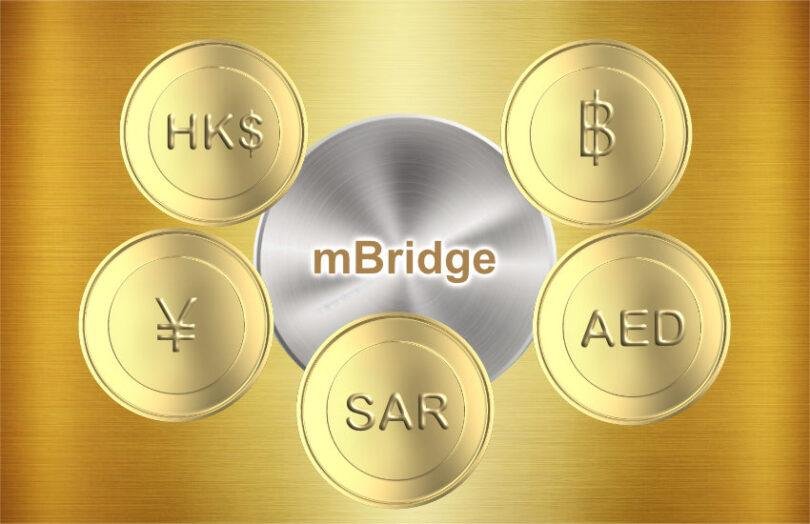
Saudi Arabia completed its planned mBridge proof-of-concept (PoC) in May 2025 and subsequently exited the project, according to Saudi Central Bank (SAMA).
About Project mBridge
- Purpose: A multi-CBDC platform for faster and more direct cross-border payments and settlement using Central Bank Digital Currencies (CBDCs).
- Founding Partners (2021): BIS Innovation Hub, Bank of Thailand, Central Bank of the UAE, People’s Bank of China and Hong Kong Monetary Authority (HKMA); SAMA became a full participant in 2024.
- Technology: Uses Distributed Ledger Technology (DLT) through the mBridge Ledger, enabling real-time peer-to-peer payments and foreign-exchange transactions.
Need for mBridge
- Lower Costs: Reduces reliance on multiple intermediaries, helping lower cross-border transaction costs.
- Faster Settlement: Enables quicker payment and settlement through a shared digital platform.
- Greater Efficiency: Connects different payment systems and CBDCs on common infrastructure, simplifying cross-border transactions.
- Improved Access: Can support jurisdictions facing reduced access to correspondent banking.
- Reduced Dollar Dependence: Enables transactions in participating CBDCs, potentially reducing the need for the US dollar as an intermediary currency.
How Does mBridge Work?
- Shared Network: Uses a DLT-based network where transactions are recorded and verified on common infrastructure.
- Validation: Participating central banks operate validating nodes to verify transactions and maintain the shared ledger.
- CBDC Transactions: Commercial banks can conduct eligible cross-border transactions using participating CBDCs.
- Direct Settlement: Enables peer-to-peer settlement, reducing the need for multiple intermediaries.
- Technical Capability: The MVP supports real-value transactions and is compatible with the Ethereum Virtual Machine (EVM) for testing applications and interoperability.
Significance
- CBDC Interoperability: Demonstrates the feasibility of connecting different CBDCs for cross-border transactions.
- Global Payment Architecture: Contributes to the development of direct settlement and alternative cross-border payment infrastructure.
Additional Information: Central Bank Digital Currency (CBDC)
1. Definition: A CBDC is the digital form of a country’s fiat currency, issued and regulated by its central bank and representing a direct liability of the central bank.
2. CBDC vs Cryptocurrency: Unlike decentralised cryptocurrencies, CBDCs are centrally controlled, sovereign-backed and regulated.
3. Uses: CBDCs can support domestic payments, cross-border transactions and financial inclusion, while providing a digital alternative to physical cash.
4. India: India’s CBDC, the Digital Rupee (e₹), is issued by the RBI and is exchangeable 1:1 with the Indian rupee.
FAQs
Q1. What is Project mBridge?
Ans: It is a multi-CBDC platform that explores faster and more direct cross-border payments using Distributed Ledger Technology (DLT).
Q2. Who were the founding participants of mBridge?
Ans: The BIS Innovation Hub, Bank of Thailand, Central Bank of the UAE, People’s Bank of China and Hong Kong Monetary Authority.
Q3. What technology does mBridge use?
Ans: It uses Distributed Ledger Technology (DLT) through the mBridge Ledger, a blockchain-based infrastructure for cross-border settlement.
Q4. What is the role of validating nodes in mBridge?
Ans: Validating nodes operated by participating institutions help verify transactions and maintain the shared ledger.