Context
The proposal to rename Barkatullah University, Bhopal, has renewed attention on the legacy of Maulana Barkatullah, a prominent revolutionary who played an important role in India’s struggle against British colonial rule.
Early Life
- Maulana Barkatullah Bhopali was born on 7 July 1854 in Bhopal.
- A scholar, journalist, and revolutionary nationalist, he spent much of his life abroad mobilising support for India’s independence.
- His activities took him across Asia, Europe, and North America, where he built networks against British colonialism.
Role in the International Freedom Movement
- Barkatullah was among the leading revolutionaries who sought to internationalise India’s freedom struggle.
- Through his writings, speeches, and political engagements, he mobilised support for Indian independence across several countries.
- He maintained close links with nationalist and revolutionary groups working against British rule.
Ideological Contributions
- He strongly advocated Hindu-Muslim unity as an essential condition for India’s freedom.
- He opposed the British policy of divide and rule and promoted the idea of composite nationalism.
- His writings highlighted the economic exploitation and social hardships experienced by Indians under colonial rule.
Provisional Government of India in Kabul
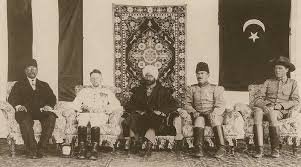
- In 1915, during the First World War, he helped establish the Provisional Government of India in Kabul, Afghanistan.
- It is regarded as India’s first government-in-exile.
- Raja Mahendra Pratap served as President, while Maulana Barkatullah became Prime Minister.
- The government sought international support to challenge British rule and advance the cause of Indian independence.
Legacy
- Barkatullah continued his anti-colonial activities until his death in 1927 in California, United States.
- Since most of his work was carried out abroad, his contributions remained relatively less recognised in mainstream nationalist narratives.
- In 1988, Bhopal University was renamed Barkatullah University in recognition of his role in the freedom movement.
- He is remembered for internationalising India’s freedom movement and championing the idea of composite nationalism.
Significance in India’s Freedom Struggle
- Played a key role in the revolutionary phase of India’s freedom movement.
- Associated with the establishment of India’s first government-in-exile.
- Promoted composite nationalism and interfaith unity.
- Helped generate international support for India’s struggle against colonial rule.