Context
- Researchers have reported the first molecular characterization of Marfan syndrome in domestic cats, involving two affected feline siblings.
- The cats showed characteristic features such as unusually long limbs, displacement of the eye lens and enlargement of the aortic root.
- Genetic analysis linked the condition to the FBN1 gene, the same gene primarily associated with Marfan syndrome in humans, making the finding relevant for comparative genetics.
What Is Marfan Syndrome?
- Marfan syndrome is an inherited genetic disorder affecting connective tissue—the tissue that supports and provides strength and flexibility to different parts of the body.
- It primarily affects the skeletal, cardiovascular and ocular systems.
- In humans, it is usually an autosomal dominant disorder, meaning one disease-causing copy of the gene can be sufficient to cause the condition.
- Its severity varies widely; even members of the same family may show different symptoms and complications.
What Causes Marfan Syndrome?
- Marfan syndrome is mainly caused by pathogenic variants in the FBN1 gene, which provides instructions for producing fibrillin-1.
- Fibrillin-1 is an important structural protein that helps maintain the strength and elasticity of connective tissues.
- Since connective tissue occurs throughout the body, a single genetic alteration can affect the bones, eyes, heart and blood vessels
Major Features
Common manifestations include:
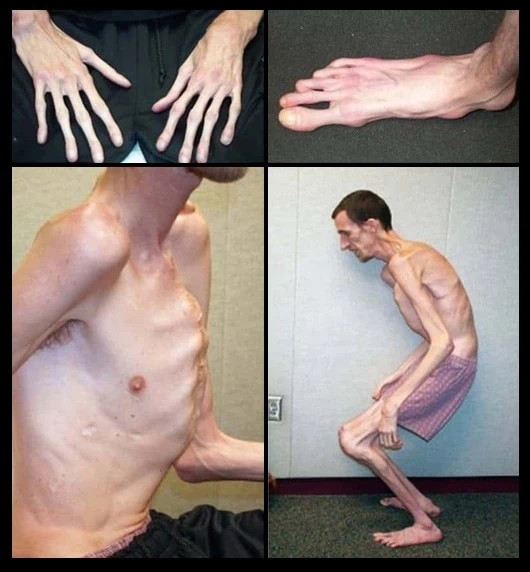
- Skeletal: Tall, thin body; unusually long arms, legs and fingers; curved spine and chest-wall abnormalities.
- Eyes: Severe nearsightedness and displacement of the eye lens.
- Cardiovascular: Enlargement or weakening of the aorta, along with possible heart-valve abnormalities.
The most serious complication is progressive weakening of the aortic wall, which can result in life-threatening aortic dissection or rupture.
What Did the Cat Study Reveal?
- The affected cats carried two altered copies of FBN1, unlike typical human Marfan syndrome where one pathogenic copy can produce disease.
- The genetic variant disrupted normal RNA splicing, an important step in processing genetic instructions before protein production.
- However, some normal FBN1 transcripts were still produced, suggesting partial preservation of gene function.
The study therefore provides a useful natural model for examining how different FBN1 variants influence the severity and expression of connective-tissue disorders.
Why Is the Discovery Significant?
- Comparative genetics: Similar FBN1-related disease across species improves understanding of fibrillin-1 and connective-tissue biology.
- Genotype–phenotype link: It shows how the functional effect of a genetic variant can influence the severity of disease.
- Veterinary medicine: Molecular identification may improve recognition and future genetic diagnosis of similar cases in cats.
Treatment and Management
There is currently no cure for Marfan syndrome. Management therefore focuses on preventing serious complications.
- Regular monitoring of the heart and aorta helps detect dangerous changes early.
- Medicines may be used to reduce blood pressure and stress on the aortic wall.
- Preventive aortic surgery may be required when enlargement reaches a high-risk stage.
FAQs
Q1. Which gene is mainly associated with Marfan syndrome?
The FBN1 gene, which provides instructions for producing fibrillin-1.
Q2. What type of genetic disorder is Marfan syndrome in humans?
It is usually an autosomal dominant disorder.
Q3. Which body systems are mainly affected?
The skeletal, cardiovascular and ocular systems.
Q4. What is the most serious complication of Marfan syndrome?
Weakening of the aorta, which can lead to aortic dissection or rupture.
Q5. Why is the recent cat study important?
It provides the first molecular evidence of feline Marfan syndrome and offers a new model for studying FBN1-related disease.