Important questions for UPSC Pre/ Mains/ Interview:
|
Context
Recent developments—including the killing of top CPI (Maoist) leader Nambala Keshava Rao (2025) and the surrender of his successor Thippiri Tirupati (2026)—have significantly weakened India’s Maoist insurgency. While the government claims the movement is nearing its end, questions remain about its residual capacity and long-term sustainability.
Q1. What is the current status of the Maoist insurgency?
- Leadership collapse:
- Most top leaders killed, arrested, or surrendered
- Organisational decline:
- Central Committee reduced from ~40 to ~2 members
- Security operations:
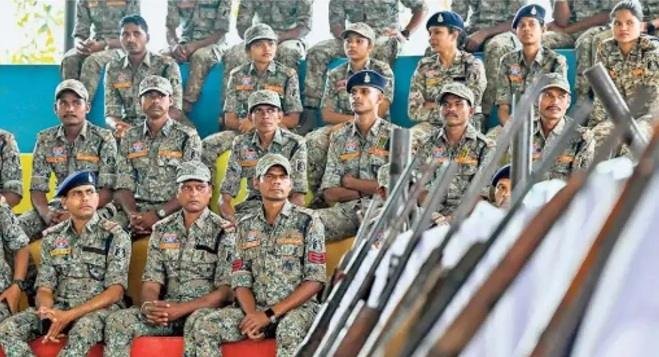
- Thousands of surrenders (~3,800), arrests (~2,200), neutralisations (~600)
- Conclusion:
- Structurally weakened and near leaderless
Q2. How has the geographical spread changed?
- Earlier: ~180 districts (2013)
- Present:
- Limited to Bijapur and Sukma (Chhattisgarh)
- Outcome:
- Collapse of “Red Corridor”
- Implication:
- End of large-scale territorial dominance
Q3. What is the historical evolution of the Maoist movement?
- Origin:
- 1967 Naxalbari uprising
- Led by Charu Majumdar
- Revival:
- People’s War Group by Kondapalli Seetharamaiah
- Consolidation:
- Formation of CPI (Maoist) in 2004 under Muppala Lakshmana Rao
- Peak: Declared India’s “biggest internal security threat”
Q4. What factors led to the decline of the insurgency?
- Security Response
- Special forces (e.g., Greyhounds)
- Operations like Operation Kagar
- Organisational Weakness
- Leadership losses
- Internal factionalism
- Ideological Decline
- Reduced appeal of class struggle narrative
- Expansion of welfare schemes
- Social Factors
- Tribal vs non-tribal leadership tensions
- Declining recruitment
Q5. What role did state policy and governance play?
- Expansion of:
- Welfare schemes in tribal areas
- Improved:
- Infrastructure and connectivity
- Strengthened:
- Democratic grievance mechanisms
- Result:
- Reduced support for armed struggle
Q6. Can the Maoist movement revive?
- Constraints
- Weak leadership and structure
- Loss of territorial control
- Reduced recruitment
- Risks
- Residual underground networks
- Tactical surrenders for regrouping
- Key factor
- Success of Rehabilitation and reintegration policies
Q7. What are the challenges and way forward?
- Challenges
- Reintegration of surrendered cadres
- Pending criminal cases
- Local grievances in tribal areas
- Way Forward
- Strengthen Rehabilitation programmes
- Ensure Justice + reconciliation balance
- Continue Development + security approach
- Improve Governance in affected regions
Conclusion
India’s Maoist insurgency has entered a phase of structural collapse, with sharply reduced leadership and territorial presence. However, its complete end depends on effective rehabilitation, sustained governance, and addressing underlying socio-economic issues, ensuring that residual threats do not re-emerge.