Context
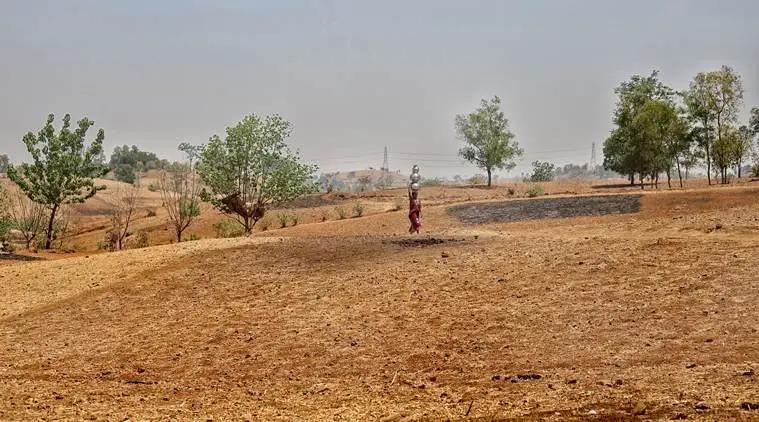
Maharashtra is facing renewed drought concerns in 2026 after receiving 19% below-normal monsoon rainfall during June–September, with 21 districts recording rainfall deficits. The state has declared 265 of 358 tehsils drought-affected and announced relief measures, highlighting its continued vulnerability to rainfall variability despite extensive irrigation infrastructure.
About Maharashtra Drought
- 1972 Drought: Repeated monsoon failure caused severe agricultural distress, unemployment, food insecurity and dependence on government relief.
- Employment Guarantee: The crisis contributed to Maharashtra’s Employment Guarantee Scheme, later formalised through the Maharashtra Employment Guarantee Act, 1977.
- Types of Drought:
-
- Meteorological drought: Rainfall is significantly below the normal level.
- Agricultural drought: Soil moisture is insufficient for normal crop growth.
- Hydrological drought: Water availability in rivers, reservoirs and groundwater aquifers falls below normal.
Why Maharashtra Remains Drought-Prone
- Rain-shadow regions: Marathwada, Vidarbha and parts of western Maharashtra receive low and variable rainfall, especially on the leeward side of the Western Ghats.
- Erratic rainfall: Intense rainfall over short periods causes runoff and limited groundwater recharge, followed by longer dry spells.
- Rainfall dependence: A significant share of cultivated land remains rainfed, making farm output sensitive to monsoon failure.
- Climate change: Rising temperatures, prolonged dry spells and higher evapotranspiration increase water stress.
Irrigation Paradox
- Uneven irrigation: Despite extensive dams, reservoirs and canals, irrigation benefits are not evenly distributed across regions.
- Groundwater stress: Continued dependence on groundwater increases vulnerability when recharge is inadequate.
- Efficiency losses: Seepage and evaporation reduce the effective delivery of canal water.
- Cropping mismatch: Water-intensive crops such as sugarcane place additional pressure on water resources in semi-arid areas.
- Key requirement: Drought resilience requires better water-use efficiency and equitable distribution, rather than relying only on expanding irrigation infrastructure.
Impacts of Drought
- Agriculture & Livestock: Crop losses, lower farm income, fodder and water shortages reduce livestock productivity.
- Rural Employment: Reduced farm activity lowers employment opportunities and rural demand.
- Indebtedness: Income losses increase dependence on credit, worsening rural debt and livelihood insecurity.
- Migration: Prolonged livelihood stress can trigger distress migration to urban areas.
Drought and Fiscal Stress
- Rising fiscal burden: Drought relief adds pressure to state finances, especially when funded through additional borrowing.
- Reduced fiscal space: Higher relief spending can limit funds for health, education, irrigation and climate-resilience infrastructure.
- Recurrent vulnerability: Repeated emergency spending can create a cycle of drought → fiscal stress → lower resilience → greater future vulnerability.
- Key requirement: Shift from ad-hoc relief to predictable drought-resilience financing and advance preparedness.
Governance Challenges
- Drought declaration: Delays or inconsistencies in declaring drought can delay relief and compensation for affected communities.
- Political contestation: Drought status may become politically contested, creating pressure for inclusion of less-affected regions and uneven relief allocation.
- Local-level assessment: Broad administrative assessments may fail to capture regional differences in rainfall, soil moisture, groundwater and crop stress.
- Data and coordination gaps: Fragmented data across weather, water resources and agriculture agencies can hinder timely and accurate drought assessment. Top of Form
Way Forward
- Shift from relief to resilience: Strengthen drought preparedness through climate-resilient cropping, watershed development and local water conservation.
- Rationalise cropping patterns: Promote less water-intensive crops suited to local agro-climatic conditions and expand drip and sprinkler irrigation.
- Improve water security: Strengthen check dams, farm ponds, rainwater harvesting and soil-moisture conservation, along with aquifer-based groundwater management.
- Use technology for early action: Integrate satellite data, weather forecasts, soil moisture and crop information for early drought detection and timely advisories.
- Ensure scientific drought assessment: Use rainfall, groundwater, reservoir, crop-stress and remote-sensing indicators for transparent, local-level drought declaration.
- Strengthen drought financing: Develop predictable contingency funds to reduce dependence on emergency borrowing and protect developmental spending.
FAQs
Q1. What are the three major types of drought?
Ans. Meteorological drought is rainfall deficiency, agricultural drought is inadequate soil moisture for crops, and hydrological drought is insufficient surface and groundwater.
Q2. What is the irrigation paradox in Maharashtra?
Ans. Despite extensive dams and irrigation infrastructure, water availability remains uneven and many areas continue to depend on rainfall and groundwater.
Q3. How does drought affect the rural economy?
Ans. It reduces crop yields and farm income, increases fodder shortages and indebtedness, reduces rural employment and may trigger distress migration.