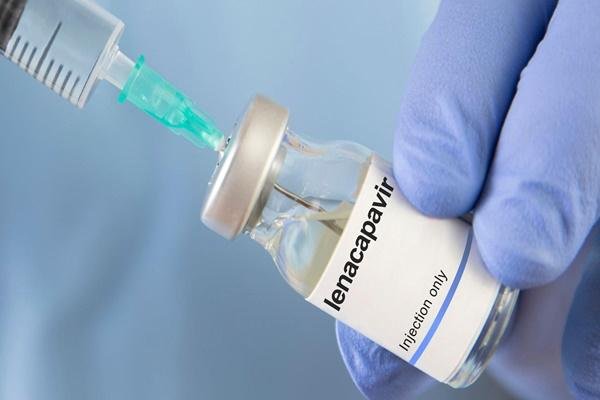
- Recently, Zimbabwe began rolling out lenacapavir, a new long-acting injectable medicine for HIV prevention, developed by Gilead Sciences.
- It will be used to protect HIV-negative people who are at risk by stopping the virus before it can establish infection.
- It is the first pre-exposure prophylaxis (PrEP) medicine that needs to be taken only once every six months, instead of daily pills, making prevention easier and more accessible.
- Effectiveness: Two major clinical studies have shown that lenacapavir helps prevent up to 99.9% of HIV transmission (extremely high protection).
- How Does Lenacapavir Work?
- HIV has a protein shell called a capsid. This capsid protects the virus and helps it multiply inside human cells. Lenacapavir belongs to a class of drugs called capsid inhibitors. It means that it blocks this capsid.
- As a result, the virus cannot replicate properly. HIV fails to establish infection and the person remains protected.
- So, instead of attacking the virus after infection, lenacapavir prevents HIV from gaining a foothold in the body.
FAQs
Q1. What is Lenacapavir?
It is a new long-acting injectable medicine developed by Gilead Sciences, designed for HIV prevention in HIV-negative individuals at risk.
Q2. How often is Lenacapavir taken?
Unlike daily oral PrEP pills, lenacapavir is administered once every six months, making prevention easier and more accessible.
Q3. How effective is Lenacapavir?
Clinical studies show it prevents up to 99.9% of HIV transmission, offering extremely high protection.
Q4. How does Lenacapavir work?
HIV has a protective protein shell called a capsid. Lenacapavir is a capsid inhibitor, meaning it blocks this shell, preventing the virus from replicating and establishing infection.
Q5. Why is Lenacapavir significant?
It represents a major breakthrough in HIV prevention, shifting from post-infection treatment to pre-exposure protection, and reducing barriers to adherence compared to daily pills.