Why in the News?
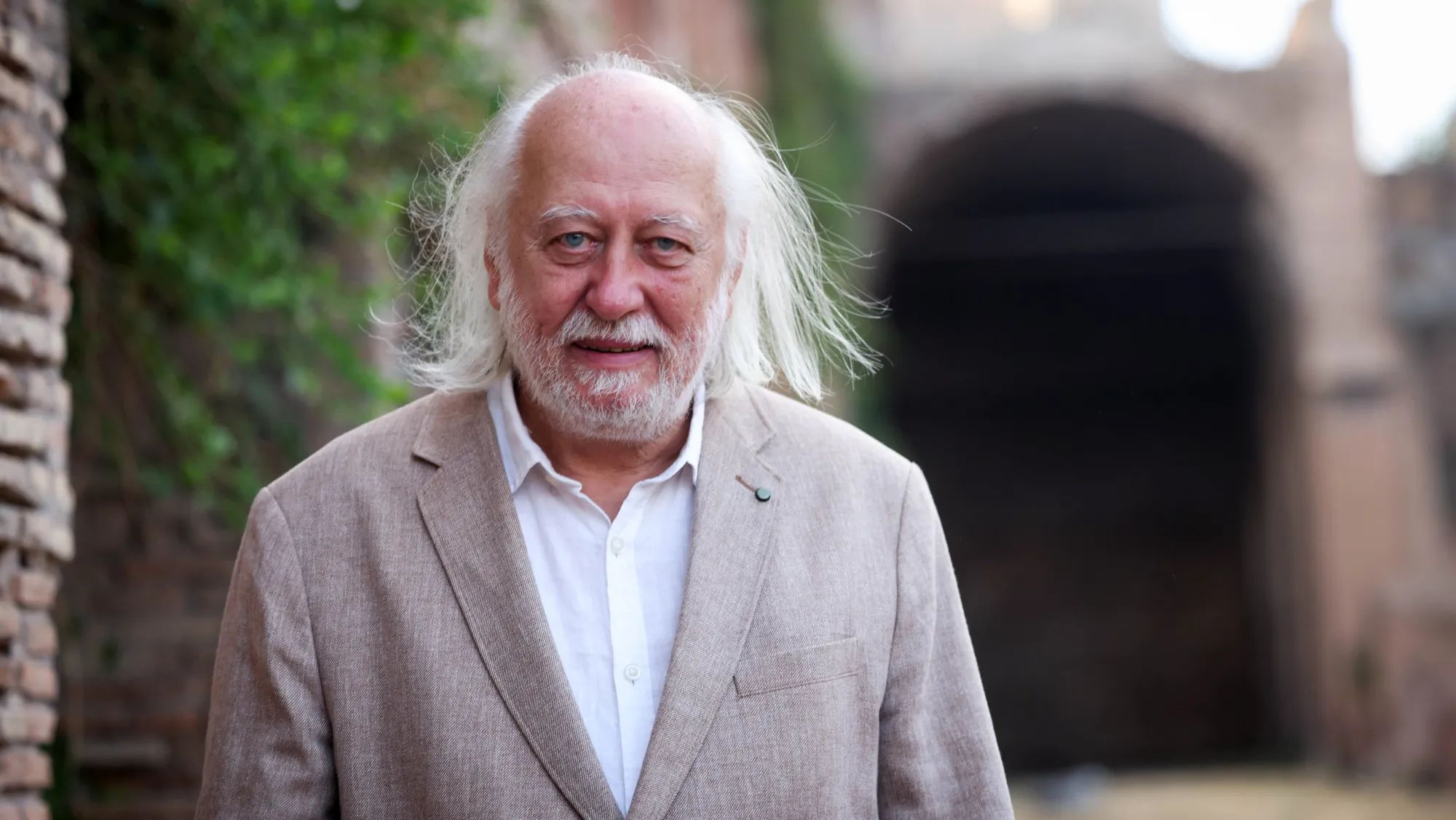
- Hungarian author László Krasznahorkai has been awarded the 2025 Nobel Prize in Literature for his “singular prose that, in the midst of apocalyptic terror, reaffirms the power of art.”
- The recognition honours his decades-long contribution to philosophical and existential literature, bridging European and Asian cultural thought.
- This makes him the second Hungarian Nobel laureate in Literature after Imre Kertész (2002), highlighting Hungary’s continued global literary significance.
Early Life and Historical Context
- Krasznahorkai was born in 1954 in Gyula, Hungary, near the Romanian border, his early life was shaped by the oppressive atmosphere of socialist Hungary.
- His Jewish and rural upbringing deepened his sensitivity to themes of history, repression, and human endurance.
- He studied law and literature in Budapest, where he began exploring existential themes that would define his writing.
- Debut novel: Sátántangó (1985) -It is a dark, complex narrative set on a dying collective farm.
- The book’s philosophical depth and unique structure established him as a distinct voice in postmodern literature.
- Sátántangó was later adapted by filmmaker Béla Tarr into a seven-hour film, turning both author and director into cult figures in European art circles.
- Key works include:
- The Melancholy of Resistance (1989): It portrays social breakdown through the arrival of a mysterious circus.
- War and War (1999): It follows a man’s obsession to preserve a mysterious manuscript amid chaos.
What is the central theme of Krasznahorkai’s writings?
- Three key terms: Apocalypse, Resistance, and Human dignity; form the core themes of László Krasznahorkai’s writings:
- Apocalypse
- He uses the idea of the apocalypse not as the literal end of the world (as described in the Bible), but as a symbol of moral and social collapse (a breakdown of order, values, and meaning).
- His novels often depict societies in decay: towns falling apart, people losing faith, and institutions turning corrupt. This shows how destruction begins within human minds.
- Apocalypse
- Through this, he reflects on the anxieties of modern life, where chaos, violence, and spiritual emptiness threaten human existence.
- Resistance
- In the face of despair and ruin, his characters often show quiet acts of resistance through art, memory, or moral courage.
- This resistance is not political rebellion but a spiritual defiance i.e., staying strong from within, not giving up hope even when everything seems to be falling apart.
- For Krasznahorkai, resistance means preserving beauty, truth, and meaning even when the world offers none.
- Human Dignity
- Amidst destruction, Krasznahorkai’s writing insists on the worth of human beings, their ability to think, feel, and create.
- He believes that art and language protect dignity, allowing humanity to rise above fear and corruption.
- Human dignity, in his view, means facing pain with courage and kindness, finding grace even in decay.
Global Influence and Cross-Cultural Engagement
- While rooted in Central European tradition (Kafka, Musil, Beckett), Krasznahorkai later turned to Asian philosophy and aesthetics.
- Works like Seiobo There Below (2008) and Destruction and Sorrow Beneath the Heavens (2004) reflect his engagement with Japanese and Chinese spiritual traditions.
- Through this cross-cultural dialogue, he evolved a philosophy of endurance and artistic devotion, viewing art as a sacred act against despair.
Literary Style and Legacy
- Krasznahorkai is Known for his long, flowing sentences and dense prose, often spanning multiple pages. This is a deliberate attempt to mimic the continuity and chaos of life.
- Reading his work demands patience, but rewards the reader with emotional and intellectual immersion.
- His literary style has been described as “beauty in language, fun in hell”, revealing his belief that art must confront darkness to find light.
- The Nobel Prize recognises this faith in language and art as forms of resistance in a world overwhelmed by speed, noise, and fragmentation.
Implications
- Renewed attention to world literature: Encourages global readers to engage with non-mainstream, philosophical works.
- Cultural diplomacy: Highlights Hungary’s role in European intellectual tradition.
- Revival of slow literature: Counters today’s fast, digital reading habits with deep, reflective engagement.
- Philosophical relevance: Reinforces art’s role in confronting existential crises like war, climate anxiety, and alienation.
- Inspiration for Indian literature: Promotes introspective storytelling that reflects society, history, and human experiences.
Challenges and Way Forward
| Challenges | Way Forward |
| 1. Limited readership due to complex prose style. | Promote translated editions and simplified commentaries for wider access. |
| 2. Declining global attention span in digital media culture. | Encourage academic and institutional engagement with literary arts. |
| 3. Underrepresentation of non-English authors in global publishing. | Support translation funding and global literary networks. |
| 4. Difficulty in interpreting dense existential themes. | Incorporate literature-based discussions in humanities curricula. |
| 5. Risk of elitism in modern literature appreciation. | Foster inclusive literary outreach and public discussions. |
Conclusion
László Krasznahorkai’s Nobel Prize is a recognition of literature as moral endurance. In an age dominated by speed, spectacle, and distraction, his work reminds humanity of the need to slow down, reflect, and rediscover meaning through art. His writing reaffirms that even amidst ruin, the human spirit endures through creation.
| EnsureIAS Mains Question
Q. In the context of the 2025 Nobel Prize in Literature awarded to László Krasznahorkai, discuss how literature can serve as a form of resistance and moral witness in times of social and political collapse. (250 Words) |