Context
The Defence Minister recently participated in the SCO Defence Ministers’ Meeting held in Bishkek, Kyrgyzstan, where he addressed the gathering.
About Kyrgyzstan
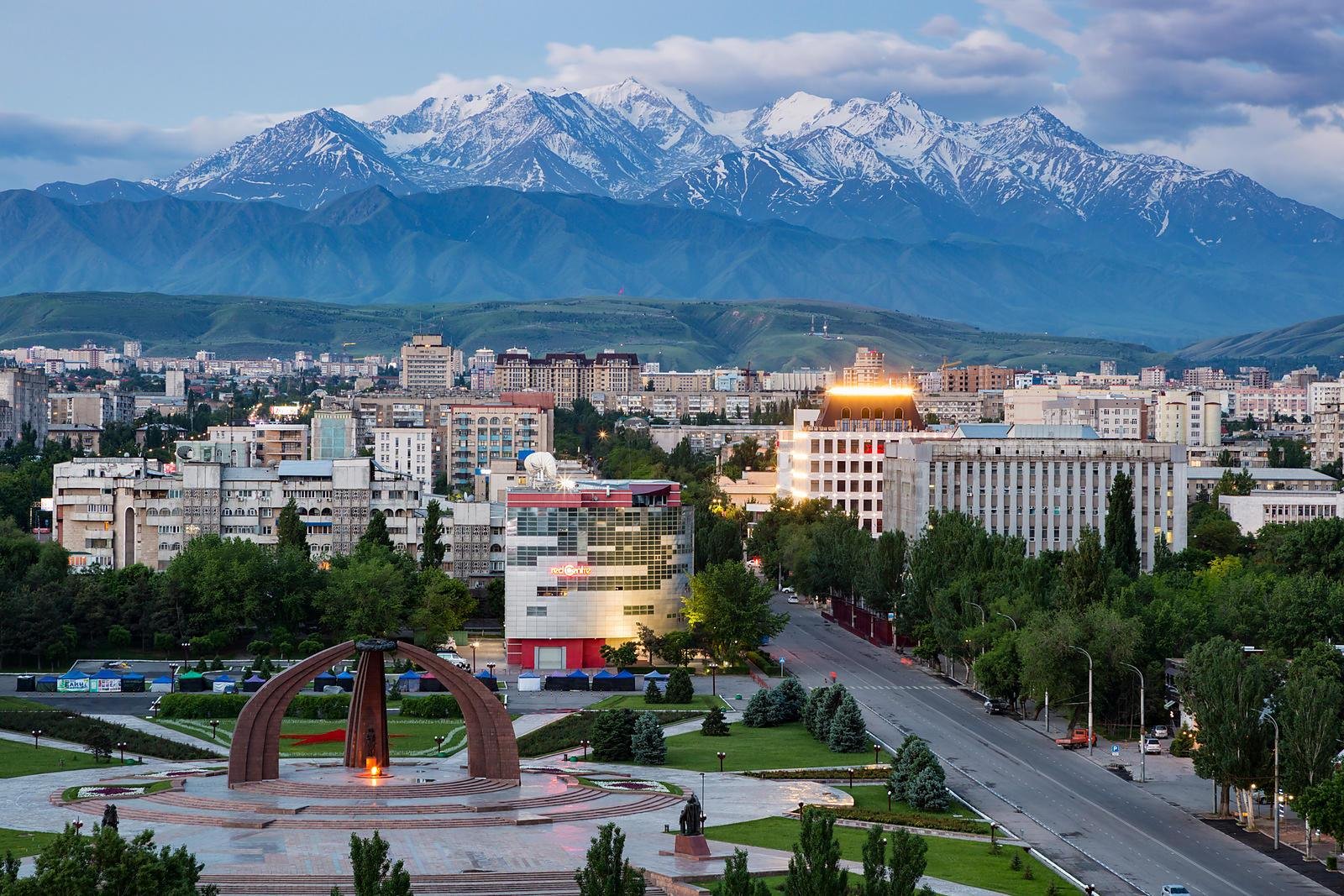
- The capital of the country is Bishkek, which also serves as an important administrative and political centre.
- Often compared to Switzerland because of its scenic mountains and landscapes, the country is sometimes called the “Switzerland of Central Asia.”
- It shares its international borders with four neighbouring countries:
- China to the east
- Kazakhstan to the north
- Uzbekistan to the west
- Tajikistan to the south
- Located in Central Asia, it is a completely landlocked nation surrounded by high mountain ranges.
Main Physical and Geographic Characteristics of Kyrgyzstan
- Kyrgyzstan has rich mineral and energy resources, including coal, oil, natural gas, uranium, as well as valuable deposits of gold and rare earth elements.
- The country is home to some important water bodies, such as major river systems like the Syr Darya, Naryn, and Chu, which play a key role in the region’s ecology and agriculture.
- One of its most famous natural landmarks is Lake Issyk-Kul, a large saline lake and among the biggest of its kind globally.
- The landscape is dominated by high mountains, with Victory Peak being the tallest point in the country, rising to 7,439 metres.
- Weather conditions vary widely due to altitude differences:
- Lowland areas generally experience warm, sunny summers
- Higher regions face very cold winters, often with freezing temperatures
About SCO
- The organisation was formed in 2001 in Shanghai, China, as a regional cooperation platform.
- Its founding charter was adopted in 2002 and came into force on 19 September 2003.
- Original members included:
- Russia
- China
- Kazakhstan
- Kyrgyzstan
- Tajikistan
- Uzbekistan
- Expansion of membership over time:
- India and Pakistan joined in 2017
- Iran became a member in 2023
- Belarus became a in 2024
- Core objectives of the group include:
- Ensuring peace and stability across the region
- Combating threats such as terrorism, separatism, and extremism
- Promoting cooperation in political, economic, and cultural areas
- Key institutional structure:
- The Council of Heads of State acts as the main decision-making body
- The Secretariat is based in Beijing
- The Regional Anti-Terrorist Structure operates from Tashkent
- The organisation uses Russian and Chinese as its official working languages.
- Its central headquarters is located in Beijing, China.
- A notable development for India: Varanasi was selected as the first SCO Tourism and Cultural Capital during the 2022 Samarkand Summit.