Important Questions for UPSC Prelims, Mains and Interview
|
Context
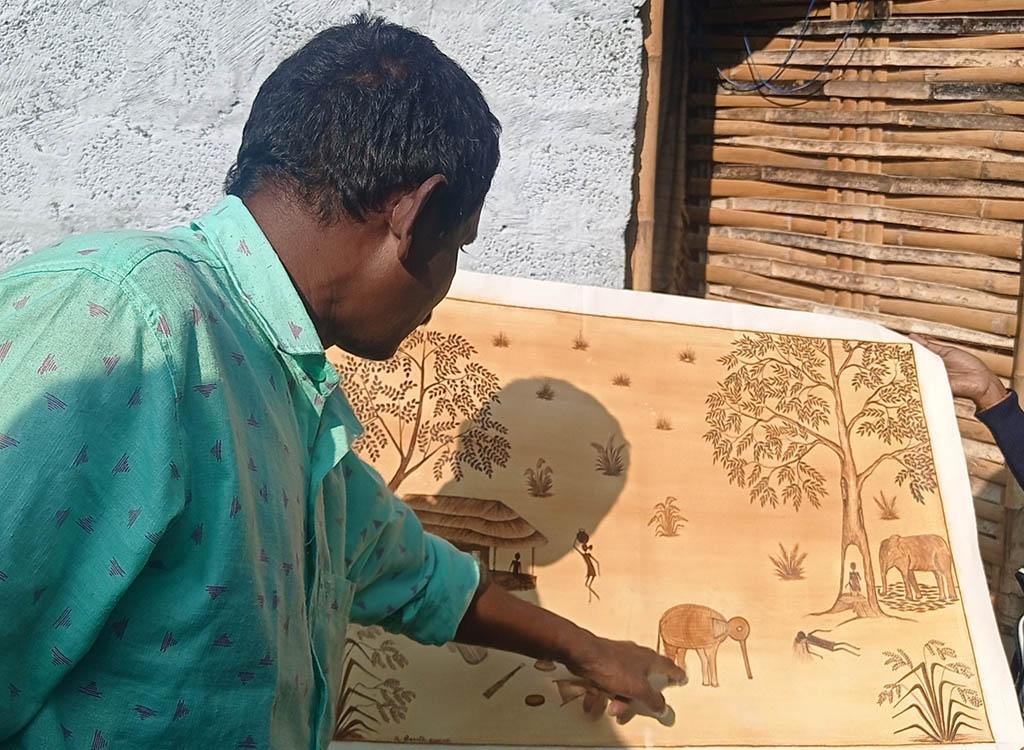
Kurumba painting, an ancient tribal art form of the Nilgiri region, is reportedly facing the threat of extinction due to declining practitioners and changing socio-economic conditions.
Q1. What is Kurumba painting, and what historical and cultural factors define this ancient tribal art tradition of South India?
- Kurumba painting is a prehistoric tribal art tradition believed to be over 3000 years old.
- It originated among the Kurumba tribal community living in the Nilgiri hills.
- Historically, the paintings were created on rock surfaces and cave walls in forested hill regions.
- The art developed as part of the tribe’s cultural expression and storytelling tradition.
- It represents a visual record of community rituals, ecological knowledge, and spiritual beliefs.
- Over time, the art expanded to include paintings on walls, cloth, and handmade paper.
Q2. Who are the Kurumba tribe, and how is their artistic tradition connected with the ecological and cultural landscape of the Nilgiri hills?
- The Kurumba tribe is an indigenous community inhabiting the Nilgiri hills of Tamil Nadu, Kerala, and Karnataka.
- Their culture is deeply linked to forest ecosystems and traditional ecological knowledge.
- Artistic practices evolved as a way to document everyday experiences and tribal traditions.
- Many designs reflect the natural environment surrounding their settlements.
- Community gatherings, rituals, and festivals often provide inspiration for artistic themes.
- The art form therefore serves as a cultural archive preserving tribal identity and heritage.
- It also reflects the tribe’s spiritual connection with forests, animals, and nature.
Q3. What natural materials and traditional tools are used in the creation of Kurumba paintings, and how do they reflect indigenous knowledge systems?
- Kurumba paintings use natural pigments obtained from forest resources.
- Yellow-brown and black pigments are derived from resin of the Vengai tree.
- Green pigments are prepared from crushed leaves collected from forest vegetation.
- Red and white colours are obtained from natural soil and mineral deposits.
- Base surface traditionally includes cow dung-coated walls, which improve pigment adhesion.
- Artists apply colours using simple tools such as fine twigs, bamboo sticks & natural fibre brushes.
- These materials demonstrate sustainable artistic practices rooted in local ecological knowledge.
Q4. What are the distinctive artistic features, motifs, and design patterns found in Kurumba painting traditions?
- Kurumba paintings use a minimalist and symbolic visual style.
- Designs often consist of linear drawings and geometric forms.
- Artists frequently incorporate dots, lines, and simple shapes to create patterns.
- Common motifs include animals, birds, huts and village scenes.
- The artwork typically features earthy natural colours such as green, red, white, and black.
- Visual composition emphasises simplicity, balance, and rhythmic patterns.
- These stylistic features reflect traditional storytelling and symbolic representation.
Q5. What themes and cultural narratives are commonly depicted in Kurumba tribal art, and how do they represent community life and spiritual beliefs?
- Many paintings depict daily activities of tribal communities.
- Scenes often portray hunting, gathering, and agricultural practices.
- Rituals and ceremonial events are frequently illustrated in the artwork.
- Festivals and cultural celebrations appear as central narrative themes.
- Spiritual symbols reflect the tribe’s belief in nature and ancestral traditions.
- The artwork also portrays relationships between humans, animals, and forests.
Q6. What are the major reasons behind the decline and threat of extinction of Kurumba painting in contemporary times?
- Urbanisation and modernisation have reduced traditional tribal lifestyles. Younger generations often shift toward modern employment opportunities instead of traditional arts.
- Limited market access has reduced economic incentives for practicing the art.
- Lack of institutional support affects documentation and promotion of tribal art forms.
- Industrial paints and commercial designs are replacing traditional natural pigment techniques.
- Migration & changing livelihoods have weakened community transmission of artistic knowledge.
- As a result, the number of practicing Kurumba artists has declined significantly.
Q7. What steps can be taken to preserve, promote, and economically sustain Kurumba painting as part of India’s tribal cultural heritage?
- Government agencies can promote the art through cultural preservation programmes.
- Recognition under Geographical Indication (GI) or heritage craft status can enhance protection.
- Training workshops can encourage young tribal artists to learn traditional techniques.
- Integration with tourism initiatives may create new economic opportunities for artisans.
- Digital platforms and exhibitions can help expand national and international visibility.
- Collaboration with designers may help adapt art for modern products such as textiles & décor.
- Inclusion in school and museum programmes can ensure long-term cultural preservation and awareness.
Conclusion
Kurumba painting represents an important element of India’s tribal artistic heritage and ecological cultural traditions. Preserving this art form requires sustained efforts in documentation, cultural promotion, and economic support for tribal artists. Protecting such indigenous art traditions is essential for safeguarding India’s diverse cultural and anthropological legacy.