Important questions for UPSC Pre/ Mains/ Interview:
|
Context
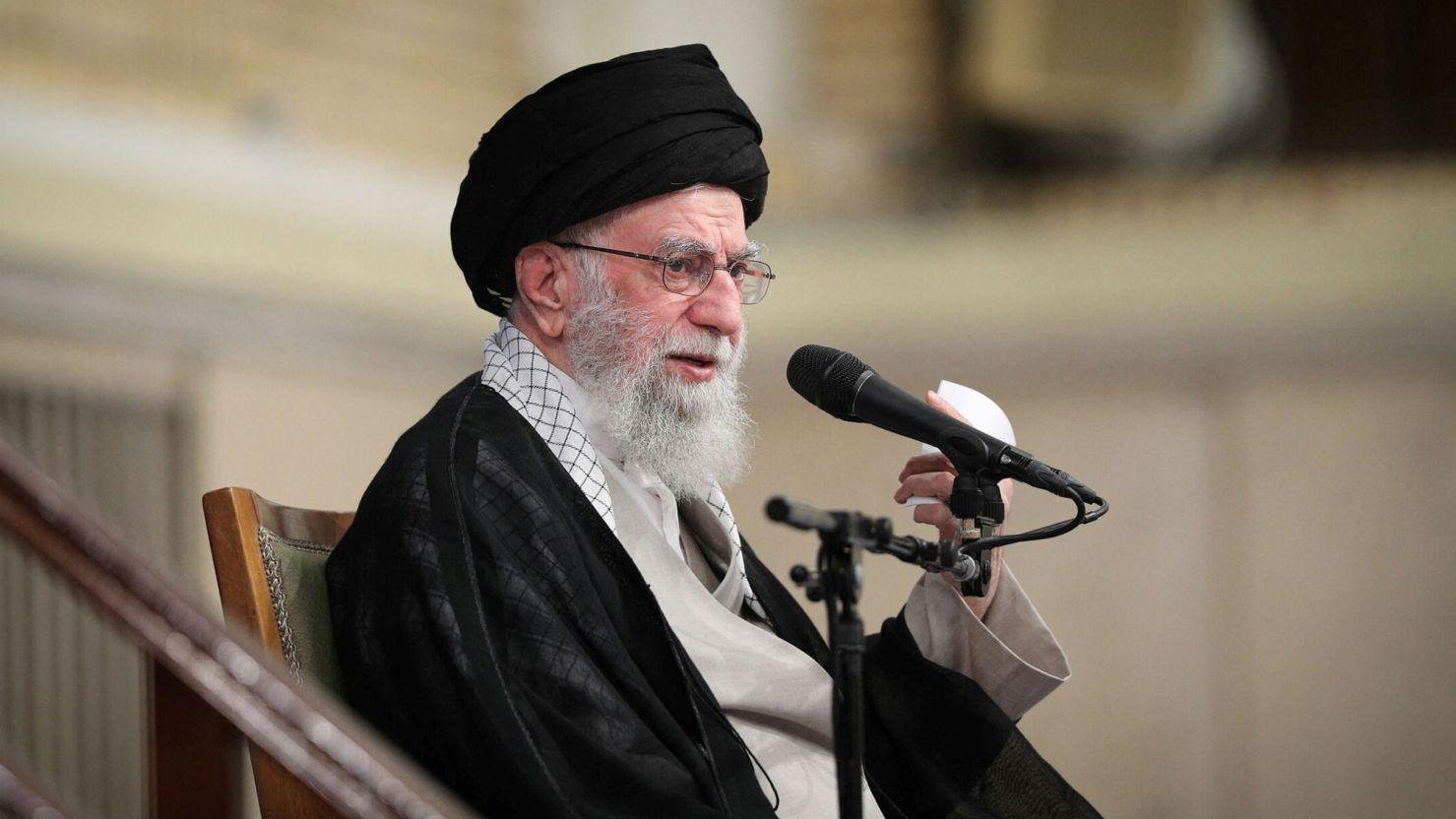
The assassination of Iran’s Supreme Leader Ayatollah Ali Khamenei has triggered a constitutional succession process within the Islamic Republic. The Assembly of Experts has begun deliberations to appoint the next Supreme Leader, while an Interim Leadership Council temporarily exercises his authority. The event highlights the institutional structure of power within Iran’s unique religio-political system.
Q1. What is the structure of Iran’s “Power Pyramid”?
- Iran operates a hybrid system combining theocratic authority and republican institutions.
- The Supreme Leader sits at the apex of the system.
- Below the Supreme Leader operate multiple interconnected institutions:
- President and Cabinet (executive administration)
- Majlis (Parliament)
- Guardian Council (constitutional oversight)
- Assembly of Experts (clerical supervisory body)
- Islamic Revolutionary Guard Corps (security apparatus)
- Religious legitimacy and political authority are fused within the constitutional framework.
- Decision-making authority ultimately concentrates at the Supreme Leader level.
The structure reflects Iran’s attempt to combine Islamic jurisprudence with modern state institutions.
Q2. What is the doctrine of Velayat-e-Faqih and how did it shape Iran’s system?
- Proposed by Ayatollah Ruhollah Khomeini before the 1979 Revolution.
- Translates to “Guardianship of the Islamic Jurist.”
- Argues that a senior Islamic jurist should govern the state.
- Based on the belief that religious scholars can best protect Islamic law and justice.
- Institutionalised in the 1979 Constitution of the Islamic Republic.
- Created the office of the Supreme Leader as the ultimate political and religious authority.
This doctrine is the ideological foundation of Iran’s political order.
Q3. How does the constitutional system of Iran distribute political authority?
- Supreme Leader: Commander-in-chief of the armed forces. Appoints heads of key institutions including judiciary and military leadership. Oversees strategic foreign and security policy.
- President: Elected through popular vote. Responsible for economic administration and governance.
- Majlis (Parliament): Legislates laws and approves budgets.
- Guardian Council: Reviews legislation for compatibility with Islamic law and the Constitution. Screens candidates for elections.
- Assembly of Experts: Elected clerical body. Responsible for selecting and theoretically supervising the Supreme Leader.
Despite elected institutions, ultimate authority remains with the Supreme Leader.
Q4. What role does the Islamic Revolutionary Guard Corps (IRGC) play in Iran’s power structure?
- Established after the 1979 Revolution to protect the Islamic Republic.
- Functions as a parallel military force alongside the regular army.
- Controls significant economic enterprises and infrastructure projects.
- Plays a major role in Iran’s regional security strategy.
- Supports allied groups such as Hezbollah and Hamas.
- Acts as a critical pillar of regime stability.
- The IRGC combines military, economic, and political influence.
Q5. How did Ayatollah Khamenei shape Iran’s leadership after 1989?
- Became Supreme Leader after the death of Ayatollah Khomeini in 1989.
- Previously served as President of Iran (1981–1989).
- Strengthened institutional authority of the Supreme Leader.
- Balanced competing factions within the political system.
- Advocated a “resistance economy” to counter Western sanctions.
- Oversaw key diplomatic developments including the 2015 nuclear agreement (JCPOA).
His leadership blended ideological rigidity with selective pragmatism.
Q6. What internal tensions exist within Iran’s political system?
Benefits of the current structure:
- Centralised authority ensures regime stability.
- Strong ideological cohesion among ruling institutions.
- Security institutions capable of controlling internal dissent.
Challenges and tensions:
- Growing economic hardship due to sanctions.
- Public dissatisfaction reflected in protests such as the Mahsa Amini demonstrations (2022).
- Rivalry between reformist and hardliner factions.
- Increasing gap between state authority and societal expectations.
These tensions shape Iran’s domestic political dynamics.
Q7. What are the implications of leadership transition after Khamenei?
- The Assembly of Experts must appoint a new Supreme Leader.
- Interim Leadership Council ensures continuity during transition.
- Leadership choice may influence:
- Iran’s domestic governance trajectory
- Relations with Western powers
- Regional geopolitical strategy
- The IRGC is expected to remain a central stabilising force.
- Institutional continuity suggests that the system of clerical supremacy will likely persist.
Leadership transition may affect policy direction but not necessarily the structural foundations of Iran’s political system.
Conclusion
Iran’s political order is defined by a distinctive fusion of religious authority and republican institutions, anchored in the doctrine of Velayat-e-Faqih. The death of Ayatollah Khamenei marks a historic transition but the institutional framework he inherited from Khomeini remains intact. The coming leadership selection will test the resilience of Iran’s power pyramid amid domestic pressures and shifting geopolitical realities.