| Important questions for UPSC Pre/ Mains/ Interview:
1. Why is India’s current phase of urbanisation increasingly driven by small towns rather than large metropolitan cities? 2. How does the rise of small towns challenge the megacity-centric understanding of urbanisation? 3. What structural economic changes have contributed to the growth of small towns? 4. How does the nature of urbanisation in small towns differ from rural and metropolitan growth? 5. Why is informal employment central to small-town economies? 6. How has small-town growth reshaped local power structures? 7. What policy and governance challenges do small towns face? 8. What are the implications of small-town-led urbanisation for India’s future? 9. How can small towns become engines of inclusive and balanced development? |
Context
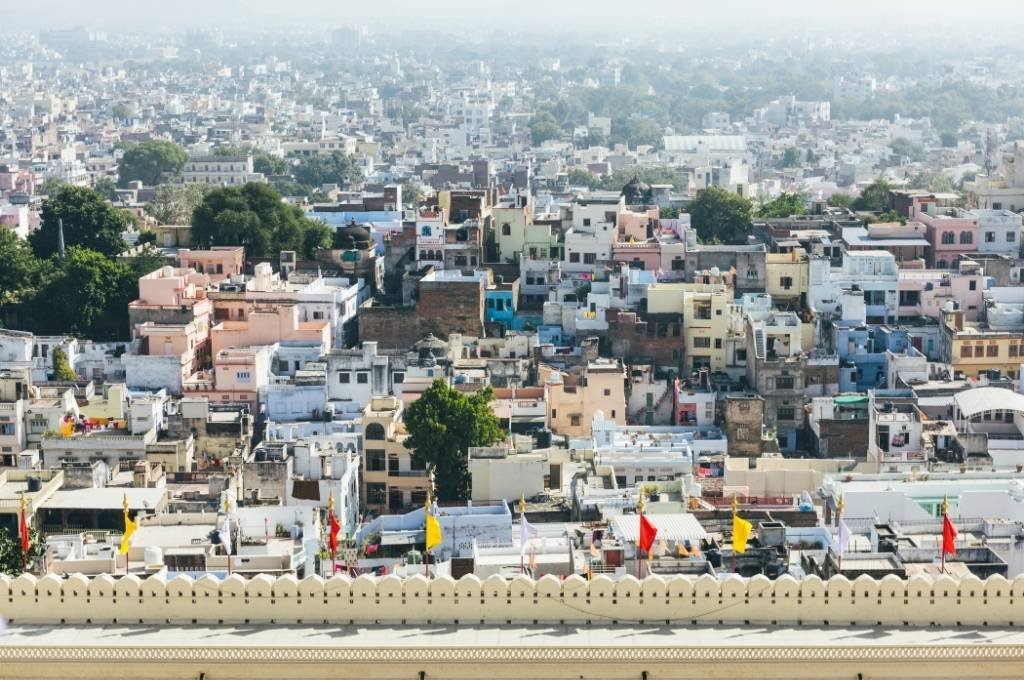
India’s urbanisation is undergoing a quiet but profound transformation. While public debate continues to focus on megacities like Delhi, Mumbai, and Bengaluru, recent analyses show that small towns are now driving India’s urban growth. Of nearly 9,000 census and statutory towns, only about 500 are large cities; the majority have populations below one lakh. These small towns are emerging as centres of employment, migration, and economic activity, reflecting a structural shift in India’s urban and economic geography. How India responds to this shift will shape its development trajectory in the coming decades.
Q1. Why is India’s current phase of urbanisation increasingly driven by small towns rather than large metropolitan cities?
- India’s urban growth is shifting toward small towns because large cities have reached economic and physical saturation.
- Key reasons
- High land prices in metros
- Infrastructure congestion
- Rising cost of living
- Declining capacity to absorb migrant labour
- As a result, economic activities are dispersing into smaller towns where land is cheaper and regulation is weaker.
- This shift indicates a reorganisation of India’s economic geography, where urban growth is no longer concentrated in a few metropolitan centres.
Q2. How does the rise of small towns challenge the megacity-centric understanding of urbanisation?
- India’s urban discourse has long equated urbanisation with megacities. The rise of small towns disrupts this view.
- Key challenges to old thinking
- Urban growth is happening outside metros
- Employment is generated in dispersed locations
- Migration is increasingly circular and regional
- Urbanisation is no longer about moving to big cities alone; it is about spreading urban processes across smaller settlements, demanding a broader understanding of what “urban India” looks like.
Q3. What structural economic changes have contributed to the growth of small towns?
- The growth of small towns is closely tied to changes in India’s development model.
- Structural drivers
- Decline of manufacturing concentration in metros
- Growth of logistics, warehousing, and construction
- Expansion of agro-processing and services
- Push factors from agriculture
- Small towns absorb rural youth and migrants displaced from metros, integrating them into the urban economy under new and more flexible conditions of labour and capital.
Q4. How does the nature of urbanisation in small towns differ from rural and metropolitan growth?
- Urbanisation in small towns is not rural continuity, but also not metropolitan-style development.
- Distinct features
- Cheaper land but weaker regulation
- Flexible labour markets
- Limited public services
- Rapid conversion of rural land
- These towns experience a deepening of urban processes without corresponding institutional capacity, creating a unique and often fragile form of urbanisation.
Q5. Why is informal employment central to small-town economies?
- Informal work dominates small towns because of low entry barriers and weak regulation.
- Nature of employment
- Construction labour
- Home-based production
- Platform and gig work
- Small retail and services
- Worker vulnerabilities
- Job insecurity
- Poor housing and services
- Limited social protection
- This often results in the urbanisation of rural poverty, rather than inclusive urban growth.
Q6. How has small-town growth reshaped local power structures?
- Rapid urbanisation has created new local elites in small towns.
- Emerging power groups
- Real estate intermediaries
- Contractors and developers
- Micro-financiers
- Political brokers
- These actors control land, labour, and access to credit, reinforcing socio-economic hierarchies.
- Workers and migrants often remain dependent and vulnerable, with limited bargaining power.
Q7. What policy and governance challenges do small towns face?
- India’s urban policies remain largely metro-centric.
- Key challenges
- Limited funding for small-town municipalities
- Weak technical and planning capacity
- Fragmented urban schemes
- Consultant-driven planning with little local input
- Basic services like water, sanitation, housing, and transport remain inadequate, while groundwater depletion and ecological stress intensify.
Q8. What are the implications of small-town-led urbanisation for India’s future?
- Small towns are now the main frontier of India’s urban expansion.
- Major implications
- New migration patterns
- Risk of spreading inequality
- Rising environmental stress
- Weak governance capacity
- If ignored, small towns may replicate metro-level problems without the institutional tools to manage them.
Q9. How can small towns become engines of inclusive and balanced development?
- Small towns also present an opportunity to rethink urban development.
- Way forward
- Shift policy focus beyond megacities
- Strengthen municipal finances and capacity
- Integrated planning for housing, jobs, transport, and ecology
- Regulate informal and platform economies
- Encourage participatory local governance
- With the right approach, small towns can support equitable, sustainable, and regionally balanced urban growth.
Conclusion
India’s urban future will not be decided in megacities alone. Small towns are now shaping the country’s patterns of migration, employment, and inequality. Ignoring them risks deepening social and ecological crises across the urban landscape. Recognising and empowering small towns, however, offers a chance to build a more balanced, inclusive, and resilient urban India. The challenge is no longer whether small towns matter—but whether policy and governance can rise to meet their growing importance.