- India has added over 50,000 megawatts (MW) of new electricity generation capacity in the current financial year 2025–26, surpassing the last year’s addition of 34,054 MW in FY 2024–25.
- The development highlights India’s accelerating push toward energy security & infrastructure growth.
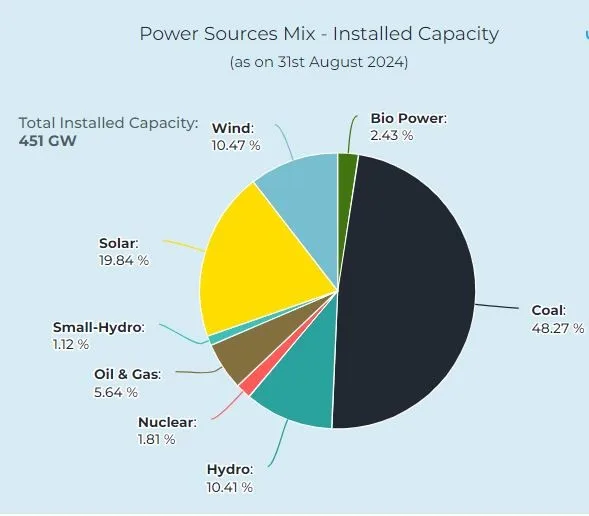
- At present, India’s total installed power generation capacity stands at around 5.2 lakh MW (≈520,000 MW). This massive figure represents the combined output potential of all power sources across the country. Break-up of India’s Power Capacity:
- Fossil Fuel–Based Power (~248,500 MW): This includes electricity generated from coal, gas and diesel. These sources still form a large share of India’s power supply and provide dependable base-load electricity.
- Non-Fossil Fuel Capacity (~272,000 MW): India has now crossed fossil fuels in overall installed capacity through cleaner sources. Non-fossil energy includes renewable power and nuclear energy. This shift reflects India’s transition toward low-carbon development.
- Nuclear Power (~8,800 MW): Nuclear energy contributes a small but stable portion of total capacity. It provides continuous electricity with very low carbon emissions, supporting clean baseload generation.
- Renewable Energy (~263,200 MW): This is the largest component of non-fossil power, covering solar, wind, hydro and biomass energy. Rapid expansion of renewable projects is main reason behind this year’s record capacity addition.
- India’s power sector is entering a high-growth, clean-transition phase, marking a major step toward sustainable development and energy independence.