Context
- India is shifting LPG imports towards the USA to reduce dependence on West Asian suppliers after recent regional disruptions.
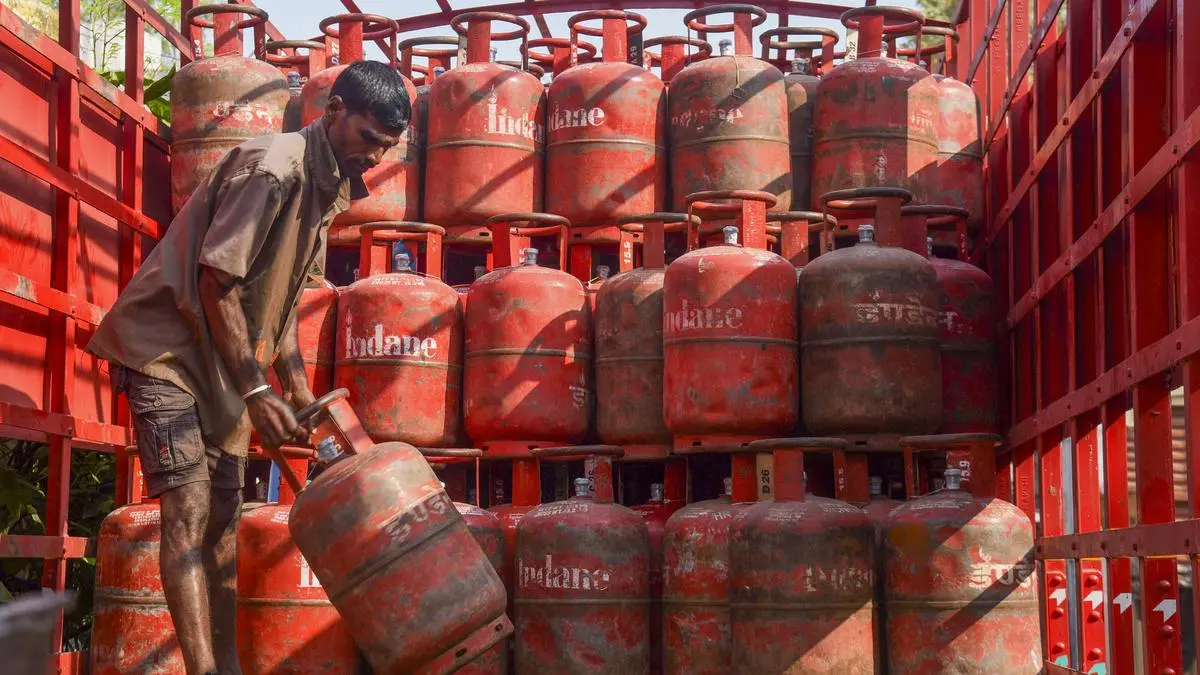
- Ministry of Petroleum and Natural Gas (MoPNG) reports that over two-thirds of India’s LPG imports now come from the USA, highlighting concerns over freight costs, supply risks and storage capacity.
About LPG
- Liquefied Petroleum Gas (LPG) is mainly a mixture of propane (C₃H₈) and butane (C₄H₁₀), obtained from crude oil refining and natural gas processing.
- It is a high-calorific-value and relatively clean fuel, producing less particulate matter and sulphur emissions than solid cooking fuels.
- LPG is naturally colourless and odourless. Ethyl mercaptan is added to give it a distinctive smell and help detect leaks.
- India is the world’s second-largest LPG importer after China, while the USA is the largest LPG exporter.
India’s LPG Transition
- Before 2014, over 750 million people relied on solid cooking fuels such as firewood, coal and cow-dung cakes, contributing to indoor air pollution.
- Pradhan Mantri Ujjwala Yojana (PMUY) was launched in 2016 to provide LPG connections to poor households.
- Beneficiaries received ₹1,600 per connection for the security deposit, regulator and installation, along with targeted refill subsidies.
- LPG became the primary cooking fuel for about 84% of households by 2022, with 17+ crore consumers added over the last nine years.
Why LPG Import Diversification Matters
- India has traditionally sourced much of its LPG from West Asia, making supply vulnerable to regional conflicts and disruptions around the Strait of Hormuz.
- Importing more LPG from the USA diversifies suppliers, but the longer route raises costs:
-
- Gulf → India: 5–10 days
- USA → India: 25–30 days
- Hence, India needs to balance supplier diversification with freight efficiency and supply security.
LPG Storage: Capacity and Expansion Challenges
- Limited Capacity: India’s major underground LPG storage facilities at Visakhapatnam and Mangaluru currently provide only about 22 days of demand, leaving the country exposed to geopolitical disruptions, shipping bottlenecks, supply shortages and price spikes.
- High Investment: Developing underground caverns requires substantial capital for exploration, construction and safety infrastructure.
- Geological Constraints: Suitable host rock formations are not available everywhere, restricting potential storage sites.
- Technical and Safety Challenges: New facilities, particularly on the western coast, face engineering difficulties, long gestation periods and stringent safety requirements.
- Infrastructure Gaps: Greater imports without adequate storage, transport and logistics infrastructure may not ensure reliable LPG supply.
Way Forward
- Expand Strategic Storage: Increase LPG reserves to withstand supply and geopolitical shocks.
- Diversify Suppliers: Maintain a balanced mix of USA, Gulf and other reliable sources.
- Reduce Logistics Costs: Upgrade ports, shipping and coastal transport to lower freight costs.
- Identify Storage Sites: Conduct geological surveys to locate suitable sites for underground LPG storage.
- Build Integrated Infrastructure: Coordinate procurement, storage, transport and distribution for reliable supply.
- Protect Consumers: Maintain adequate reserves while ensuring affordable LPG for vulnerable households.
Conclusion
India’s shift towards US LPG imports can improve supplier diversification, but energy security also requires adequate storage, efficient logistics and affordable access. India must build a resilient LPG supply system to withstand geopolitical disruptions.
FAQs
Q1. Why is India increasing LPG imports from the USA?
Ans. India is diversifying its supply sources after disruptions in West Asia highlighted the risks of dependence on Gulf suppliers. US supplies can reduce geographical concentration.
Q2. What is LPG composed of?
Ans. LPG mainly contains propane (C₃H₈) and butane (C₄H₁₀). It is obtained during crude oil refining and natural gas processing.
Q3. Why is ethyl mercaptan added to LPG?
Ans. LPG is naturally odourless. Ethyl mercaptan is added to give it a distinctive smell, allowing consumers to detect gas leakage.
Q4. Where are India’s major underground LPG storage facilities located?
Ans. Major underground LPG storage facilities are located at Visakhapatnam and Mangaluru.