| Important questions for UPSC Pre/ Mains/ Interview:
1. Why is India’s aviation sector strategically important? 2. What structural weaknesses have recent disruptions exposed? 3. What role does the aviation regulator play, and what are the oversight gaps? 4. Why is pilot shortage a major structural bottleneck? 5. How have new FDTL norms affected operations? 6. How does market concentration affect sector stability? 7. What is the role of regional airlines and UDAN? 8. How does fuel price volatility impact airlines? 9. How does India compare globally in operational buffers? 10.What are the associated Benefits and Risks? 11.What reforms are necessary going forward? |
Context
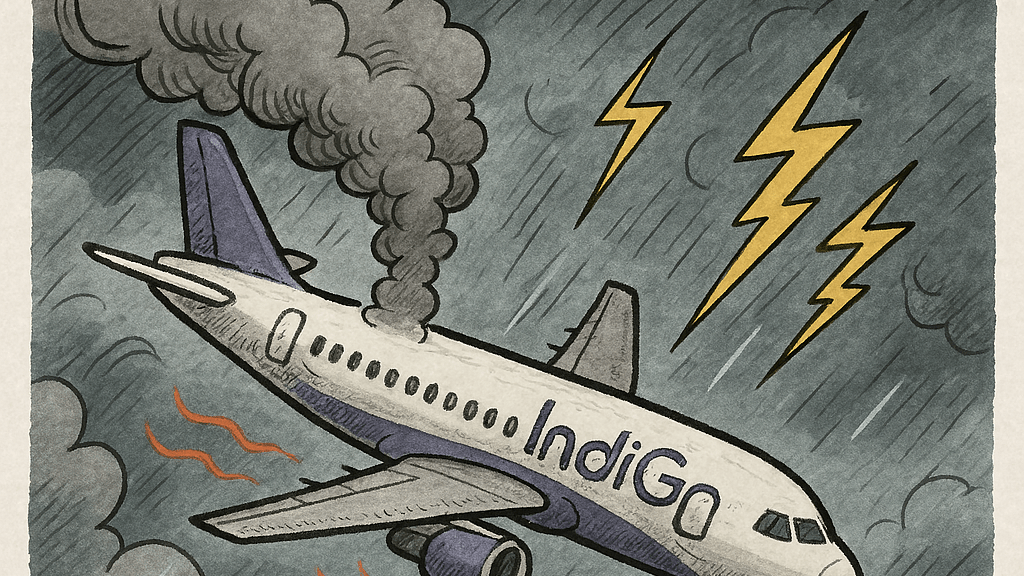
India’s aviation sector has recently witnessed repeated flight cancellations, prolonged delays, safety advisories, and operational instability. These disruptions have drawn attention to deeper structural issues relating to manpower shortages, regulatory capacity, fuel costs, and market concentration.
Q1. Why is India’s aviation sector strategically important?
- India is the third-largest domestic aviation market globally.
- Operates over 840 aircraft.
- Carries more than 350 million passengers annually.
- Supports:
- Economic integration
- Regional connectivity
- Tourism and business mobility.
- Critical for infrastructure-led development and supply chains.
Q2. What structural weaknesses have recent disruptions exposed?
- Airlines operating close to maximum utilisation.
- Limited spare crew and aircraft buffers.
- Weak shock absorption capacity.
- Increasing frequency of safety advisories.
- Overdependence on a few dominant carriers.
Q3. What role does the aviation regulator play, and what are the oversight gaps?
- The sector is regulated by the Directorate General of Civil Aviation (DGCA).
- Key concerns:
- Significant vacancies in technical and supervisory positions.
- Rapid fleet expansion without proportional regulatory strengthening.
- Reliance on temporary exemptions rather than preventive regulation.
- Reactive crisis management instead of systemic oversight.
- This weakens institutional credibility and long-term compliance culture.
Q4. Why is pilot shortage a major structural bottleneck?
- Demand projected at 25,000–30,000 pilots over the next decade.
- Domestic training capacity insufficient.
- Licensing bottlenecks delay supply.
- New Flight Duty Time Limitation (FDTL) norms increase rest requirements.
- Low pilot-to-aircraft ratio compared to global standards.
- Fatigue risks and operational fragility rise under tight schedules.
Airlines increasingly depend on foreign pilots as short-term solutions.
Q5. How have new FDTL norms affected operations?
- Mandate longer rest periods.
- Restrict night operations.
- Enhance safety but reduce scheduling flexibility.
- Force airlines to restructure rosters.
- Increase staffing requirements without parallel capacity addition.
Safety improvement objective clashes with workforce shortages.
Q6. How does market concentration affect sector stability?
India’s aviation market is highly concentrated, with two airline groups controlling nearly 90% of domestic traffic.
Implications:
- Creates a de facto duopoly.
- Dominant carriers become systemically important.
- On many routes, only one airline operates.
- Disruptions lead to connectivity collapse, not passenger redistribution.
- Smaller cities are disproportionately affected.
Q7. What is the role of regional airlines and UDAN?
- The UDAN scheme aims to expand affordable air connectivity.
- Recent developments:
- Approval of new regional airlines.
- Focus on underserved and tier-II/III cities.
- Structural challenges:
- High ATF costs.
- Weak passenger demand on thin routes.
- Infrastructure gaps at regional airports.
- Intense fare competition.
- Past failures of regional carriers indicate fragility without sustained support.
Q8. How does fuel price volatility impact airlines?
- Aviation Turbine Fuel (ATF) is the largest cost component.
- Linked to global crude oil prices and exchange rate volatility.
- Thin profit margins amplify the impact of fuel spikes.
- Taxation structure varies across States.
- No full pass-through flexibility due to price competition.
This makes profitability highly sensitive to external shocks.
Q9. How does India compare globally in operational buffers?
- Global best practices:
- Maintain spare crew pools.
- Keep aircraft reserve margins.
- Build slack capacity for disruptions.
- Indian carriers:
- Operate at near-total utilisation.
- Limited redundancy.
- Minor disruptions cascade into network-wide delays.
Q10. What are the associated Benefits and Risks?
- Growth Benefits
- Expanding middle-class mobility.
- Strengthened regional integration.
- Infrastructure multiplier effects.
- Employment generation.
- Structural Risks
- Safety dilution under capacity strain.
- Regulatory fatigue.
- Market monopolistic tendencies.
- Financial unsustainability.
- Passenger welfare deterioration.
Q11. What reforms are necessary going forward?
- Institutional Strengthening
- Fill DGCA technical vacancies.
- Move towards risk-based preventive oversight.
- Digital safety compliance monitoring.
- Human Resource Capacity
- Expand pilot training academies.
- Fast-track licensing reforms.
- Encourage domestic simulator capacity.
- Market & Economic Reforms
- Rationalise ATF taxation.
- Ensure fair competition.
- Strengthen consumer protection norms.
- Operational Resilience
- Mandate minimum crew buffers.
- Incentivise route diversification.
- Build redundancy frameworks.
Conclusion
India’s aviation sector stands at a structural inflection point. Rapid growth without proportional institutional strengthening has created systemic fragility. Ensuring long-term sustainability requires balancing expansion with regulatory capacity, manpower development, financial resilience, and passenger-centric safeguards. Only calibrated reform can prevent recurring operational crises.