| Important Questions for UPSC Prelims / Mains / Interview
1. What are the key amendments made to the Information Technology (Intermediary Guidelines and Digital Media Ethics Code) Rules, 2021 regarding synthetic media? 2. What is meant by “Synthetically Generated Information (SGI)” under the amended rules? 3. How do reduced takedown timelines impact intermediary liability under Section 79 of the IT Act, 2000? 4. What is the concept of safe harbour and how is it affected by the amendments? 5. What constitutional issues arise in regulating AI-generated content in India? 6. How do the new rules attempt to balance privacy protection with freedom of speech? 7. What administrative and federal changes have been introduced under the amended rules? 8. What operational and compliance challenges do intermediaries face under the new regime? 9. What is the way forward to ensure balanced and effective regulation of synthetic media? |
Context
The Union Government has notified amendments to the Information Technology (Intermediary Guidelines and Digital Media Ethics Code) Rules, 2021, effective February 20, 2026.
The amendments aim to regulate AI-generated or synthetic content more strictly and significantly reduce timelines for removal of unlawful material.
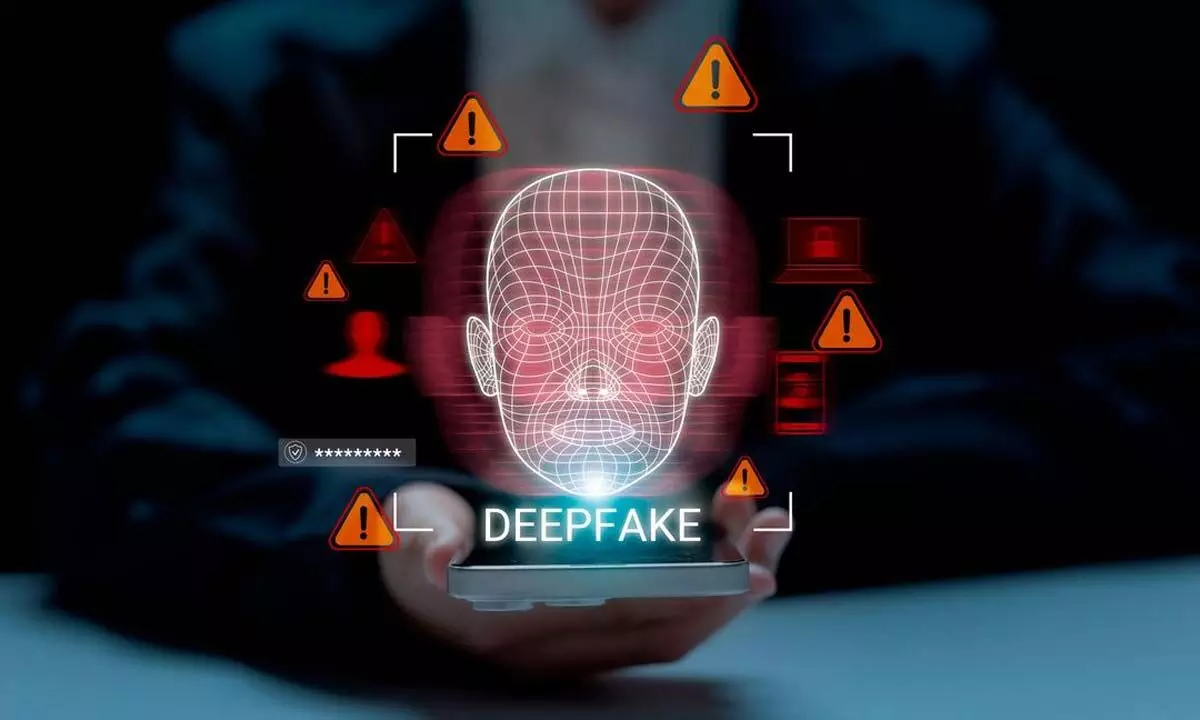
The reforms are designed to curb non-consensual deepfakes, intimate imagery, and AI-driven misinformation, while strengthening intermediary accountability under the Information Technology Act, 2000.
Q1. What are the key amendments made to the Information Technology (Intermediary Guidelines and Digital Media Ethics Code) Rules, 2021 regarding synthetic media?
- The takedown timeline for court- or government-declared illegal content has been reduced to 3 hours from the earlier 24–36 hours.
- Non-consensual intimate imagery and deepfakes must now be removed within 2 hours instead of 24 hours.
- Other unlawful content must be taken down within 3 hours instead of 36 hours.
- Platforms are required to prominently label AI-generated content.
- The legal definition of “Synthetically Generated Information (SGI)” has been formally introduced.
- Intermediaries must seek user disclosure regarding AI-generated uploads.
- Platforms must proactively remove non-consensual synthetic content even if not voluntarily disclosed.
Q2. What is meant by “Synthetically Generated Information (SGI)” under the amended rules?
- SGI refers to audio, visual, or audio-visual content artificially created, modified, or altered using computer resources.
- Such content appears real or indistinguishable from authentic events or persons.
- It includes AI-generated deepfakes, manipulated videos, and synthetic voice outputs.
- The scope excludes routine editing tools such as basic image touch-ups.
- The definition narrows the broader draft version proposed earlier.
- Platforms must label such content prominently if identified.
- The aim is to prevent deception and protect users from manipulated content.
Q3. How do reduced takedown timelines impact intermediary liability under Section 79 of the IT Act, 2000?
- Section 79 provides “safe harbour” protection to intermediaries for user-generated content.
- Safe harbour is conditional upon the exercise of due diligence.
- Failure to remove unlawful content within the prescribed 2–3 hour window may be treated as non-compliance.
- Loss of safe harbour may expose platforms to civil or criminal liability.
- Platforms may face higher regulatory scrutiny.
- Big Tech companies will need enhanced real-time monitoring systems.
- Smaller intermediaries may struggle with the operational burden.
Q4. What is the concept of safe harbour and how is it affected by the amendments?
- Safe harbour protects intermediaries from being treated as publishers of user content.
- It applies only when intermediaries act as neutral conduits.
- The amendments increase the threshold of due diligence.
- Knowingly permitting unlawful synthetic content can result in loss of protection.
- The regulatory shift increases accountability for algorithmic amplification.
- Compliance failures may attract penalties.
- Platforms must strengthen internal moderation mechanisms to retain protection.
Q5. What constitutional issues arise in regulating AI-generated content in India?
- Article 19(1)(a) guarantees freedom of speech and expression.
- Rapid takedown timelines may encourage precautionary over-censorship.
- Overbroad enforcement could chill legitimate expression.
- Article 21 protects privacy and dignity.
- Faster removal of non-consensual deepfakes strengthens personal dignity.
- Courts may need to balance free speech and privacy concerns.
- Judicial review may determine constitutional validity of strict timelines.
Q6. How do the new rules attempt to balance privacy protection with freedom of speech?
- The rules prioritise removal of intimate and non-consensual deepfakes.
- They mandate labelling instead of automatic deletion in certain cases.
- Routine content editing is excluded to prevent overreach.
- Platforms must use reasonable technical measures rather than blanket censorship.
- User disclosure mechanisms encourage transparency.
- The objective is to reduce harm without banning AI innovation.
- Balance depends on fair and proportionate enforcement.
Q7. What administrative and federal changes have been introduced under the amended rules?
- Earlier rules allowed only one authorised officer per State for issuing takedown orders.
- The amendment now permits multiple State-authorised officers.
- This enhances administrative flexibility for large States.
- It strengthens decentralised enforcement capacity.
- Coordination between Centre and States becomes more important.
- Federal implications of digital governance are reinforced.
- States gain a more active role in platform regulation.
Q8. What operational and compliance challenges do intermediaries face under the new regime?
- Determining illegality within 2–3 hours is legally and technically complex.
- Law enforcement communications may lack clarity.
- Platforms may adopt defensive over-removal strategies.
- Real-time moderation requires advanced AI detection tools.
- Human oversight remains necessary in sensitive cases.
- Smaller platforms may lack technological capacity.
- Ensuring fairness and avoiding arbitrary takedowns is difficult.
Q9. What is the way forward to ensure balanced and effective regulation of synthetic media?
- Clear standards for defining illegality must be developed.
- Standardised digital takedown protocols should be introduced.
- An independent appellate or review mechanism can prevent arbitrary removal.
- Indigenous AI detection tools should be strengthened under national AI initiatives.
- Harmonisation with the Digital Personal Data Protection Act, 2023 is essential.
- Capacity building for State authorities in cyber law is necessary.
- Transparency reporting by platforms can enhance accountability.
Conclusion
India’s amended IT Rules represent a decisive move towards regulating synthetic media in the era of generative AI. By reducing takedown timelines and mandating labelling of AI-generated content, the government seeks to protect privacy, dignity, and public order. However, the framework also raises concerns about operational feasibility and the risk of over-censorship. Its long-term success will depend on calibrated enforcement, technological readiness, constitutional safeguards, and institutional oversight.