Context
India has secured a 1.64-million-tonne annual steel quota under the proposed India–EU Free Trade Agreement (FTA), as the EU adopts a new regime imposing a 50% tariff on steel imports beyond quotas.
About Tariff-Rate Quota (TRQ)
- TRQ allows a specified quantity of imports at a lower tariff, while imports beyond the limit face a higher duty.
- Under the India–EU arrangement, Indian steel exporters receive preferential and predictable market access within specified quotas.
- It provides market access to exporters while protecting the domestic industry.
India’s Steel Quota and Covered Products
- Annual Quota: India has a country-specific quota of 1,641,470 tonnes, comprising:
| Component | Annual Quota |
| Most-Favoured-Nation (MFN) component | 946,616 tonnes |
| FTA component | 694,853 tonnes |
| Total | 1,641,470 tonnes |
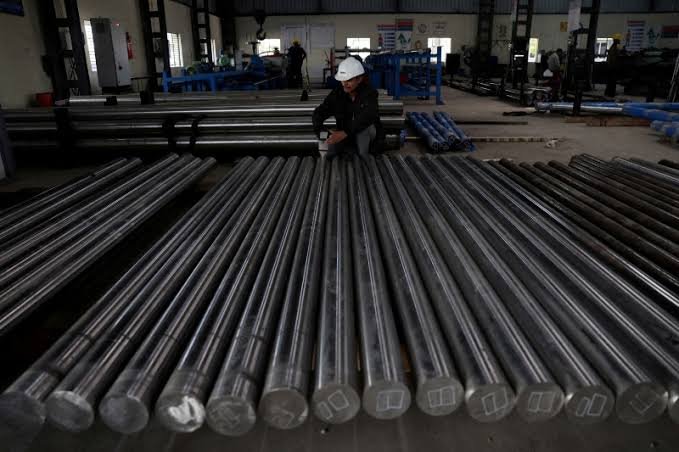
- Coverage: The quota covers hot-rolled, cold-rolled and coated sheets, tin mill products, quarto plates, stainless steel, bars, reinforcing bars, wire rods, pipes and tubes.
- Major quota allocations include:
-
- Hot-rolled sheets and strips: 509,605 tonnes
- Cold-rolled sheets: 218,658 tonnes
- Metallic-coated sheets: 197,860 tonnes
- Organic-coated sheets: 186,038 tonnes
- Export Limit: India currently exports around 4 million tonnes of steel to the EU annually; therefore, the quota covers only part of existing exports.
EU Steel Import Regime
- The EU’s new Steel Regulation took effect on 1 July 2026, replacing the 2018 steel safeguards that expired in June 2026 after the WTO-permitted eight-year period.
- The new framework provides:
-
- 18.3 million tonnes of duty-free tariff quotas.
- 50% duty on imports exceeding applicable quotas.
- A melt-and-pour requirement to improve traceability of steel origin and production.
- Most-Favoured-Nation (MFN) quotas are based on each country’s average share of EU imports during 2022–24.
- The regime seeks to address global steel overcapacity and protect EU steel producers.
Key Features and Review Mechanism
1. Additional Quota: India can compete for additional quota in categories where it already has country-specific quotas, alongside eligible EU FTA partners.
2. Residual Quota: For categories without country-specific quotas, Indian exporters can access available residual quotas, including those reserved for EU FTA partners.
3. Fair Administration: The EU will administer quotas in a transparent, objective and non-discriminatory manner and protect India if better quota access is later given to another FTA partner.
4. Periodic Review: Quotas will be reviewed one year after the FTA enters into force and every five years thereafter, considering quota utilisation, market conditions and changes in the EU steel regime.
5. PSR Consultation: India will be consulted on proposed changes to Product Specific Rules (PSRs) for covered steel products.
Significance for India
- Greater export certainty: Provides more predictable access to the EU steel market.
- Higher competitiveness: Encourages better quality, efficiency and product diversification.
- Reduced tariff risk: Country-specific quotas help limit exposure to the 50% out-of-quota tariff.
- Regulatory readiness: Encourages Indian exporters to strengthen traceability and production-origin compliance.
Challenges
- Limited coverage: The 1.64-million-tonne quota is well below India’s current 4-million-tonne steel exports to the EU.
- Quota utilisation: Benefits depend on India’s ability to fully use the allocated quota.
- Compliance costs: EU traceability and quality requirements may increase exporters’ costs.
- Competition: Indian exporters may face competition from other EU FTA partners for additional quotas.
Way Forward
- Quota Utilisation: Improve coordination between exporters and government agencies to maximise quota use.
- Product Upgradation: Promote high-value steel through better quality, technology and diversification.
- Regulatory Compliance: Strengthen traceability and certification to meet EU standards.
- FTA Negotiations: Use periodic reviews to seek larger quotas based on export demand.
- Cost Competitiveness: Reduce production and logistics costs to strengthen India’s position in the EU market.
FAQs
Q1. What is a Free Trade Agreement (FTA)?
Ans: An FTA is an agreement between countries to reduce or remove trade barriers, such as tariffs and quotas, on specified goods and services to promote trade.
Q2. What is a Tariff-Rate Quota (TRQ)?
Ans: A TRQ allows a specified quantity of imports at a lower or preferential tariff. Imports beyond the quota face a higher duty.
Q3. What tariff will apply to steel imported outside applicable EU quotas?
Ans: Steel imports beyond applicable quotas will face a 50% tariff under the EU’s new steel import regime.
Q4. What is the melt-and-pour requirement?
Ans: It is a steel-origin requirement intended to improve transparency and traceability by identifying where steel was melted and poured during production.
Q5. What is the Most-Favoured-Nation (MFN) component in the context of an FTA?
Ans: FTAs let member countries charge much lower tariffs (or zero tariffs) to each other without being forced to give those same super-low rates to the rest of the WTO members.