Important Questions for UPSC Prelims / Mains / Interview
|
Context
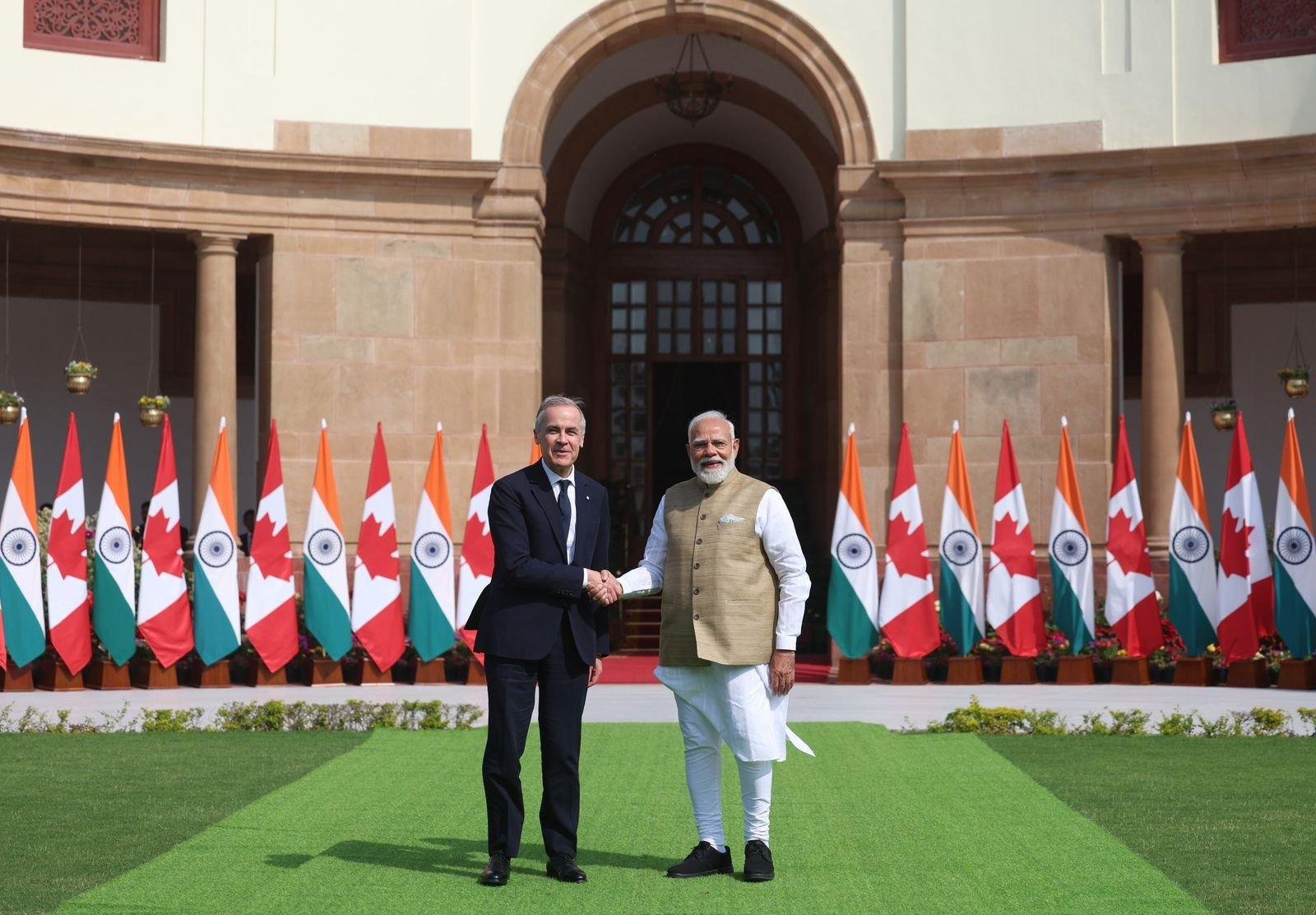
India and Canada have initiated efforts to restore diplomatic trust and expand strategic cooperation following tensions arising from the 2023 Nijjar controversy. The visit of the Canadian Prime Minister to India marked the first full bilateral prime ministerial engagement since 2018 and resulted in several agreements focusing on energy security, trade expansion, and security cooperation.
Q1. Why is the recent visit of the Canadian Prime Minister to India considered significant for the reset of India–Canada bilateral relations?
- The visit represents the first full bilateral Canadian prime ministerial visit to India since 2018, signalling renewed diplomatic engagement.
- It comes after relations deteriorated due to the 2023 diplomatic dispute regarding the killing of Hardeep Singh Nijjar.
- Both governments emphasised rebuilding strategic trust and restoring high-level dialogue mechanisms.
- The discussions focused on expanding cooperation in energy, trade, and security sectors.
- Leaders also exchanged views on regional conflicts in West Asia, highlighting the importance of diplomacy and stability.
- The visit reflects a pragmatic attempt to move beyond recent tensions toward economic and strategic collaboration.
Q2. What are the major outcomes of the India–Canada visit, particularly regarding uranium supply, energy cooperation, and trade negotiations?
- India and Canada signed a long-term uranium supply agreement worth approximately $1.9 billion.
- The Canadian company Cameco will supply 10,000 tonnes of uranium to India between 2027 and 2035.
- Both sides finalised the Terms of Reference for negotiations on a Comprehensive Economic Partnership Agreement (CEPA).
- Cooperation was expanded in areas such as renewable energy, nuclear technology, and advanced reactors.
- Both countries agreed to strengthen collaboration in counterterrorism and intelligence sharing.
- Canada committed to joining global initiatives supported by India, including:
- International Solar Alliance (ISA)
- Global Biofuel Alliance
- The two countries agreed to convene the Joint Working Group on Counterterrorism to address shared security concerns.
Q3. How does the long-term uranium supply agreement between India and Canada contribute to India’s energy security and clean energy transition?
- The agreement ensures stable uranium supply for India’s expanding nuclear power programme.
- Nuclear energy provides reliable baseload electricity that complements intermittent renewable sources.
- The partnership strengthens civil nuclear cooperation between the two countries.
- It supports India’s efforts to reduce dependence on fossil fuels and transition toward low-carbon energy systems.
- The agreement builds upon the earlier uranium supply partnership implemented between 2015 and 2020.
- Secure uranium imports help maintain operational continuity of India’s nuclear reactors.
- Expanded nuclear cooperation may facilitate future collaboration in:
- Small Modular Reactors (SMRs)
- Advanced nuclear technologies.
Q4. What is the significance of restarting negotiations for a Comprehensive Economic Partnership Agreement (CEPA) between India and Canada?
- CEPA aims to expand bilateral trade significantly by 2030.
- Current trade stands at around $8.66 billion, with a target of reaching approximately $50 billion.
- The agreement could improve market access for goods and services in both economies.
- Cooperation is expected to focus on sectors such as:
- critical minerals
- clean energy technologies
- advanced manufacturing industries.
- The agreement may help diversify India’s global trade partnerships beyond traditional markets.
- CEPA negotiations could also reduce tariff and regulatory barriers affecting bilateral commerce.
Q5. How do India and Canada cooperate in the areas of multilateral diplomacy, climate initiatives, and strategic energy transition?
- Canada’s participation in the International Solar Alliance strengthens global solar energy cooperation.
- Its support for the Global Biofuel Alliance enhances international collaboration on sustainable fuels.
- Both countries have emphasised clean energy cooperation as a pillar of their partnership.
- Nuclear and renewable energy collaboration contributes to climate mitigation and net-zero commitments.
- India’s growing role in global climate governance receives greater legitimacy through partnerships with G7 countries like Canada.
- Energy collaboration includes work in sectors such as:
- liquefied petroleum gas (LPG) infrastructure
- renewable energy technology
- advanced reactor research.
- Such cooperation strengthens global climate diplomacy and technology-sharing mechanisms.
Q6. What are the major challenges and sources of tension affecting India–Canada relations in recent years?
- The 2023 Nijjar controversy created a serious diplomatic dispute between the two countries.
- Canada alleged possible involvement of Indian officials in the killing, which India strongly rejected.
- The dispute led to expulsion of diplomats and suspension of trade negotiations.
- India has expressed concerns about Khalistani separatist activities operating from Canadian territory.
- Canada has raised issues related to transnational repression and political freedom.
- Regulatory differences have slowed progress in trade negotiations such as CEPA.
- Previous uranium supply agreements faced implementation delays, raising reliability concerns.
- Political sensitivities related to the large Indian-origin diaspora in Canada sometimes influence bilateral debates.
Q7. What steps can be taken to rebuild trust and strengthen long-term strategic cooperation between India and Canada?
- Establishing regular high-level diplomatic consultations can rebuild political confidence.
- Early conclusion of the CEPA agreement would boost economic interdependence.
- Strengthening counterterrorism cooperation and intelligence exchange can address security concerns.
- Expanding collaboration in clean energy technologies and nuclear power development will support climate goals.
- Transparent investigation mechanisms can help reduce mistrust arising from past disputes.
- Constructive engagement with the Indian diaspora community in Canada can strengthen people-to-people ties.
- Joint initiatives in critical minerals supply chains and advanced technologies can create new areas of strategic cooperation.
Conclusion
The recent diplomatic engagement between India and Canada represents a careful attempt to stabilise a relationship affected by political tensions. Agreements on uranium supply, energy transition, and trade negotiations indicate a renewed emphasis on pragmatic economic and strategic cooperation. However, unresolved issues such as the Nijjar controversy and security concerns continue to pose challenges. Sustained dialogue, confidence-building measures, and deeper institutional cooperation will be essential to transform the relationship into a stable and forward-looking strategic partnership.