Context
Rapid urbanisation, disappearance of wetlands, and large-scale concretisation in Indian cities have disrupted natural drainage systems. As a result, cities increasingly experience prolonged waterlogging after heavy rainfall, highlighting the importance of concepts like hydrological hysteresis and landscape memory in understanding urban flooding.
What is Hydrological Hysteresis?
- Hydrological hysteresis refers to the phenomenon where the response of a landscape to rainfall depends not only on the present rainfall but also on previous rainfall events.
- In simple terms the effect of rainfall on runoff and soil moisture depends on what happened earlier in the system. If the land has already received rainfall and is saturated, additional rainfall behaves differently compared to when the soil is dry.
- Thus, the history of rainfall influences current hydrological behaviour.
What is Landscape Memory?
- The idea of landscape memory explains how natural landscapes retain the influence of past weather conditions.
- Land surfaces neither absorb rain immediately nor dry instantly after rainfall stops.
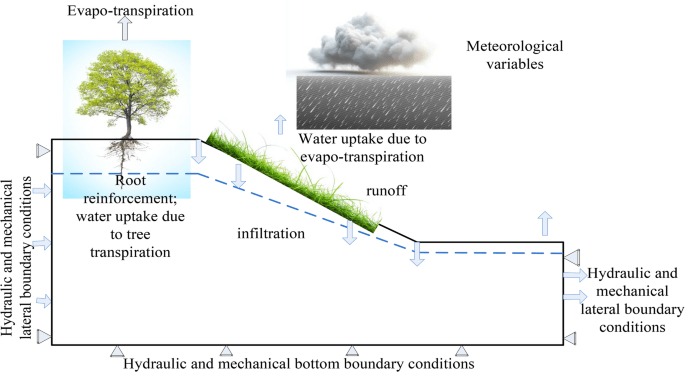
- Instead, they retain moisture from previous precipitation, which determines soil saturation levels, water infiltration capacity and run-off patterns.
Connection to Urban Flooding
- These concepts help explain urban flooding in Indian cities.
- Waterlogging is not always caused only by drainage failure.
- Because of hydrological hysteresis:
- Soil and land surfaces may already be saturated from previous rainfall.
- The land cannot absorb additional rainwater.
- Excess water accumulates on roads and built-up areas.
- In highly urbanised areas with concrete surfaces, infiltration becomes even more limited, worsening the problem.
Conclusion
Hydrological hysteresis and landscape memory highlight that flooding depends not only on present rainfall but also on past moisture conditions of the land. Recognising these processes is essential for developing resilient urban drainage systems and managing flood risks in rapidly urbanising cities.
FAQs
Q1. What is hydrological hysteresis in simple terms?
Hydrological hysteresis means that a landscape’s response to rainfall depends not only on the current rain but also on previous rainfall events. For example, if the soil is already saturated from earlier rain, new rainfall will cause more runoff and waterlogging compared to when the soil is dry.
Q2. How does landscape memory affect flooding?
Landscape memory refers to how land surfaces retain moisture from past rainfall. This stored moisture influences soil saturation, infiltration capacity, and runoff. In urban areas, this memory effect explains why waterlogging persists even after rainfall stops.
Q3. Why are hydrological hysteresis and landscape memory important for Indian cities?
Rapid urbanisation, loss of wetlands, and concretisation have disrupted natural drainage. These concepts show that urban flooding is not only about drainage failure but also about how past rainfall and soil saturation interact with impermeable surfaces like concrete.
Q4. How can understanding hydrological hysteresis help in flood management?
Recognising hysteresis and landscape memory helps urban planners design resilient drainage systems, restore wetlands, and increase permeable surfaces. This reduces runoff, improves water absorption, and mitigates flood risks in rapidly urbanising regions.