Context
A decade after Girnar Wildlife Sanctuary was declared an eco-sensitive zone, a group of monks has recently called for removing this status, arguing that it restricts religious activities in the area, which is home to around 54 lions.
About Girnar Wildlife Sanctuary
- After Gir Forest was declared a wildlife sanctuary in 1965, nearby areas with lion habitats were gradually given protected status. This process eventually led to the creation of Girnar Wildlife Sanctuary in
- The area holds strong religious importance, with several Hindu and Jain temples situated on the hills, attracting pilgrims.
- The vegetation mainly consists of dry deciduous forests, including trees like teak, dhak, and acacia, along with other plants adapted to dry conditions.
- The sanctuary also includes a mix of dense forests, open scrublands, and grassland habitats.
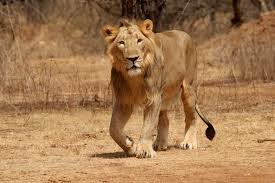
- It is home to a wide variety of wildlife such as Asiatic lions, leopards, spotted deer, sambar, chinkara, and chousingha.
- Other animals found here include Indian golden jackals, along with a rich bird population of nearly 300 species, including both resident and migratory birds.
- Gir Sanctuary is the only place in the world where Asiatic lions are found living freely in the wild.