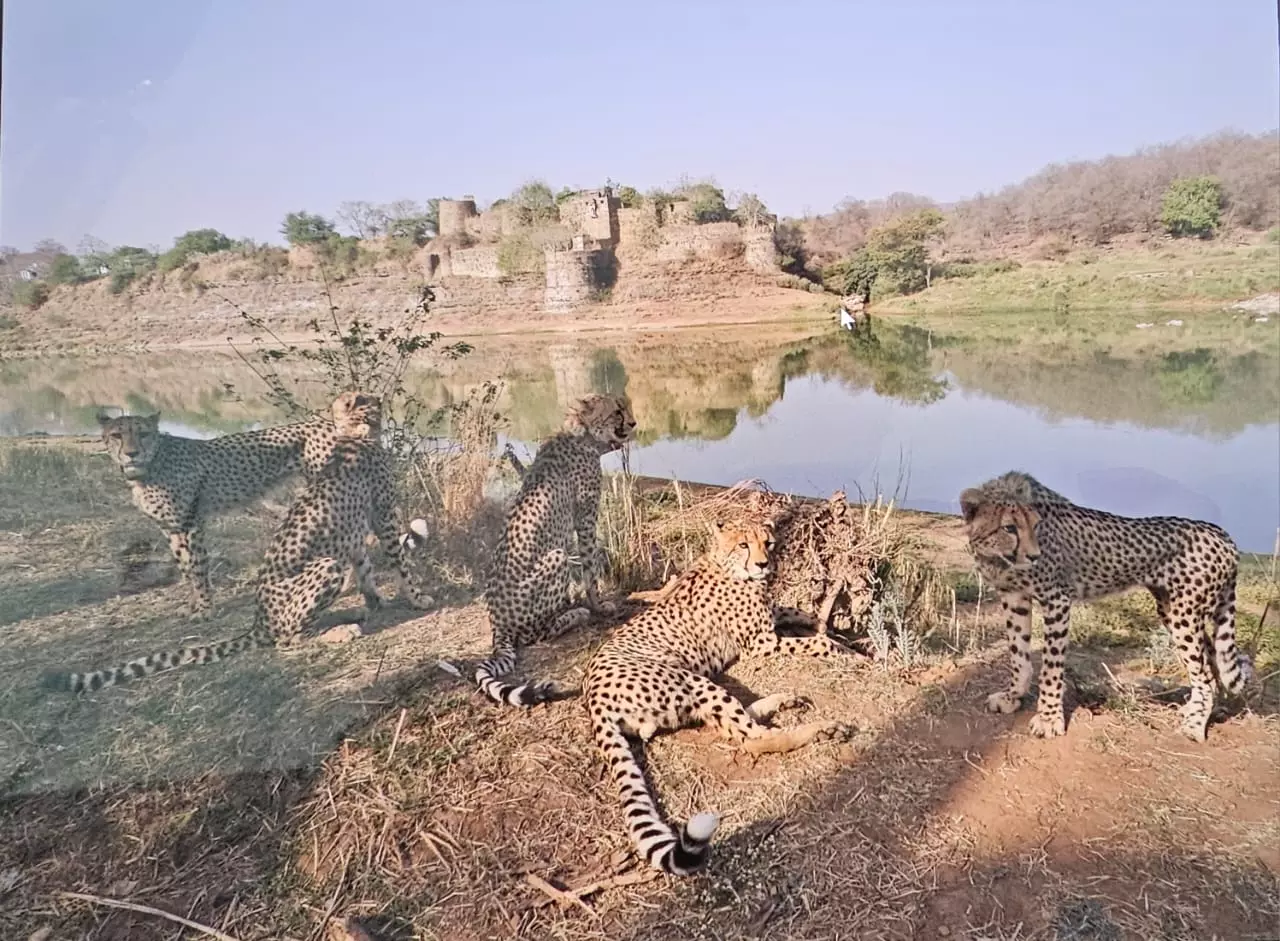
Context
Gandhi Sagar Wildlife Sanctuary in Madhya Pradesh has become the second cheetah habitat under Project Cheetah after Kuno National Park. Its integration with Kuno expands protected habitat for establishing a viable cheetah population in India.
About the Sanctuary
- Location: Northwestern Madhya Pradesh, along the Rajasthan border.
- Status: Notified in 1974; covers about 368 sq km.
- Chambal River: Flows through and divides the sanctuary into two parts.
- Gandhi Sagar Dam: Creates a large reservoir within the landscape.
- Heritage: Includes Hinglajgarh Fort, Chaturbhujnath Temple, Taxakeshwar Temple, Chaurasigarh and Bhadkaji rock paintings.
Ecology and Biodiversity
- Habitat: Open, rocky terrain with sparse vegetation and forest patches, suitable for cheetahs.
- Ecoregion: Part of the Khathiar-Gir dry deciduous forests.
- Flora: Khair, Salai, Kardhai, Dhawda, Tendu and Palash.
- Fauna: Chinkara, Nilgai, Spotted Deer, Indian Leopard, Striped Hyena and Jackal.
- Conservation Status: Designated an Important Bird and Biodiversity Area (IBA).
Significance for Project Cheetah
- Suitable Habitat: Open landscapes and adequate prey base make it suitable for cheetah reintroduction.
- Range Expansion: Provides an additional habitat beyond Kuno National Park, supporting the long-term establishment of cheetahs in India.
Additional Information: Project Cheetah
- Launch: Started on 17 September 2022 to re-establish the cheetah in its historical range in India, following IUCN guidelines.
- Unique Initiative: It is the world’s first intercontinental large wild carnivore translocation project.
- Source Countries: Cheetahs have been brought from Namibia, South Africa and Botswana.
- Nodal Institutions: Implemented by the MoEFCC, with the National Tiger Conservation Authority (NTCA) playing a key role.
- Habitat Expansion: Kuno National Park and Gandhi Sagar now provide a combined 3,428 sq km of protected cheetah habitat. Nauradehi Wildlife Sanctuary and Banni Grasslands are identified as future release sites.
- Conservation Status: The African cheetah is Vulnerable on the IUCN Red List. The Asiatic cheetah is Critically Endangered and survives almost exclusively in Iran.
- Conservation Approach: The programme is shifting towards landscape-level management, focusing on habitat, prey base and ecological connectivity rather than species protection alone.
- Population Progress: As of September 2026, India’s cheetah population stood at 52 individuals, including 49 cubs born in India, according to the latest PIB update.
FAQs
Q1. Where is Gandhi Sagar Wildlife Sanctuary located?
Ans: It is located in northwestern Madhya Pradesh, along the Rajasthan border.
Q2. When was Gandhi Sagar Wildlife Sanctuary notified?
Ans: It was notified as a wildlife sanctuary in 1974 and covers about 368 sq km.
Q3. Which river passes through the sanctuary?
Ans: The Chambal River flows through the sanctuary and divides it into two parts.
Q4. Which major dam is associated with the sanctuary?
Ans: The Gandhi Sagar Dam is located in the region and creates a large reservoir.
Q5. Which ecoregion does Gandhi Sagar Wildlife Sanctuary belong to?
Ans: It forms part of the Khathiar-Gir dry deciduous forests ecoregion.