Context
- The Ministry of Tribal Affairs (MoTA) informed the Ministry of Power that the Forest Rights Act (FRA), 2006 and its Rules do not contain a provision requiring Gram Sabha consent for Stage-II forest clearance.
- MoTA also stated that matters concerning such consent do not fall under its purview.
Forest Rights Act, 2006
The Scheduled Tribes and Other Traditional Forest Dwellers (Recognition of Forest Rights) Act, 2006 was enacted to address the historical denial of rights to forest-dependent communities.
Key Provisions
- Recognises individual and community forest rights of eligible forest-dwelling Scheduled Tribes and other traditional forest dwellers.
- Under Section 6, the Gram Sabha initiates the process of determining the nature and extent of forest rights.
- Claims are subsequently examined through the Sub-Divisional Level Committee and District Level Committee.
- MoTA is the nodal ministry, while implementation is primarily undertaken by State Governments and Union Territory Administrations.
Gram Sabha Consent and Forest Diversion
The controversy arises from the distinction between the FRA’s statutory provisions and the broader forest-clearance framework.
- The FRA does not prescribe a general requirement of Gram Sabha consent specifically for Stage-II forest clearance for diversion of forest land.
- At the same time, forest-diversion procedures have required completion of applicable FRA processes, including recognition and settlement of eligible forest rights, before diversion.
- Earlier forest-clearance guidelines also provided for a No-Objection Certificate (NOC) from concerned Gram Sabhas in the applicable process. This practice came to be described as Gram Sabha consent for forest clearance.
- This does not mean that Gram Sabhas lack statutory authority under the FRA. The Act assigns them specific functions, including recommendations in particular circumstances.
Thus, the present dispute concerns the legal basis of a general Stage-II consent requirement and the institutional authority responsible for it, rather than the existence of any Gram Sabha role under the FRA.
NHPC Projects and Forest-Clearance Delays
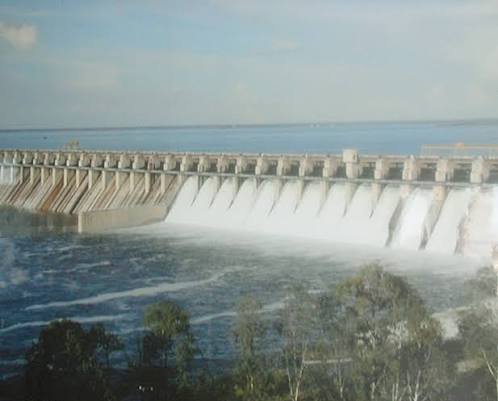
The issue gained prominence following concerns over prolonged delays in major hydropower projects.
- A Parliamentary Standing Committee on Public Undertakings, examining NHPC, found that forest clearance for under-construction projects was taking an average of 106 months, or nearly nine years.
- The Committee identified consent from all concerned Gram Sabhas for diversion of forest land as a critical bottleneck.
- The 520 MW Teesta-IV Hydroelectric Project in North Sikkim was cited as a project indefinitely stalled because consent from a small number of local bodies remained pending.
70–75% Super-Majority Proposal
NHPC proposed replacing consent from all affected Gram Sabhas with a 70–75% qualified super-majority for large hydropower projects of national importance.
The Parliamentary Committee asked the Ministry of Power to examine the feasibility of the proposal in consultation with MoTA.
The proposal has not become a statutory requirement.
Constitutional and Legal Context
The role of Gram Sabhas in tribal and forest governance is supported by a wider legal framework.
- PESA, 1996 strengthens Gram Sabha-based governance in Scheduled Areas, including consultation and recommendations concerning land and natural resources.
- The Fifth and Sixth Schedules provide special constitutional safeguards and governance arrangements for tribal areas.
- In Samatha v. State of Andhra Pradesh (1997), the Supreme Court reinforced safeguards relating to tribal land in Scheduled Areas.
- In the Niyamgiri case (2013), the Supreme Court recognised the role of Gram Sabhas in determining community and religious claims protected under the FRA.
These provisions establish the importance of community participation while also showing that the nature and extent of Gram Sabha powers depend on the specific law and circumstances involved.
Key Concerns
- Development versus Community Rights: Forest diversion may be necessary for hydropower and other infrastructure, but such projects can affect the livelihoods, customary practices and resource rights of forest-dependent communities.
- Legal Ambiguity: The controversy highlights uncertainty regarding the relationship between the FRA, forest-clearance rules and administrative guidelines, particularly concerning Gram Sabha consent at the Stage-II clearance stage.
- Super-Majority Proposal: A 70–75% threshold could reduce project delays, but it could also weaken the ability of smaller or dissenting communities to protect their interests. Any such change therefore requires careful legal and rights-based scrutiny.
- Institutional Responsibility: MoTA’s position raises an important administrative question: if a consent requirement is applied within the forest-clearance process but is not expressly derived from the FRA, the legal basis and competent authority must be clearly identified.
Way Forward
- Complete recognition and settlement of forest rights early in areas where major projects are proposed.
- Strengthen the capacity of State-level FRA authorities and local institutions.
- Integrate FRA compliance and community consultation into the early planning and feasibility stage of infrastructure projects.
- Clearly define the respective responsibilities of MoTA, forest-clearance authorities and State Governments.
- Improve transparency and documentation of Gram Sabha proceedings and decisions.
- Any reform of the consent mechanism should balance infrastructure requirements with legally protected community rights.
FAQs
- What is the central issue in the Gram Sabha consent controversy?
The issue is whether a general requirement of Gram Sabha consent for Stage-II forest clearance has a statutory basis under the FRA and which authority is responsible for administering such a requirement.
- What is the role of Gram Sabha under the FRA?
The Gram Sabha initiates the process of determining individual and community forest rights under Section 6. It also has specific recommendation or consent-related functions under certain provisions of the Act.
- Does the FRA generally mandate 100% Gram Sabha consent for Stage-II forest clearance?
The FRA does not expressly create a general Stage-II forest-clearance consent requirement. The present controversy concerns the forest-clearance framework through which such consent has been sought in practice.
- What is the 70–75% proposal?
It is a qualified super-majority proposal suggested by NHPC for large hydropower projects of national importance. It is not an existing statutory rule.
- Why is Teesta-IV important in this debate?
The 520 MW Teesta-IV Hydroelectric Project in North Sikkim illustrates how pending consent from a small number of local bodies can contribute to prolonged delays in major hydropower projects.
- Who implements the Forest Rights Act?
State Governments and Union Territory Administrations are primarily responsible for implementation, while MoTA is the nodal ministry at the Union level.
- What is the larger governance challenge?
The challenge is to balance infrastructure development, environmental protection and community rights through timely procedures and clear institutional responsibilities, without weakening statutory safeguards.