Important questions for UPSC Pre/ Mains/ Interview:
|
Context
Recently, the first scientific assessment of the fishing cat (Prionailurus viverrinus) identified Kaziranga National Park and Tiger Reserve as a major stronghold for this small wild cat species.
Q1. What is the Fishing Cat and why is it important?
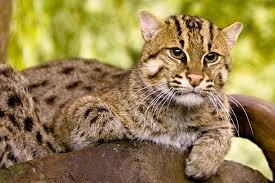
- The fishing cat is a medium-sized wild feline that is stocky, powerfully built, and uniquely adapted to wetland ecosystems.
- Unlike most cats, it regularly enters water and actively hunts fish, making it one of the world’s few semi-aquatic felines.
- Its presence indicates healthy wetlands, so it acts as an important ecological indicator species.
Q2. What are the habitat preferences of the Fishing Cat?
The fishing cat primarily depends on wetland-rich environments:
- It inhabits mangrove forests, swamps, marshes, and freshwater wetlands.
- The species is adapted to both freshwater and saltwater habitats.
- It tolerates a wide range of climatic conditions, from tropical rainforests to temperate regions, showing high ecological flexibility.
Q3. What is the geographical distribution of the Fishing Cat?
- Global Distribution: Native to South and Southeast Asia, including India, Sri Lanka, Malaysia, Thailand, Java, and Pakistan.
- Distribution in India: Fishing cats are mainly found in:
- Sundarbans mangrove forests
- Foothills of the Himalayas along the Ganga River and Brahmaputra River river valleys
- Parts of the Western Ghats
- These areas provide abundant water bodies and prey availability.
Q4. What are the key physical and behavioural features of the Fishing Cat?
- Physical Characteristics
- Powerfully built body with short limbs and a stocky appearance.
- Long head and short tail, roughly one-third of body length.
- Coarse brownish-grey fur with distinctive dark markings.
- Shows strong sexual dimorphism, with males significantly larger than females.
- Behavioural Traits
- An excellent swimmer that frequently enters water and can even dive to catch fish.
- Primarily nocturnal, remaining active during night hours.
- Highly adapted for aquatic hunting, which sets it apart from most wild cats.
Q5. What is the conservation status of the Fishing Cat?
- IUCN Red List: Vulnerable
- Wildlife Protection Act, 1972 (India): Schedule I (highest level of legal protection)
- This reflects serious population pressures due to habitat loss and wetland degradation.
Q6. Why is Kaziranga significant for Fishing Cat conservation?
- The recent assessment confirms Kaziranga as a core population stronghold.
- Its extensive wetlands, grasslands, and river systems provide ideal habitat conditions.
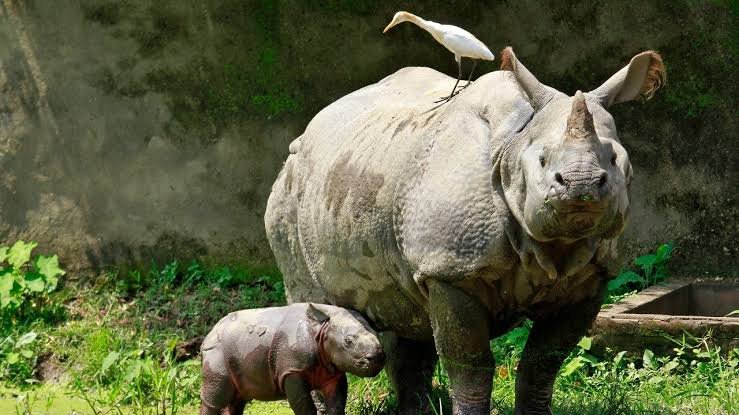
- This finding expands Kaziranga’s conservation importance beyond megafauna to include lesser-known wetland specialists like the fishing cat.
Conclusion
The fishing cat is a unique semi-aquatic wild feline closely tied to Asia’s wetland ecosystems. Its Vulnerable status highlights the urgent need to protect mangroves, marshes, and riverine habitats. The recognition of Kaziranga as a stronghold strengthens India’s role in conserving this species, while also underlining the broader importance of wetland preservation for biodiversity and ecological stability.