| Important questions for UPSC Pre/ Mains/ Interview:
1. What are cash transfers and how have they evolved in India’s welfare framework? 2. Why are unconditional cash transfers gaining popularity among States? 3. What trends has the Finance Commission identified in State subsidy spending? 4. Which States and schemes illustrate this trend most clearly? 5. What fiscal risks does the 16th Finance Commission associate with this expansion? 6. Why is capital expenditure crowding-out a serious concern? 7. What reforms has the Finance Commission recommended? 8. What are the broader policy challenges involved? 9. What should be the way forward for States? |
Context
The 16th Finance Commission has warned that the rapid expansion of large, unconditional cash transfer schemes by States poses serious risks to fiscal sustainability.
Q1. What are cash transfers and how have they evolved in India’s welfare framework?
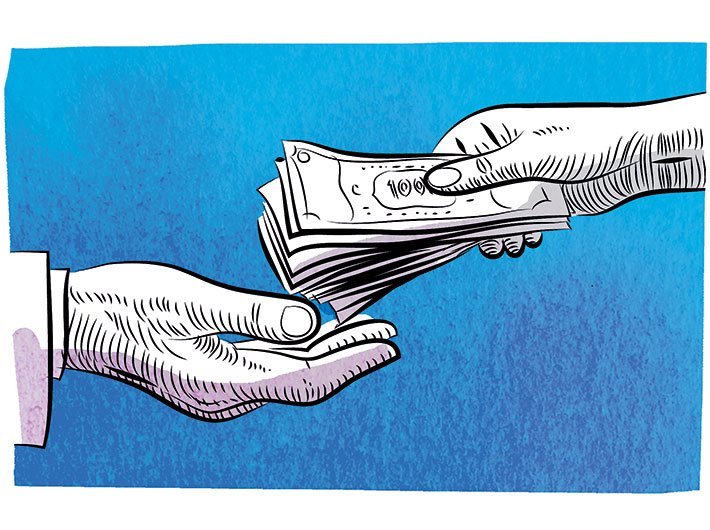
- Cash transfers are direct monetary payments made by governments to beneficiaries, usually credited to bank accounts.
- In India, delivery is enabled through the JAM trinity (Jan Dhan–Aadhaar–Mobile), which has reduced leakages and transaction costs.
- Cash transfers are of two types:
- Conditional transfers, linked to outcomes such as school attendance or health check-ups.
- Unconditional transfers, which impose no conditions on usage.
- Traditionally, unconditional transfers were limited to social security pensions and farmer income support.
- Over the past decade, improved digital infrastructure has enabled States to expand cash transfers to larger population groups, changing the structure of welfare spending.
Q2. Why are unconditional cash transfers gaining popularity among States?
- They are administratively simple and quick to implement.
- Direct transfers are politically visible and easily attributable to governments.
- They avoid problems of exclusion and leakage associated with in-kind subsidies.
- Digital delivery allows rapid scale-up without large institutional capacity.
- However, ease of expansion also raises concerns about targeting and fiscal discipline.
Q3. What trends has the Finance Commission identified in State subsidy spending?
- Large-group unconditional cash transfer schemes now account for 2% of total State subsidy expenditure in 2025–26.
- This is a sharp increase from just 3% in 2018–19, indicating a structural shift.
- Earlier, nearly 84% of unconditional transfers were pensions and farmer support.
- By 2025–26, large-group schemes alone account for 47.4% of all unconditional transfers.
- This shows a movement away from targeted welfare towards broad-based cash schemes.
Q4. Which States and schemes illustrate this trend most clearly?
- States with the steepest recent expansion include Maharashtra, Odisha, and Jharkhand.
- Key schemes highlighted by the Commission include:
- Majhi Ladki Bahin Yojana (Maharashtra) – ₹1,500 per month to eligible women.
- Gruha Lakshmi (Karnataka) – ₹2,000 per month to women heads of households.
- Lakshmir Bhandar (West Bengal) – Monthly transfers to women beneficiaries.
- Fiscal impact examples:
- Maharashtra: from 6% to 6.2% of revenue expenditure in two years.
- Jharkhand: from 8% to 13% in the same period.
- Odisha: from nil to 5.1%.
- These jumps reflect rapid fiscal expansion, not gradual rebalancing.
Q5. What fiscal risks does the 16th Finance Commission associate with this expansion?
- Recurring fiscal burden: Unconditional transfers create permanent revenue expenditure commitments.
- Reduced budgetary flexibility: Large pre-emptions limit governments’ ability to respond to shocks.
- Weak targeting: Expanding beneficiary bases dilute redistributive impact and efficiency.
- Crowding out of capital expenditure: Higher revenue spending constrains investment in infrastructure, health, and education.
- Opacity in financing: Use of off-budget borrowings, guarantees, or revenue assignments weakens fiscal transparency.
Q6. Why is capital expenditure crowding-out a serious concern?
- Capital expenditure drives long-term growth and productivity.
- Persistent diversion of resources to cash transfers undermines:
- Infrastructure creation
- Human capital development
- Future revenue-generating capacity
- This can trap States in a low-growth, high-subsidy equilibrium, worsening intergenerational equity.
Q7. What reforms has the Finance Commission recommended?
- Periodic and rigorous review of all subsidy and cash transfer schemes.
- Rationalisation of beneficiary bases to focus on the most vulnerable.
- Sunset or exit clauses, especially for non-merit and broad-based transfers.
- Discontinuation of off-budget financing for welfare schemes.
- Alignment of welfare design with fiscal responsibility and deficit reduction goals.
Q8. What are the broader policy challenges involved?
- Balancing political economy pressures with fiscal prudence.
- Designing welfare that is supportive without becoming fiscally rigid entitlements.
- Ensuring that short-term income support does not undermine long-term development spending.
- Maintaining transparency and credibility in State public finances.
Q9. What should be the way forward for States?
- Shift from blanket unconditional transfers towards better-targeted and outcome-linked support.
- Institutionalise regular evaluation of welfare schemes based on costs and outcomes.
- Protect and prioritise capital expenditure, even during periods of fiscal stress.
- Strengthen coordination between welfare policy and medium-term fiscal frameworks.
- Treat cash transfers as policy instruments, not permanent political commitments.
Conclusion
Unconditional cash transfers have improved welfare delivery, but their unchecked expansion threatens fiscal sustainability. States must rebalance welfare priorities to protect capital investment and long-term growth while ensuring support reaches the truly vulnerable.