Context
- In September 2026, Anthropic announced that its Claude AI had produced a complete computer-checked formalisation of Fermat’s Last Theorem (FLT) using the Lean proof assistant.
- Claude worked largely autonomously for about 11 days on the formalisation.
- The significance lies not in solving FLT again, but in converting a highly complex mathematical proof into a form that could be verified step by step by a computer.
What Is Fermat’s Last Theorem?
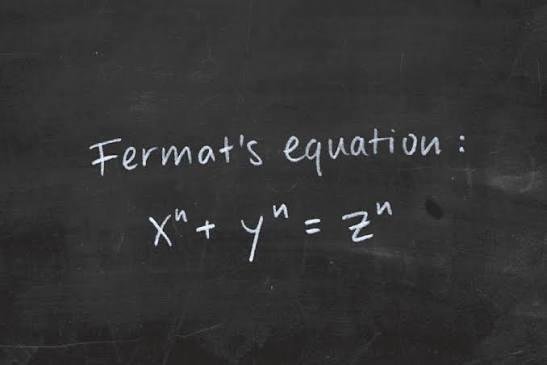
Fermat’s Last Theorem states that:
xⁿ + yⁿ = zⁿ
has no positive integer solutions when n > 2.
For example:
3² + 4² = 5²
works when n = 2, but no corresponding positive-integer solution exists for exponents greater than 2.
Historical Background
- French mathematician Pierre de Fermat proposed the statement around 1637.
- He wrote it in the margin of his copy of Diophantus’ Arithmetica, claiming that he had a proof too large to fit in the margin.
- The theorem remained unproved for more than 350 years.
- Andrew Wiles, later working with Richard Taylor to repair a gap in the original argument, completed the accepted proof in the 1990s.
- The corrected proof was published in 1995.
How Was Fermat’s Last Theorem Proved?
The modern proof does not directly solve the Fermat equation.
Its conceptual chain is:
Hypothetical Fermat solution → Frey curve → Ribet’s theorem → Modularity → Contradiction
Frey Curve
Gerhard Frey showed that a hypothetical solution to FLT could generate a special type of elliptic curve.
Ribet’s Contribution
Ken Ribet proved that such a curve would have properties incompatible with the expected relationship between elliptic curves and modular forms.
Wiles’ Contribution
Andrew Wiles proved a crucial part of the modularity theorem for semistable elliptic curves.
Therefore, the existence of a Fermat solution would imply an elliptic curve that must simultaneously satisfy contradictory properties.
Hence:
No such Fermat solution can exist.
What Is Formal Proof Verification?
Traditional mathematical proofs are written for human mathematicians and may rely on accepted results or steps that are not explicitly expanded.
A formal proof expresses every logical statement in a precise machine-readable form.
The process is:
Mathematical argument → Formal definitions → Explicit logical steps → Machine verification
A computer proof assistant then checks whether each step follows correctly from the accepted assumptions and previously proved results.
What Is Lean?
Lean is an interactive theorem prover and programming language used for formal mathematics and software verification.
It allows users to:
- define mathematical objects precisely;
- state theorems in formal language;
- construct proofs;
- verify those proofs using a small logical kernel.
Lean therefore acts as a proof-checking system, rather than simply giving an answer.
What Did Claude Achieve?
- Claude generated a very large formal proof of FLT in Lean.
- The project involved thousands of intermediate mathematical results and millions of lines of formal code.
- Lean’s proof-checking system then verified the logical validity of the formalised argument.
The key distinction is:
Wiles proved FLT mathematically.
Claude formalised and machine-verified the existing mathematical framework.
Thus, this was an achievement in formalisation and automated reasoning, not a new discovery of Fermat’s Last Theorem.
Why Is the Development Important?
Scalable proof formalisation
AI can help convert extremely long mathematical arguments into computer-checkable form, reducing the manual burden on mathematicians.
Higher verification reliability
Formal proof assistants require every logical step to be explicit, helping expose hidden gaps or unsupported assumptions.
Research productivity
AI can perform repetitive proof-engineering tasks while mathematicians focus on conceptual ideas and new conjectures.
Reusable mathematical knowledge
Once formally verified, theorems can become reliable building blocks for later automated proofs.
Beyond mathematics
The same formal-verification approach can support:
- software verification;
- cryptographic protocols;
- safety-critical systems;
- algorithm correctness.
Thus:
Human insight → AI formalisation → Machine verification → Reusable trusted knowledge
What Does This Reveal About AI?
The development shows that AI is moving beyond solving standard mathematical exercises towards handling large-scale symbolic reasoning tasks.
Its emerging role may include:
- generating proof steps;
- translating human mathematics into formal languages;
- searching large theorem libraries;
- checking consistency across complex arguments;
- assisting researchers in proof construction.
However, AI remains strongest when working within an existing body of mathematical knowledge.
Key Limitations
- Not original discovery: Claude formalised a known theorem rather than creating the underlying mathematical breakthrough.
- Dependence on existing libraries: Formal AI systems rely heavily on previously encoded definitions and theorems.
- Scale versus readability: Extremely large machine-generated proofs may be difficult for humans to interpret.
- Verification is not intuition: A computer can establish logical correctness without providing the conceptual elegance or insight valued in mathematics.
FAQs
Q1. Who proposed Fermat’s Last Theorem?
Pierre de Fermat.
Q2. What does Fermat’s Last Theorem state?
For positive integers, xⁿ + yⁿ = zⁿ has no solutions when n > 2.
Q3. Who proved Fermat’s Last Theorem?
Andrew Wiles, with an important contribution from Richard Taylor.
Q4. What did Claude do in 2026?
Claude created a computer-checkable formalisation of the known proof in Lean.
Q5. What is Lean?
Lean is a formal proof assistant and programming language used to represent and verify mathematical arguments.