Important questions for UPSC Pre/ Mains/ Interview:
|
Context
India’s Prototype Fast Breeder Reactor (PFBR) at Kalpakkam has achieved criticality, marking a major milestone in advancing the country’s nuclear energy programme and long-term fuel sustainability.
Q1. What is a Fast Breeder Reactor (FBR), and how does it function in the nuclear energy cycle?
- A Fast Breeder Reactor (FBR) is a nuclear reactor that produces more fissile material than it consumes.
- Unlike conventional reactors that use slow (thermal) neutrons, FBRs use fast neutrons to sustain nuclear fission.
- It typically uses Mixed Oxide (MOX) fuel, composed of plutonium-239 and uranium-238.
- The key feature is the “breeding process”, where fertile material (U-238) absorbs neutrons and converts into fissile material (Pu-239).
- This allows continuous fuel generation, improving efficiency and sustainability.
- FBRs are especially important for countries like India with limited uranium but abundant thorium resources.
Q2. What is meant by ‘criticality’ in a nuclear reactor, and why is it a significant milestone?
- Criticality refers to the stage where a self-sustaining nuclear chain reaction is achieved.
- At this point, each fission reaction produces enough neutrons to maintain a stable reaction without external input.
- There are three states:
- Subcritical: Reaction slows down and stops
- Critical: Stable and controlled reaction
- Supercritical: Reaction increases rapidly
- Achieving controlled criticality indicates that the reactor core is functioning correctly.
- It is a crucial step before full-scale power generation, ensuring both efficiency and safety.
Q3. What are the key features and technical specifications of India’s PFBR at Kalpakkam?
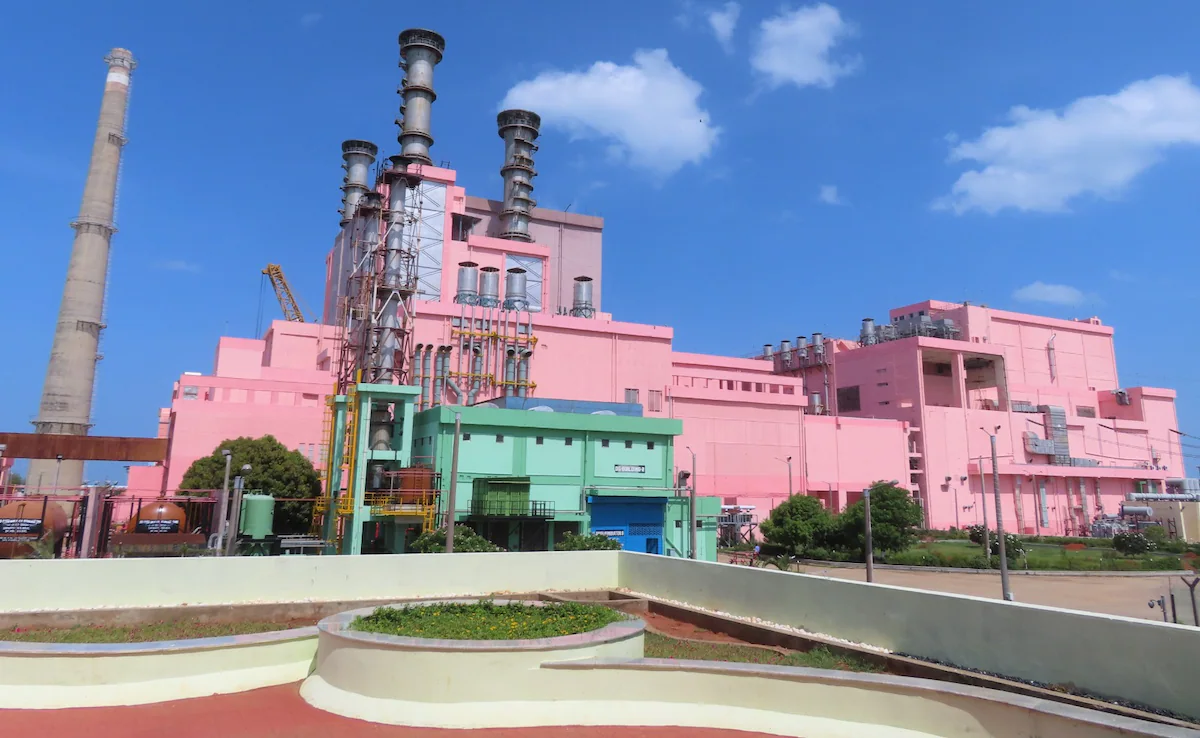
- The PFBR is a 500 MWe sodium-cooled, pool-type fast breeder reactor located at Kalpakkam (Tamil Nadu).
- It is developed at the Indira Gandhi Centre for Atomic Research (IGCAR) and operated by BHAVINI under the Department of Atomic Energy.
- The reactor uses MOX fuel (uranium-238 + plutonium-239).
- It is designed to generate more fissile material than it consumes, enhancing fuel sustainability.
- It incorporates safety features such as a negative void coefficient, which reduces reaction intensity during overheating.
- Achieving criticality confirms that the reactor is ready to progress toward electricity generation.
Q4. How does the PFBR fit into India’s three-stage nuclear power programme?
- The PFBR is a central element of India’s three-stage nuclear programme:
- Stage 1: Pressurised Heavy Water Reactors (PHWRs) use natural uranium to produce plutonium.
- Stage 2: Fast Breeder Reactors like PFBR use this plutonium to generate more fissile material.
- Stage 3: Thorium-based reactors convert thorium into uranium-233 for long-term energy.
- Thus, PFBR acts as a bridge between uranium-based and thorium-based energy systems.
- It enables India to move toward a closed nuclear fuel cycle, maximising resource utilisation.
Q5. What is the significance of fast breeder reactors for India’s energy security and nuclear strategy?
- FBRs improve fuel efficiency by extracting more energy from limited uranium reserves.
- They help reduce dependence on imported uranium, enhancing energy security.
- They enable utilisation of thorium reserves, where India has a global advantage.
- FBRs reduce nuclear waste by converting unused materials into useful fuel.
- The development of PFBR places India among advanced nuclear technology nations, with only a few countries having such capability.
Q6. What are the safety features and challenges associated with fast breeder reactors?
- Key safety features include the negative void coefficient, which automatically reduces reactivity during overheating.
- Use of liquid sodium coolant allows efficient heat transfer but requires careful handling due to its reactive nature.
- Controlled criticality ensures stable and safe reactor operation.
- However, FBRs involve complex technology, high costs, and require advanced safety protocols.
- Long gestation periods and technical challenges can affect timely implementation.
Q7. What is the broader significance of achieving criticality at PFBR for India’s nuclear future?
- Achieving criticality marks a decisive technological milestone in India’s nuclear journey.
- It strengthens India’s capability to build a self-reliant and sustainable nuclear energy system.
- It accelerates progress toward a thorium-based energy future, crucial for long-term needs.
- It enhances India’s position in the global nuclear landscape as a technologically advanced nation.
- It supports the goal of a closed fuel cycle, ensuring efficient resource utilisation and reduced waste.
Conclusion
The achievement of criticality at the PFBR represents a major leap in India’s nuclear programme. It reinforces the country’s path toward sustainable, secure, and self-reliant energy development.