Why in the News?
- In February 2024, the National Sample Survey (NSS) released its Household Consumption Survey after more than a decade, giving fresh insights into consumption and poverty levels.
- In April 2025, the World Bank’s Poverty and Equity Brief reported that India’s extreme poverty has fallen sharply to 3% in 2022-23, sparking debates on whether poverty has truly declined.
- A new analytical approach based on the “Thali Index” highlights persistent food deprivation in India, questioning the adequacy of official poverty estimates.
Key Highlights
- Official Poverty Estimates: A Success Story?
- The World Bank (2025) claimed that extreme poverty in India fell from 2% in 2011-12 to 2.3% in 2022-23, using the international poverty line of $2.15/day (PPP).
- This suggested that extreme poverty has virtually disappeared in India, presenting an optimistic picture of economic progress.
- Limitations of the Calorie-Based Poverty Line
- Traditional poverty measurement in India was calorie-based, defining poverty as income insufficient to buy food with minimum calories.
- This physiological approach ignored dimensions like nutrition balance, dietary diversity, and food satisfaction, thus failing to capture hidden hunger.
- The Thali as a New Food Metric
- To go beyond calories, researchers proposed the “Thali Index”, which measures how many balanced meals (thalis) a household can afford.
- A thali (₹30) includes rice, dal, vegetables, roti, curd, and salad; representing a complete, nutritious meal in South Asia.
- Analysis of NSS 2024 data revealed:
- 50% of rural households and 20% of urban households could not afford two thalis per day per person.
- This indicates widespread food deprivation, despite low “poverty”
- Food Expenditure vs. Non-food Needs
- Households must spend on rent, healthcare, education, transport, communication, etc. before food.
- Food often becomes a residual item, explaining why actual food intake is lower than income-based poverty lines suggest.
- Role of the Public Distribution System (PDS)
- When PDS entitlements (free and subsidised foodgrains) are included in consumption:
- Food deprivation falls to 40% in rural and 10% in urban areas.
- However, distortions exist:
- In rural India, even the richest 10% get almost the same subsidy benefits as the poorest, despite not needing them.
- In urban India, the distribution is more progressive, yet 80% of beneficiaries still receive cereals, many beyond the minimum requirement.
- Cereals Equalised, Pulses Neglected
- NSS data shows that cereal (rice and wheat) consumption is nearly identical between the poorest and richest.
- This means the PDS has succeeded in equalising cereal intake, but cereals account for only 10% of household expenditure.
- The real deprivation lies in pulses, the only affordable protein source for many Indians, where the poorest consume half the amount compared to the richest.
- Policy Proposals: A Nutrition-Sensitive PDS
- Trim excess cereal entitlements for the better-off to save costs and reduce stock burdens on the Food Corporation of India (FCI).
- Expand pulses distribution through PDS, making protein affordable to the poor.
- Adopt a targeted and compact subsidy model, eliminating support for households already consuming more than two thalis/day.
- Such restructuring can equalise primary food consumption, raising the poor’s diet quality to the best observed levels in society.
- When PDS entitlements (free and subsidised foodgrains) are included in consumption:
Key Terms
- Extreme Poverty
- Defined by the World Bank as living on less than $2.15/day (PPP).
- Focuses on absolute deprivation, not relative poverty.
- Used as a global benchmark for tracking SDG-1 (No Poverty).
- Criticised for being too narrow, as it ignores nutrition and social needs.
- In India, poverty reduction at this line does not always mean adequate living standards.
- Thali Index
- A food affordability measure based on the cost of a standard Indian thali.
- Goes beyond calories to reflect balanced nutrition and dietary satisfaction.
- Useful to assess real consumption inequality, not just income.
- Highlights affordability gaps between rural and urban households.
- Can be used by policymakers to design nutrition-sensitive subsidies.
- Public Distribution System (PDS)
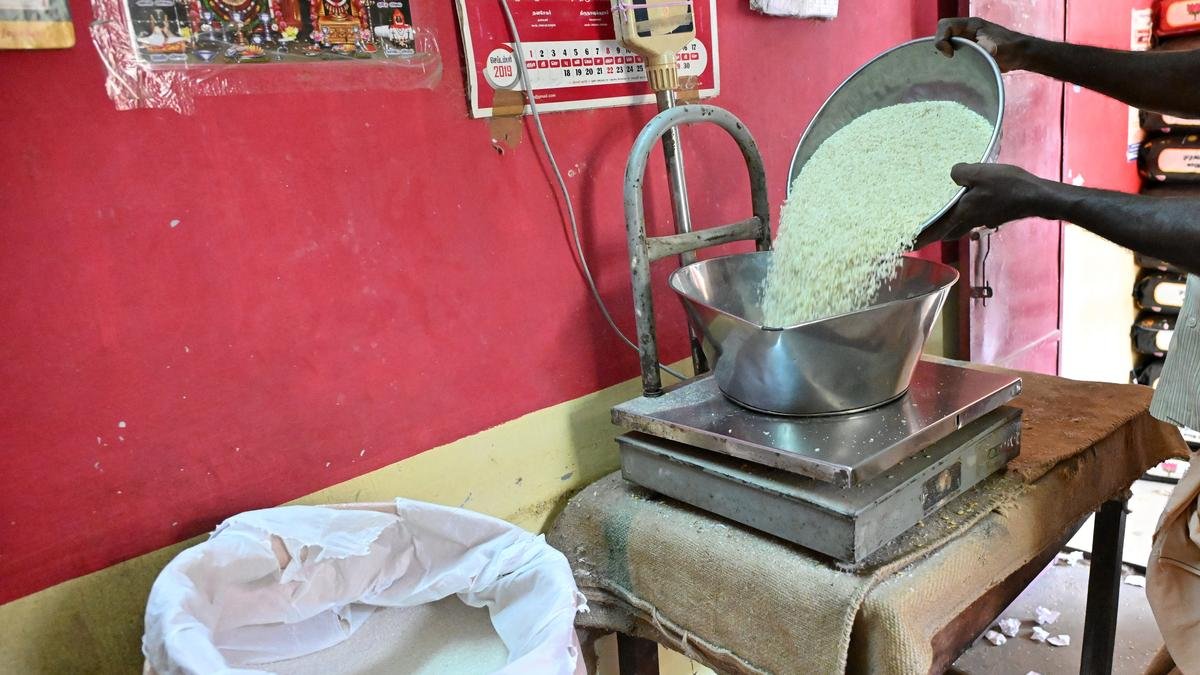
- India’s largest food security programme, distributing subsidised foodgrains.
- Initially universal (1960s), later targeted (TPDS, 1997), expanded under NFSA (2013).
- Covers over 800 million people.
- Plays role in price stabilisation, social welfare and poverty alleviation.
- Criticised for leakages, corruption, fiscal burden and limited nutritional scope.
- Food Corporation of India (FCI)
- Established in 1965 to ensure food procurement, storage, and distribution.
- Maintains buffer stocks and implements government subsidy schemes.
- Faces challenges like excess procurement, high carrying costs, storage losses.
- Major contributor to the Union food subsidy bill.
- Reforming FCI is central to PDS restructuring and fiscal sustainability.
- Nutritional Inequality
- Refers to disparities not in calories, but in proteins, vitamins, and minerals.
- Leads to hidden hunger, malnutrition, stunting, and anaemia.
- Linked to affordability gaps for pulses, milk, eggs, fruits, vegetables.
- India’s economic growth has not fully addressed dietary diversity.
- Calls for a shift from food security to nutrition security in policy.
Implications
- On Poverty Measurement
- Moves the focus from income poverty to consumption poverty.
- Highlights the gap between statistical poverty reduction and real nutritional well-being.
- On Social Welfare Policy
- Urges a shift from calorie sufficiency to nutritional adequacy.
- Subsidies should target proteins, micronutrients, and dietary balance.
- On Fiscal and Economic Policy
- Current PDS is fiscally unsustainable, with high cereal procurement and storage costs.
- Rationalisation frees resources for pulses distribution, healthcare, and education.
- On Rural Livelihoods and Food Security
- Expanding pulses demand can benefit farmers and crop diversification.
- Reduces protein deficiency, malnutrition, stunting, and anaemia.
- On Global Development Debate
- India can pioneer a nutrition-sensitive food subsidy model, relevant for other developing countries.
- Strengthens India’s progress towards SDG-2 (Zero Hunger).
Challenges and Way Forward
| Challenges | Way Forward |
| Over-subsidisation of cereals, even to higher-income groups. | Rationalise entitlements, gradually reduce subsidies for the better-off. |
| Persisting nutritional inequality with protein-rich foods being unaffordable. | Expand PDS to pulses, eggs, and milk in some states. |
| High fiscal burden on Food Corporation of India due to excess procurement. | Reduce buffer stocks, optimise procurement, use Direct Benefit Transfer (DBT) where feasible. |
| Leakages and inefficiencies in PDS delivery. | Strengthen One Nation One Ration Card, Aadhaar seeding, digitisation. |
| Over-dependence on cereals-only food security model. | Adopt nutrition-sensitive social safety nets aligned with SDGs. |
Conclusion
While India’s poverty statistics suggest impressive progress, the Thali Index reveals deep food deprivation and nutritional inequality. The Public Distribution System has successfully equalised cereals but has reached its limits. A restructured, nutrition-focused PDS with greater emphasis on pulses and protein-rich foods can ensure that the poorest households consume diets comparable to the richest. This transformation would not only achieve equalisation of primary food consumption but also set a global benchmark for inclusive food security.
| Ensure IAS Mains Question
Q. “Despite the decline in monetary poverty, food deprivation persists in India.” Discuss with reference to the role of the Public Distribution System and suggest reforms to make it nutrition-sensitive. (250 words) |
| Ensure IAS Prelims Question
Q. With reference to food consumption and poverty in India, consider the following statements: 1. The NSS 2024 survey revealed that cereal consumption levels are almost identical across the richest and poorest households. 2. Pulses consumption among the poorest 5% of households is significantly lower than that of the richest 5%. 3. The PDS currently distributes rice, wheat, and pulses in equal quantities to all beneficiaries. Which of the statements given above is/are correct? a) 1 only b) 1 and 2 only c) 2 and 3 only d) 1, 2 and 3 Answer: b) 1 and 2 only Explanation Statement 1 is correct: The NSS 2024 Household Consumption Survey shows that cereal consumption (rice and wheat) is almost the same across income groups, both the poorest 5% and the richest 5%. This indicates that the Public Distribution System (PDS) has been successful in equalising the intake of staple cereals across the population. Statement 2 is correct: There is a large disparity in pulses consumption. The poorest 5% of households consume only half the amount of pulses compared to the richest 5%. This highlights the problem of nutritional inequality since pulses are a key source of protein for the poor and are relatively expensive. Statement 3 is incorrect: The PDS primarily distributes rice and wheat under the National Food Security Act (NFSA, 2013). Pulses are not supplied in equal quantities to all beneficiaries, they are either absent from the central PDS basket or distributed occasionally in some states. |
|
Also Read |
|
| UPSC Foundation Course | UPSC Daily Current Affairs |
| UPSC Monthly Magazine | CSAT Foundation Course |
| Free MCQs for UPSC Prelims | UPSC Test Series |
| ENSURE IAS NOTES | Our Booklist |