Why in the News?
Srinagar is experiencing a combination of ecological degradation, post–Article 370 governance disruptions, and economic decline in its three main livelihood pillars — tourism, horticulture, and artisan trades.
How Wetlands, Lakes, and Mountains Shape Srinagar’s Economy
Srinagar’s economy is deeply tied to its ecology:
- Wetlands
- Function as natural sponges, reducing flood risk.
- Support horticulture, fisheries, and groundwater recharge.
- Encroachment and construction have reduced their capacity, increasing flood vulnerability and raising urban living costs.
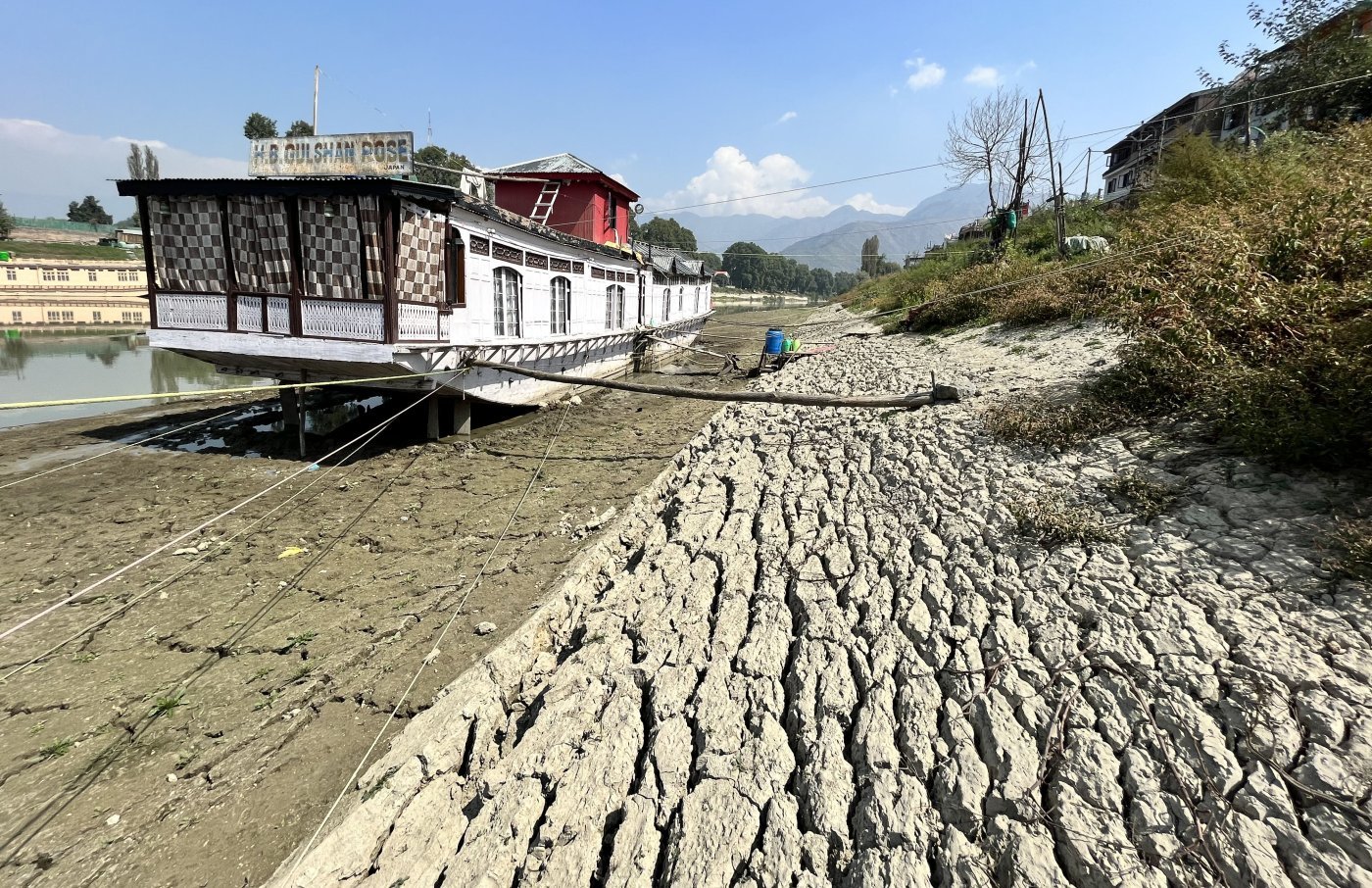
- Dal Lake, Nigeen Lake, Wular and other water bodies
- Anchor tourism, shikara economy, houseboats, and floating gardens.
- Pollution and shrinking surface area hurt livelihoods dependent on lake tourism and aquatic produce.
- Mountains and Himalayan Geography
- Enable horticulture (apples, walnuts, almonds) with unique climatic advantages.
- Landslides and road closures block fruit trucks, causing massive losses (e.g., ₹200 crore loss in a few days in 2025).
- Climate stress now brings erratic weather, impacting yields and transport.
Overall: The ecological foundations sustaining tourism, crafts, and horticulture are weakening, directly affecting incomes.
How Article 370’s Dilution Affected Livelihoods
The governance shift after August 2019 created several economic disruptions:
- Impact of Blackouts, Curfews, Restrictions
- Internet shutdowns and movement curbs crippled entrepreneurs, especially women running small businesses and craft units.
- Market access collapsed; customer outreach froze; supply chains broke.
- Stagnant Public Sector
- Over 32,000 government vacancies remain unfilled.
- Region experiences 8% urban unemployment, 32% youth unemployment, and 53.6% female unemployment.
- Weak Private Sector Growth
- Businesses hesitant due to policy uncertainty.
- Tourism projections remain seasonal and unstable.
- Governance Deficit
- Reduced local representation led to weak grievance redress, slow market reforms, and lack of responsive planning.
Result: A slowing economy with fewer opportunities and rising distress.
Why Are Traditional Sectors Struggling?
- Tourism
- Highly seasonal; extremely vulnerable to weather, landslides, internet shutdowns, and political disruptions.
- Infrastructure improvements do not address instability of visitor flows.
- Local communities often excluded from decision-making.
- Horticulture
- Climate change causing unseasonal rainfall, frequent road closures, and perishable losses.
- Cold-chain infrastructure inadequate.
- Price volatility and weak market linkages reduce farmer income.
- Horticulture’s contribution to GSDP is declining.
- Artisan Trades (Carpets, Papier-mâché, Woodwork)
- Women artisans face exploitation, low wages, lack of raw material access.
- Digital marketing difficulties since 2019 harmed exports.
- Middlemen take major profits; artisans earn as little as ₹250–300/day.
- Smart-city redevelopment sometimes displaces artisan neighbourhoods and street vendors.
- Vulnerability of Marginalised Groups
- Some transgender persons and vulnerable women pushed into risky occupations due to income loss.
Altogether: The three pillars — tourism, horticulture, crafts — have weakened simultaneously, leading to widespread livelihood fragility.
Why the “Metropolitan Capital” Development Model Fails?
Recent growth strategies rely heavily on external capital inflows:
- Issues
- Focus on facade beautification rather than functional improvements.
- Smart-city projects often remove green cover and squeeze artisan spaces.
- Real-estate–driven expansion leads to wetland destruction.
- Little emphasis on local entrepreneurship, small manufacturing, or traditional industries.
Therefore: Capital-heavy, top-down development does not address local needs or ecological limits.
What Strategies Can Build a Resilient, Locally Rooted Economy?
- Ecological & Urban Reforms
- Strict protection and restoration of wetlands and floodplains.
- Integrate lakes into urban planning (blue–green infrastructure).
- Control urban sprawl through zoning and eco-sensitive development.
- Strengthening Horticulture
- Climate-resilient varieties; better irrigation; orchard rejuvenation.
- Cold chains, pack-houses, and reliable all-weather connectivity.
- Farmer cooperatives with stable price mechanisms.
- Reviving Artisan and Craft Economies
- Cluster-based development of weaving, papier-mâché, and woodcraft.
- Common facility centres for raw materials.
- Digital marketing platforms supported by the State.
- Prevent displacement of artisan quarters; include them in town plans.
- Tourism Reforms
- Community-led tourism; cultural circuits; homestays; crafts-linked tourism.
- Off-season tourism (autumn, winter festivals, birding routes).
- Reduce dependence on single-season inflow.
- Governance Improvements
- Restore meaningful local governance and decision-making power.
- Fill vacancies in public sector institutions.
- Provide helplines, entrepreneurship support, and market linkages for women.
- Social Protection & Livelihood Diversification
- Skill-building in IT services, food processing, eco-tourism, small-scale manufacturing.
- Financial inclusion for informal workers and street vendors.
Goal: Robust, diverse, climate-adapted local economy less dependent on tourism shocks.
Conclusion
Srinagar’s future lies not in mega-projects or cosmetic urban upgrades but in restoring its ecological base, revitalising its traditional livelihoods, and empowering the people who sustain the city—its artisans, women entrepreneurs, farmers, and workers. By rooting growth in local knowledge, ecological resilience, and inclusive governance, Srinagar can transition from fragility to a stable, diversified, future-ready economy.
| EnsureIAS Mains Question
Q. How have ecological degradation and post–Article 370 governance disruptions combined to weaken Srinagar’s traditional economy? Discuss measures needed to build a resilient, locally rooted economic model for the city. (250 Words) |
| EnsureIAS Prelims Question
Q. With reference to Srinagar’s regional economy, consider the following statements: 1. Wetlands in Srinagar act as natural flood buffers and support horticulture and tourism-linked livelihoods. 2. Since 2019, supply-chain disruptions and climate risks have significantly affected the horticulture sector. 3. The “metropolitan capital infusion” model focuses primarily on strengthening local artisan clusters and informal markets. 4. Post–Article 370 communication restrictions adversely impacted women-led enterprises and handicraft marketing. Which of the statements given above are correct? (a) 1 and 2 only Answer: (b) 1, 2 and 4 only Explanation: Statement 1 is Correct: Srinagar’s wetlands reduce flood impact, recharge groundwater, and support tourism and adjacent horticultural activity. Statement 2 is Correct: Climate change (landslides, erratic weather) and highway closures have hurt horticulture and supply chains. Statement 3 is Incorrect: Metropolitan capital infusion prioritises large infrastructure, real estate and tourism mega-projects — not artisan clusters or informal markets. Statement 4 is Correct: Post–Article 370 blackouts and restrictions severely affected women entrepreneurs and artisans dependent on digital marketing. |