Important questions for UPSC Pre/ Mains/ Interview:
|
Context
The Special Intensive Revision (SIR) of electoral rolls has reduced the number of registered voters while increasing voter turnout percentages, raising questions about accuracy versus inclusion in India’s electoral system.
Q1. What is an electoral roll in India, and why is its accuracy crucial for free and fair elections?
- An electoral roll is a constituency-wise list of eligible voters maintained by the Election Commission of India. Only individuals listed in this roll are entitled to vote in elections.
- The Constitution ensures that all citizens above 18 years of age, subject to certain conditions, are included in the roll.
- The accuracy of this list is essential because errors such as duplicate or missing entries can distort electoral outcomes and undermine the credibility of democratic processes.
- Thus, a reliable electoral roll is the foundation of free, fair, and transparent elections.
Q2. What are the different types of electoral roll revisions in India, and how does Special Intensive Revision (SIR) differ from Summary Revision?
- Electoral rolls are updated through two main processes: Summary Revision and Special Intensive Revision (SIR).
- Summary Revision is conducted regularly and focuses on limited updates such as adding new voters and correcting minor errors.
- In contrast, SIR is a comprehensive exercise involving fresh verification, re-enumeration, and stricter documentation requirements.
- While Summary Revision maintains continuity, SIR aims to remove accumulated inaccuracies and ensure a more precise and updated voter database.
Q3. How has the growth of India’s electorate evolved over time, and what makes it significant globally?
- India’s electorate has expanded dramatically from around 17 crore voters at independence to over 96 crore in recent years.
- This growth reflects population increase, improved voter registration systems, and wider democratic participation.
- At one stage, the electorate was expected to reach nearly 100 crore, making it one of the largest voting populations in the world.
- This scale highlights the complexity and significance of managing elections in the world’s largest democracy.
Q4. What impact has the Special Intensive Revision (SIR) had on the size of electoral rolls and voter turnout?
- The SIR exercise has led to a notable reduction in the size of electoral rolls due to the removal of inaccurate entries such as absent, shifted, dead, and duplicate voters.
- Across multiple states, the number of voters declined significantly, marking a break from the usual trend of continuous growth.
- At the same time, voter turnout percentages increased sharply in several states.
- This rise is partly due to the removal of “ghost voters,” which increases turnout when calculated against a smaller, more accurate voter base.
Q5. What are the main reasons for deletion of names during the Special Intensive Revision process?
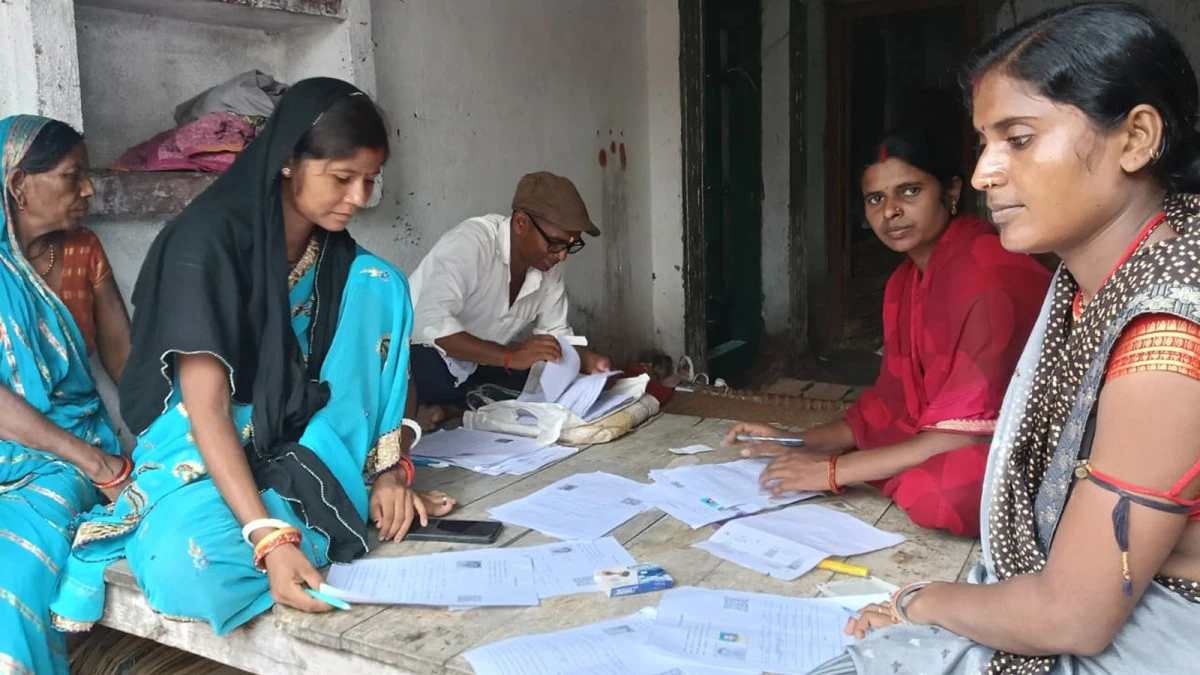
- The primary reason for deletion is the removal of ASDD entries—voters who are absent, have shifted residence, are deceased, or are duplicated.
- Additional deletions occur when individuals fail to submit required enumeration forms or cannot verify their identity and eligibility.
- In many cases, the burden shifts to citizens to prove their eligibility, leading to exclusion if documentation is insufficient.
- These factors collectively contribute to the reduction in voter numbers during SIR.
Q6. How does the process of fresh enrolment and correction mitigate the reduction in electoral roll size during SIR?
- Although initial drafts of electoral rolls show significant reductions, final rolls often recover partially through new registrations and corrections.
- Eligible voters who were initially excluded can reapply and be re-included after verification.
- This demonstrates that SIR is not solely a deletion exercise but also a corrective mechanism aimed at improving accuracy.
- Thus, the final outcome reflects both removal of ineligible entries and restoration of genuine voters.
Q7. What concerns have been raised regarding exclusion and disenfranchisement, and how can a balance be achieved between accuracy and inclusion?
- The SIR process has raised concerns about the unintended exclusion of genuine voters, particularly among vulnerable groups who may lack proper documentation.
- Strict verification procedures can lead to disenfranchisement on technical grounds, affecting the inclusiveness of elections.
- To address this, authorities must ensure that verification processes are transparent, accessible, and citizen-friendly.
- A balanced approach is needed where accuracy is improved without compromising the fundamental right to vote.
Conclusion
While Special Intensive Revision strengthens the accuracy of electoral rolls, it also highlights risks of exclusion. Ensuring both precision and inclusiveness is essential to uphold the integrity of India’s electoral democracy.