Context
- The death of Sahil Wakode, a second-year B.Tech student at IIT Bombay, on 18 September 2026 has renewed debate over caste discrimination, student well-being and inclusion in higher education.
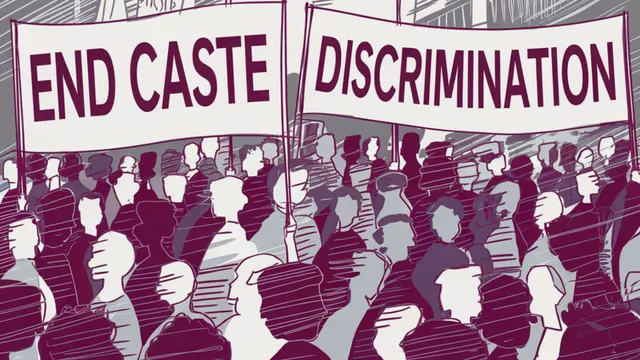
- The incident raises a wider question: Does access to elite education automatically ensure social equality and belonging?
Representation vs Inclusion
- Representation means access: Reservations and affirmative action enable historically disadvantaged communities to enter higher educational institutions.
- Inclusion means belonging: Admission alone does not ensure equal dignity, participation and acceptance within an institution.
- Therefore, formal equality of opportunity must be complemented by substantive equality, which recognises differences in students’ social starting points.
How Can Caste Exclusion Persist?
- Merit stereotypes: Reserved-category students may be perceived as less capable because their admission is associated with a “quota”.
- Subtle discrimination: Prejudice may operate through caste-based remarks, jokes, stereotyping and social exclusion, even without formal discriminatory rules.
- Unequal social capital: Differences in schooling, language, economic resources and social networks can intensify isolation in highly competitive institutions.
Thus, a formally merit-based institution can be caste-neutral in its rules but not necessarily caste-blind in everyday social interactions.
Can Education Weaken Caste Hierarchies?
- Social mobility: Education opens occupations historically unavailable to disadvantaged communities.
- Economic empowerment: Professional qualifications can improve income and enable intergenerational mobility.
- Social integration: Diverse campuses create opportunities for interaction across caste and class boundaries.
- Structural limitation: Educational mobility alone cannot eliminate deeply embedded social prejudice, caste networks and identity-based stereotypes.
Education is therefore a powerful equaliser, but its transformative potential depends on whether access is followed by inclusion.
Constitutional and Institutional Safeguards
- Articles 14–16: Guarantee equality and provide the constitutional basis for affirmative action.
- Article 46: Directs the State to promote the educational and economic interests of weaker sections, particularly SCs and STs.
- UGC Equity Framework: The Supreme Court has kept the UGC Promotion of Equity Regulations, 2026 in abeyance; the 2012 Regulations continue to operate while the new framework is under reconsideration.
- National Task Force: Constituted by the Supreme Court in March 2025 under Justice (Retd.) S. Ravindra Bhat to address student mental health and prevent suicides in higher educational institutions. Its consultations have specifically included caste discrimination in higher education.
From Access to Genuine Inclusion
- Trusted grievance mechanisms: Students need accessible and credible systems for reporting discrimination.
- Inclusive campus culture: Faculty sensitisation, mentoring and peer support can counter stereotyping and isolation.
- Integrated support: Academic assistance, mental-health services and social-inclusion measures should operate together.
The challenge is therefore to move beyond numerical representation towards access → participation → dignity → belonging. Education can weaken inherited hierarchies, but genuine equality requires institutions where social identity does not determine a student’s everyday experience.
FAQs
Q1. What is the difference between representation and inclusion?
Representation ensures presence; inclusion ensures equal dignity, participation and belonging.
Q2. Which Directive Principle specifically protects weaker sections from social injustice?
Article 46 of the Constitution.
Q3. Which UGC equity framework currently operates?
The 2012 Regulations currently operate because the 2026 Regulations remain in abeyance.
Q4. Who chairs the Supreme Court’s National Task Force on student mental health?
Justice (Retd.) S. Ravindra Bhat.
Q5. Can education alone eliminate caste discrimination?
Education can improve mobility and weaken traditional barriers, but institutional inclusion and broader social change are also necessary.