Context
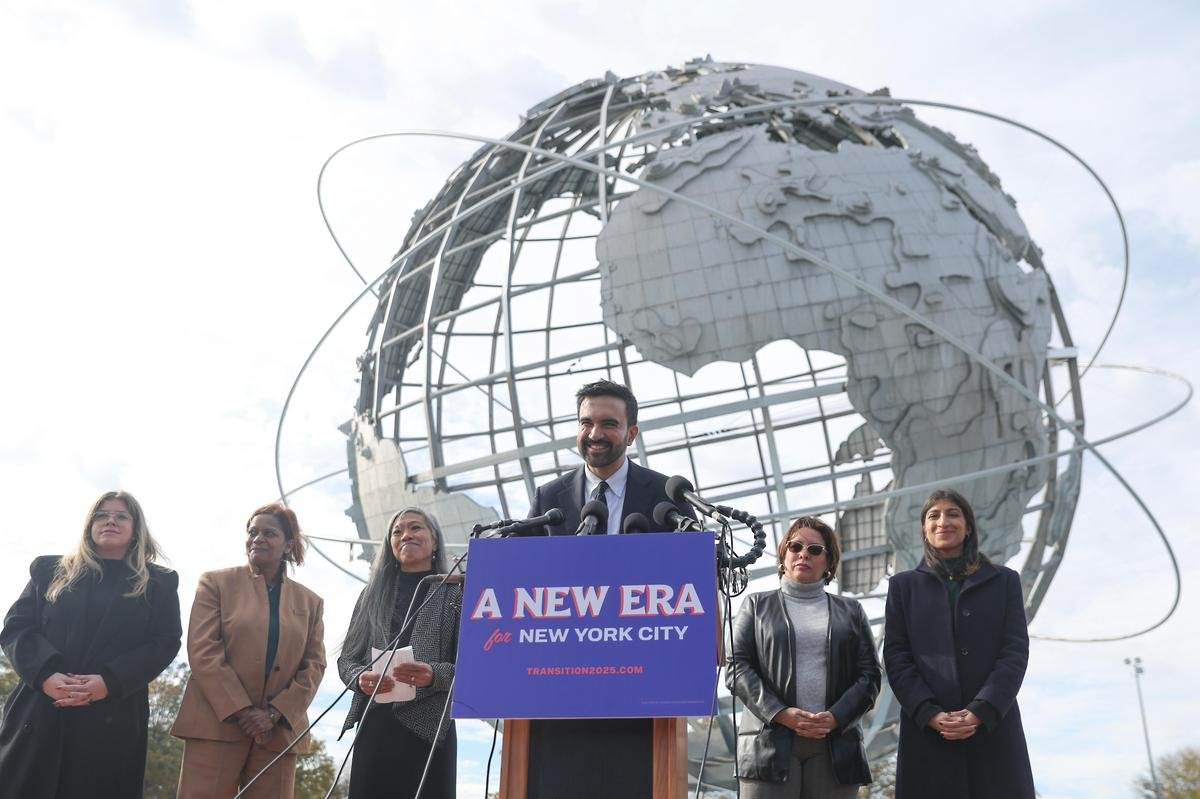
- Zohran Mamdani has been elected as the Mayor of New York City, promising welfare-oriented policies like free buses, rent freezes, and universal childcare.
- This has sparked discussions on sustainable welfarism and the balance between social justice and economic efficiency, using a “Mamdani model” as a framework for disciplined welfare policies.
What is a Mamdani Model?
The Mamdani model focuses on creating welfare systems that are both socially inclusive and economically sustainable. It aims to combine two approaches:
- Rawlsian: Prioritising the worst-off to ensure fairness and social justice.
- Pareto-efficient: Ensuring resources are allocated efficiently without wasting economic capacity.
The model acts as a “thermostat,” leaning Rawlsian during crises or shocks (like recessions) and Pareto as capacity and resources grow, maintaining a balance between equity and efficiency.
Mechanism of the Mamdani Model
The Mamdani approach suggests practical steps for welfare delivery that keep both social justice and economic incentives in mind:
- Subsidise outcomes, not inputs: Pay for results (like children attending school or buses running on time) rather than just funding providers.
- Maintain modest prices with compensation: Keep a small fee or fare for services to maintain supply quality and provide transparent payments to providers.
- Use targeted and automatic support: Means-tested or shock-triggered vouchers can adjust support according to need without overloading the system.
- Fund quality rigorously: Allocate funds for staffing, inspections, and accreditation to ensure high-quality service delivery.
- Partner with mission-driven firms: Engage socially responsible businesses to co-produce welfare services, using cross-subsidies to balance quality and scale.
Benefits and Importance of a Mamdani Model
- Balances fairness and efficiency: Prevents extreme inefficiency or exclusion in public services.
- Protects vulnerable populations: Provides social safety nets during shocks or downturns.
- Maintains service quality: Ensures resources are used effectively without eroding standards.
- Encourages private participation: Engages mission-driven firms in delivering public services.
- Fiscal discipline: Makes welfare promises cost-transparent and economically sustainable.
- Scalable and adaptive: Can adjust support dynamically according to economic or social conditions.
Recent Examples and Global Comparisons
- New York City (upcoming): Free buses, rent freezes, universal childcare under Mamdani’s leadership.
- Brazil: Bolsa Família conditional cash transfers that target poor households.
- Kenya: Inua Jamii program using cash transfers to support elderly and vulnerable.
- Singapore/France: Bus and public transport models that protect access while maintaining supply.
- India: Public Distribution System and Direct Benefit Transfers provide lessons on combining welfare with market mechanisms.
Challenges and Way Forward
| Challenges | Way Forward |
| Risk of over-subsidising services leading to poor quality or shortages. | Subsidise outcomes, not inputs, and maintain modest pricing with transparent provider compensation. |
| Price controls may discourage supply or investment in services. | Use targeted, shock-responsive vouchers and tax/zoning incentives to encourage supply. |
| Fiscal strain from large-scale welfare promises. | Transparent cost estimation, pairing with productivity growth and regulated public investment. |
| Balancing social justice with market efficiency. | Implement the Rawls-Pareto “thermostat”: lean Rawlsian during shocks, Pareto-efficient as capacity grows. |
| Ensuring participation of mission-driven firms and the private sector. | Build partnerships with socially-minded enterprises using cross-subsidy and reputational incentives. |
| Risk of exclusion due to poor data, monitoring, or infrastructure gaps. | Fund accreditation, staffing, and audits; use e-vouchers and public options to ensure universal access. |
Conclusion
The Mamdani model offers a blueprint for sustainable welfare: balancing fairness and efficiency, protecting vulnerable populations, ensuring quality, and engaging socially responsible businesses. It emphasises disciplined, fiscally honest, and adaptable welfare policies rather than blanket free promises. Its success depends on transparent funding, smart design, and a programmed oscillation between social protection and market efficiency.
| Ensure IAS Mains Question
Q. The Mamdani Model represents a new framework for “fiscally honest and micro-economically careful” welfarism. Discuss how this approach can help countries like India design sustainable welfare systems. (150 words) |
| Ensure IAS Prelims Question
Q. Consider the following statements regarding the Mamdani Model of Welfarism: 1. It aims to balance social justice and economic efficiency by acting as a “thermostat” between Rawlsian and Pareto approaches. 2. It promotes large-scale subsidies without price signals to ensure universal access. 3. It encourages partnerships with socially responsible firms to co-produce welfare services. Which of the statements given above is/are correct? a) 1 and 2 only b) 1 and 3 only c) 2 and 3 only d) 1, 2 and 3 Answer: b) 1 and 3 only Explanation: Statement 1 is correct: The Mamdani Model seeks to create a balance between Rawlsian welfare (equity) and Pareto efficiency (economic rationality), acting as a thermostat that adjusts based on economic conditions. Statement 2 is incorrect: The model discourages blanket subsidies or free schemes and instead promotes modest pricing with transparent funding and quality control. Statement 3 is correct: It includes mission-driven firms and social enterprises as partners to co-produce welfare services, combining social goals with market discipline. |