Context
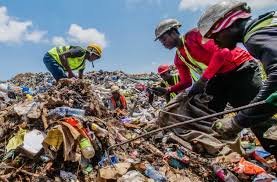
India is facing a growing waste-management crisis due to rapid urbanisation, plastic pollution, overflowing landfills, open waste burning and contamination of water bodies. To address these concerns, the government notified the Solid Waste Management Rules, 2026, replacing the 2016 framework from April 1, 2026.
The revised Rules aim to strengthen waste segregation, scientific processing, landfill remediation, regulation of bulk waste generators and digital monitoring while promoting a circular economy. However, concerns remain regarding implementation capacity, excessive centralisation and limited flexibility for States and local bodies.
Constitutional and Federal Dimensions
- The Solid Waste Management Rules, 2026 have been framed under the Environment (Protection) Act, 1986, enacted through Article 253 of the Constitution to fulfil international environmental commitments such as the 1972 Stockholm Declaration.
- Article 253 empowers Parliament to legislate even on matters traditionally associated with States and local governments, including sanitation, public health, land and water management. While national environmental standards are necessary, excessive central control may weaken cooperative federalism by reducing the policymaking role of States and local institutions.
Need for Decentralised Waste Governance
- Waste management is closely linked to local conditions such as population density, settlement patterns, geography, consumption behaviour and administrative capacity. Therefore, decentralised governance is often more effective than a uniform regulatory approach.
- The principle of subsidiarity emphasises that governance functions should be performed at the lowest effective level closest to citizens and local realities. Similarly, economist A. Hayek’s concept of the “knowledge problem” highlights that local authorities possess context-specific knowledge that central institutions may not fully understand.
- Waste-management requirements differ significantly across megacities, coastal regions, Himalayan towns, tribal areas and rural settlements. Hence, local governments require adequate flexibility to design solutions suited to their ecological, social and economic conditions.
- Further, administrative capacity improves through local decision-making, experimentation and institutional learning. Excessive central supervision may discourage innovation and weaken accountability at the grassroots level.
Challenges and Way Forward
| Challenges | Way Forward |
| Uniform national regulations may not suit diverse regional conditions. | Promote flexible and region-specific waste-management models based on local needs. |
| Rural local bodies often lack trained personnel, infrastructure and financial resources. | Develop simplified rural systems focusing on community composting, awareness programmes and cluster-based waste processing. |
| Municipalities face weak institutional capacity and unfunded compliance obligations. | Provide predictable fiscal support, technical assistance and greater financial decentralisation. |
| Excessive dependence on digital compliance may increase bureaucratic reporting. | Strengthen outcome-based monitoring focused on service delivery and accountability. |
| Weak citizen participation affects segregation and sustainable waste practices. | Encourage community participation through gram sabhas, resident welfare associations and awareness campaigns. |
| Continued landfill dependence creates environmental and public health risks. | Expand decentralised composting, recycling infrastructure and waste-to-resource initiatives. |
| Fragmented governance in metropolitan regions reduces coordination efficiency. | Establish Metropolitan Waste Management Authorities with technical experts and citizen oversight. |
| Simultaneous nationwide implementation may overburden weaker institutions. | Adopt a phased rollout prioritising megacities, municipalities, smaller towns and rural areas sequentially. |
| Limited State autonomy discourages policy innovation and experimentation. | Allow States greater flexibility to develop locally suitable waste-management models. |
Conclusion
The Solid Waste Management Rules, 2026 represent an important step towards improving environmental governance and sustainable waste management in India. However, effective implementation requires a balance between national standards and decentralised governance.
Empowered local bodies, greater State flexibility, adequate financing and active citizen participation will be essential for building an efficient, accountable and environmentally sustainable waste-management system.