Context
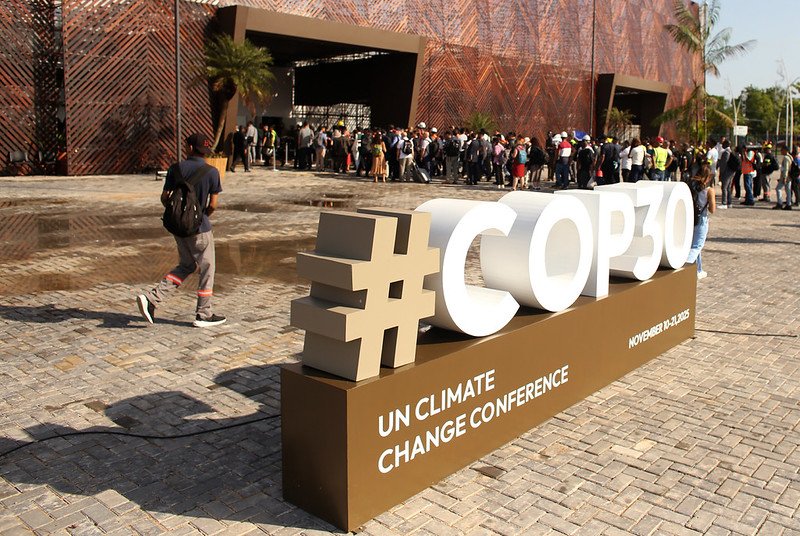
Global carbon emissions are projected to reach a record high by the end of 2025, a finding released to coincide with COP 30 in Brazil.
Key Highlights
- Global emissions trajectory
- Emissions are set to peak at a historic high in 2025 rather than fall rapidly.
- A slow decline by ~2030 is possible but insufficient for holding a temperature rise of 1.5°C as targeted by the Paris Climate Pact.
- In 2025, US emissions increased the moste., by 1.9%.
- India’s emissions grew by 1.4%, and China and the EU each saw a 4% rise.
- But India and China’s emissions increased much more slowly than in 2024 because both countries used more renewable energy.
- In India, a cooler summer and early monsoon reduced the need for electricity, so emissions from the electricity sector fell in the first half of 2025 compared to the same period in 2024.
- Carbon intensity trends
- India’s average annual growth of GHG emissions slowed to 6% (2015–2024) from 6.4% (2004–2015), indicating a reduction in carbon intensity of economic growth.
- In contrast, the US has now reversed its nearly 20-year trend of falling emissions, which is a worrying sign.
- Energy mix shift
- Renewables have overtaken coal as the major electricity source in some places, yet rising energy demand continues to sustain fossil-fuel deployment.
- Carbon budget risk
- The world has a limited carbon budget (the maximum amount of greenhouse gases we can emit while still keeping global warming below 5°C).
- At the current pace of emissions, this budget is getting used up very quickly.
- If emissions do not fall fast, we will use up the remaining budget soon, making it extremely hard to stay below 1.5°C.
- This means the world is getting dangerously close to crossing the temperature limit set by the Paris Agreement.
- Temperature pathway
- Parallel assessments indicate the world is currently on track for about 6°C of warming if policies do not tighten substantially.
Drivers Behind Rising Emissions
- Rising energy demand: Economic activity and higher energy use globally increase emissions even as cleaner sources are added.
- Insufficient pace of clean deployment: Although renewables are growing fast, their rollout plus electrification isn’t yet replacing fossil fuels quickly enough.
- Climate variability impacts: Weather patterns (cooler summers, early monsoons) can temporarily reduce sectoral emissions, but they do not substitute for structural decarbonisation.
- Policy and investment gaps: Current national policies, investment flows and timelines do not match the emission reductions required for 1.5°C.
- Behavioral and infrastructural inertia: Existing infrastructure, industry dependence on fossil fuels, and slow demand-side changes impede rapid decarbonisation.
Current Actions and Measures
- Renewable scale-up: Large-scale deployment of wind, solar and other renewables is displacing some coal generation in electricity mixes.
- Energy efficiency and carbon intensity gains: Some economies (notably India) show declining carbon intensity due to efficiency measures and structural shifts in the economy.
- Short-term weather effects: Seasonal climate factors (cooler summers, early monsoons) temporarily reduced electricity emissions in parts of 2025.
- International engagement at COP30: Negotiations aim to set clearer roadmaps for clean energy transitions and to mobilise adaptation and resilience finance.
- Calls for adaptation investment: Policymakers are urged to increase spending on climate-resilient infrastructure, early warning systems, and social protection against extreme events.
Implications
- Missed 1.5°C target: Even with a flattening of emissions by 2030, current pathways make limiting warming to 5°C highly unlikely.
- Greater climate impacts: A likely ~2.6°C pathway implies substantially higher risks of extreme heat, sea-level rise, ecosystem loss, and socio-economic disruption.
- Urgent mitigation gap: Deeper and faster emissions cuts are required across sectors — electricity, industry, transport, and land use.
- Escalating adaptation needs: Countries must invest more in adaptation to protect vulnerable populations from floods, droughts, cyclones and food/water insecurity.
- Policy and finance pressure: International cooperation and scaled financing (public and private) are imperative to accelerate clean technology deployment and adaptation.
Challenges & Way Forward
| Challenge | Way forward |
| Insufficient emission reductions pace | Increase NDC ambition; adopt net-zero laws with interim 2030 targets; rapid retirement of unabated coal |
| Rising global energy demand | Scale energy efficiency, demand-side management, electrification with green power |
| Financing gap for clean transition | Mobilise public finance, de-risk private investment, expand concessional climate funds |
| Adaptation shortfall | Prioritise nature-based solutions, climate-resilient infrastructure, social protection, and early-warning systems |
| Fossil fuel lock-in | End new unabated fossil fuel development; enforce stringent EIA and climate compatibility tests |
| Technology and supply chain limits | Invest in domestic manufacturing, recycle critical minerals, diversify supply chains |
| Equity and just transition concerns | Design just-transition programmes: retraining, social safety nets, community-led adaptation |
| Policy coordination failure | Integrate climate targets across fiscal, energy, industrial and land-use planning |
Conclusion
The latest trajectories show a pivotal moment: renewable energy progress is real, but decarbonisation is too slow to keep 1.5°C within reach. COP30 must catalyse rapid, equitable emissions cuts and scale adaptation finance. Immediate, coordinated action—tightening 2030 targets, phasing out unabated fossil fuels, boosting efficiency, and protecting vulnerable communities—will determine whether the world limits catastrophic warming or locks in far worse impacts.
| EnsureIAS Mains Question Q. Critically examine why recent gains in renewable energy have not translated into sufficient emission reductions globally. In your answer, discuss policy, financial and technological measures that COP30 should prioritise to keep the 1.5°C goal attainable while ensuring a just transition. (250 Words) |
| EnsureIAS Prelims Question Q. Consider the following statements:1. Global emissions are projected to reach a record high by the end of 2025 and may plateau or begin to decline by about 2030. 2. The Global Carbon Project’s 2025 assessment indicates that the world is already locked into a 2.6°C temperature rise irrespective of future policy changes. Choose the correct option: A. 1 only Answer: A (1 only) Explanation: |