| Important questions for UPSC Pre/ Mains/ Interview:
1. What is Darwin’s Bark Spider? 2. Where is Darwin’s Bark Spider found? 3. What are the physical characteristics of the spider? 4. Why is the silk of Darwin’s Bark Spider unique? 5. What is special about its web-building ability? 6. What is known about its lifecycle and behaviour? 7. What is the ecological significance of the Darwin’s Bark Spider? 8. Why is this spider important from a scientific and applied perspective? |
Context
- Scientists from China, Madagascar, Slovenia, and the United States have recently studied bark spiders to understand the conditions under which they produce exceptionally tough silk.
- The research has renewed interest in the Darwin’s bark spider due to the extraordinary mechanical properties of its silk, which surpass most natural and synthetic fibres.
Q1. What is Darwin’s Bark Spider?
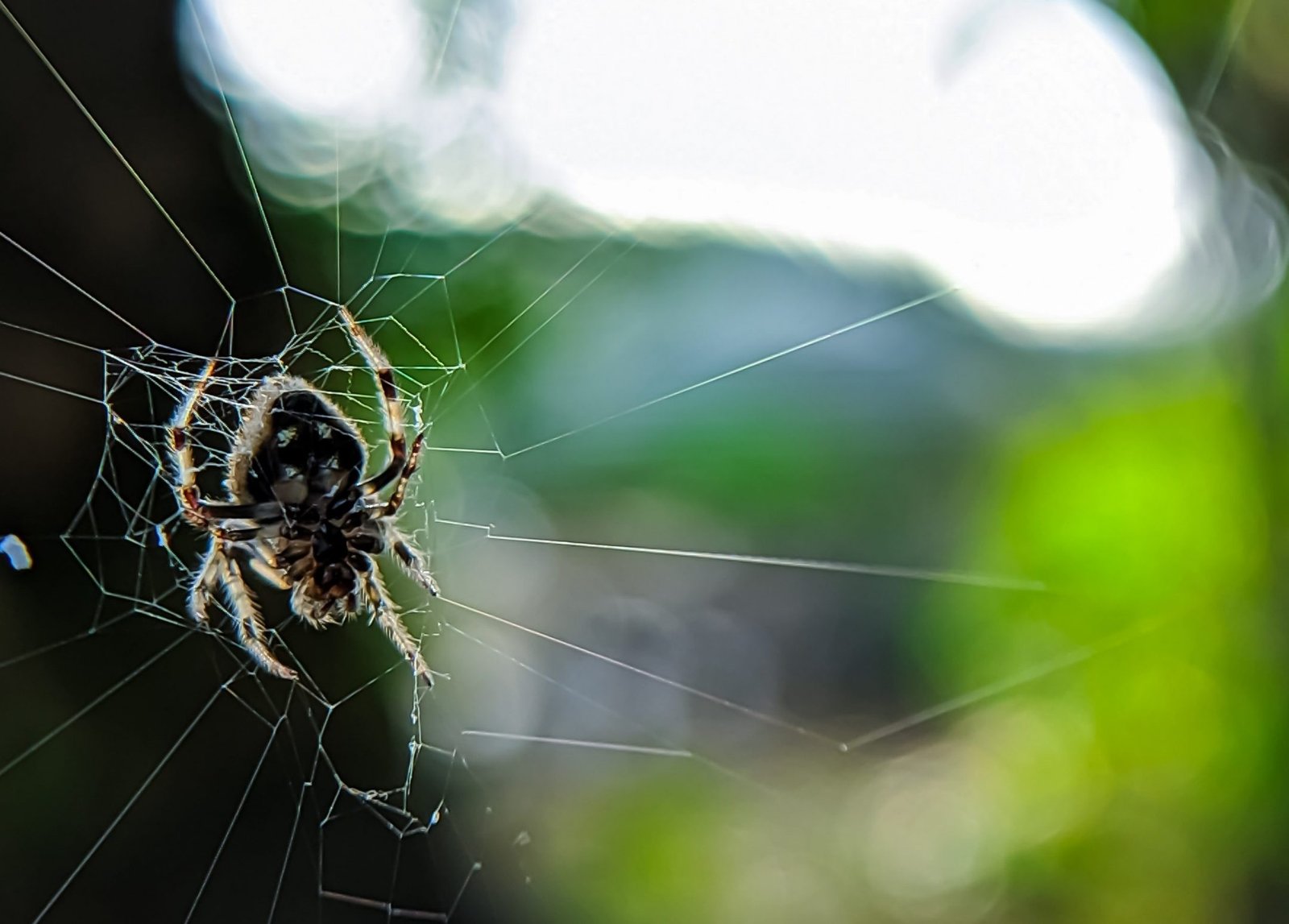
- Darwin’s bark spider (Caerostris darwini) is a unique species of orb-weaver spider.
- It belongs to the family Araneidae.
- The species was discovered in 2001 and formally described in 2009.
- It is named after Charles Darwin, reflecting the evolutionary significance of its exceptional silk.
Q2. Where is Darwin’s Bark Spider found?
- It inhabits riverine forests and wetlands.
- Its distribution is limited to the forests of Madagascar.
- The species prefers environments with open water bodies, which strongly influence its web-building behaviour.
Q3. What are the physical characteristics of the spider?
- Females are medium-sized, with body lengths of about 0.8–1 inch (2–2.5 cm).
- Males are much smaller than females, showing strong sexual dimorphism.
- The spiders are typically dark brown with mottled patterns.
- Their coloration provides camouflage against tree bark, helping avoid predators.
Q4. Why is the silk of Darwin’s Bark Spider unique?
- The spider produces the toughest biological material ever tested.
- The silk has a tensile strength of about 1.6 gigapascals.
- This strength is roughly three times higher than that of iron.
- It is more than twice as tough as any other known spider silk.
- The silk combines both high strength and elasticity, making it superior to steel and most human-made fibres.
Q5. What is special about its web-building ability?
- The spider constructs large orb webs that span rivers and streams.
- These webs can reach diameters of up to 82 feet (25 metres).
- Unlike most orb-weaving spiders, it builds webs over open water rather than vegetation.
- The extreme toughness of the silk allows the web to withstand strong winds, rain, and fast-flowing water.
Q6. What is known about its lifecycle and behaviour?
- The species has a relatively short lifespan, typical of orb-weaving spiders.
- Females generally live longer than males.
- Web-building over water allows access to a high concentration of flying insects.
Q7. What is the ecological significance of the Darwin’s Bark Spider?
- It plays an important role in controlling insect populations in riverine ecosystems.
- By trapping insects over water bodies, it contributes to maintaining ecological balance.
- Its unique adaptation highlights evolutionary innovation driven by environmental pressures.
Q8. Why is this spider important from a scientific and applied perspective?
- The properties of its silk offer insights for developing advanced biomaterials.
- Potential applications include:
- High-strength fibres
- Medical sutures
- Lightweight protective materials
- Studying the spider helps scientists understand how environmental conditions influence biological material production.
Conclusion
The Darwin’s bark spider represents a remarkable example of evolutionary adaptation. Its extraordinary silk combines strength and toughness unmatched in nature, making it valuable for both ecological study and future technological innovation.