Important Questions for UPSC Prelims, Mains and Interview
|
Context
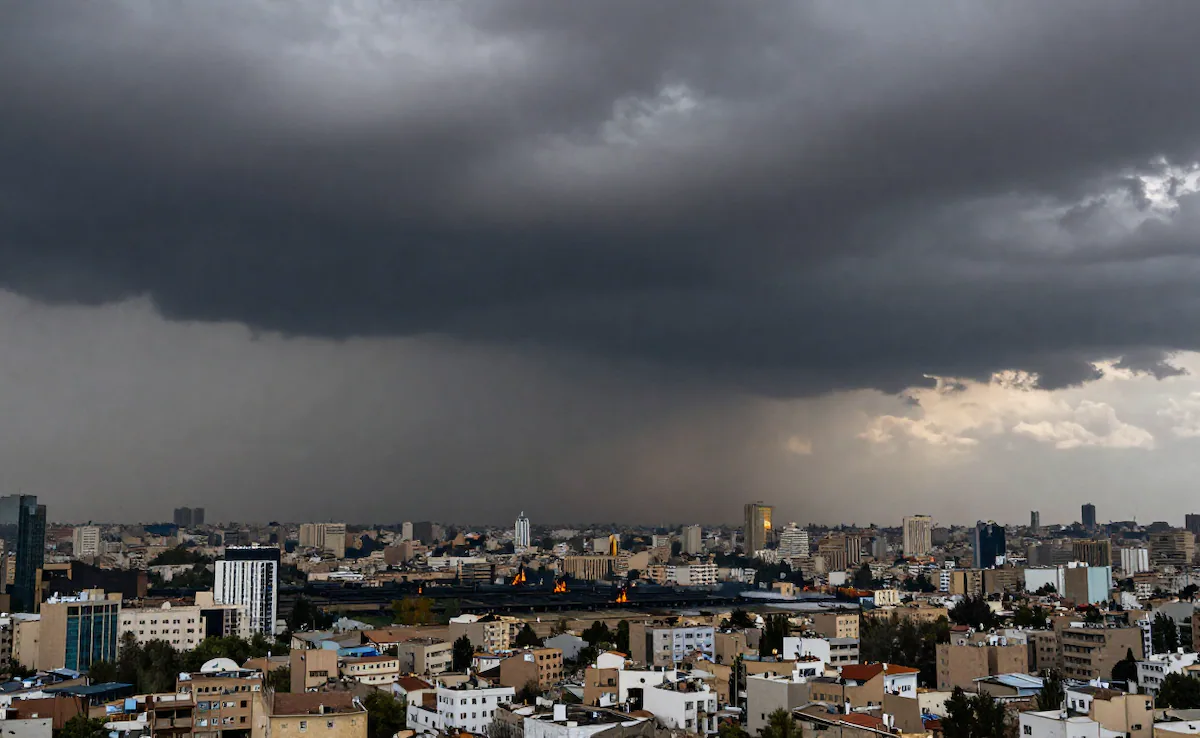
During the West Asia conflict, air strikes on oil depots and refineries near Tehran released large amounts of soot, hydrocarbons and toxic gases into the atmosphere. These pollutants later mixed with rainfall, resulting in black rain, highlighting the environmental risks of warfare and industrial pollution.
Q1. What is black rain, and how does it form through atmospheric processes involving industrial pollution and combustion residues?
- Black rain refers to rainfall that appears dark or oily due to the presence of soot and pollutants.
- It occurs when rain droplets capture airborne particles suspended in the atmosphere, known as atmospheric scavenging or wet deposition.
- Pollutants from industrial or fires remain suspended as particulate matter & gases, which mix with rain during cloud formation or precipitation, producing dark, toxic rainwater that carries harmful residues to the ground..
Q2. How do air strikes on oil depots and refineries contribute to the formation of black rain in conflict zones?
- Bombing of oil storage facilities causes large-scale combustion of petroleum products (hydrocarbons) which release dense clouds of soot and carbon particles along with toxic gases like Sulfur dioxide (SO₂) and Nitrogen oxides (NOx).
- These emissions remain suspended in the atmosphere and spread with the wind circulation, which then comes down on the ground as black rain.
Q3. What are the major chemical components present in black rain, and why are they hazardous to human health and the environment?
- Particulate Matter (PM2.5): These include microscopic soot and carbon particles produced by incomplete combustion.
- Hydrocarbons and petroleum compounds: Polycyclic Aromatic Hydrocarbons (PAHs) and Oil residues from burning petroleum.
- Acid-forming gases: Sulfur dioxide and Nitrogen oxides that form acidic compounds in water.
- Volatile organic compounds such as benzene which are toxic and potentially carcinogenic.
- Heavy metals released during petroleum combustion.
- Exposure to such chemicals can contaminate soil, water and biological systems.
Q4. Why did the geographical and climatic conditions of Tehran intensify the impact of the black rain event?
- Tehran is located in a basin surrounded by mountain ranges.
- The Alborz Mountains create a natural barrier around the city, which limits the dispersion of polluted air masses and they get accumulated in the atmosphere.
- Temperature inversions may further trap pollutants near the ground level.
Q5. What are the major human health risks associated with exposure to black rain and toxic atmospheric pollutants?
- Immediate exposure may cause eye irritation and redness.
- Contact with polluted rainwater may lead to skin irritation and chemical burns.
- Inhalation of polluted air may trigger respiratory problems and breathing difficulties.
- Short-term exposure can result in headaches, nausea and throat irritation.
- Long-term exposure to toxic hydrocarbons may cause lung damage.
- Carcinogenic compounds increase the risk of cancer and chronic diseases.
- Vulnerable groups such as children and elderly individuals may face higher health risks.
Q6. How does black rain affect ecosystems, soil quality, water resources, and infrastructure in affected regions?
- Toxic chemicals deposited through rainfall can cause soil contamination which may further damage crop productivity and plant growth.
- Pollutants may infiltrate groundwater & surface water bodies & can disrupt aquatic ecosystems.
- Persistent pollutants may enter the food chain through plants and animals.
- Acidic components in black rain may cause corrosion of buildings and metal infrastructure.
- Long-term contamination can degrade environmental quality and biodiversity.
Q7. How is black rain different from acid rain in terms of causes, composition, and environmental impacts?
- Acid rain mainly results from industrial emissions and vehicle pollution.
- Black rain usually occurs due to large-scale combustion events such as fires or explosions.
- The main pollutants in acid rain are sulfuric and nitric acids formed from SO₂ and NOx.
- Black rain contains soot, hydrocarbons, heavy metals and oil residues.
- Acid rain often appears clear and indistinguishable from normal rainwater.
- Black rain is visibly dark, oily and sometimes sticky in texture.
- Acid rain mainly causes long-term ecological damage, while black rain creates immediate toxic contamination and health risks.
Q8. What role do international organisations and disaster response agencies play in monitoring and responding to such environmental hazards?
- International organisations monitor environmental pollution and health risks during disasters.
- Agencies such as the World Health Organization (WHO) provide health advisories. Health authorities advise citizens to avoid exposure and remain indoors during pollution events.
Conclusion
The black rain incident in Tehran illustrates how warfare, industrial pollution and atmospheric processes can combine to produce serious environmental disasters. Understanding phenomena such as atmospheric scavenging, hydrocarbon pollution and particulate deposition is essential for addressing environmental security and protecting public health in modern conflict scenarios.