Why in the News?
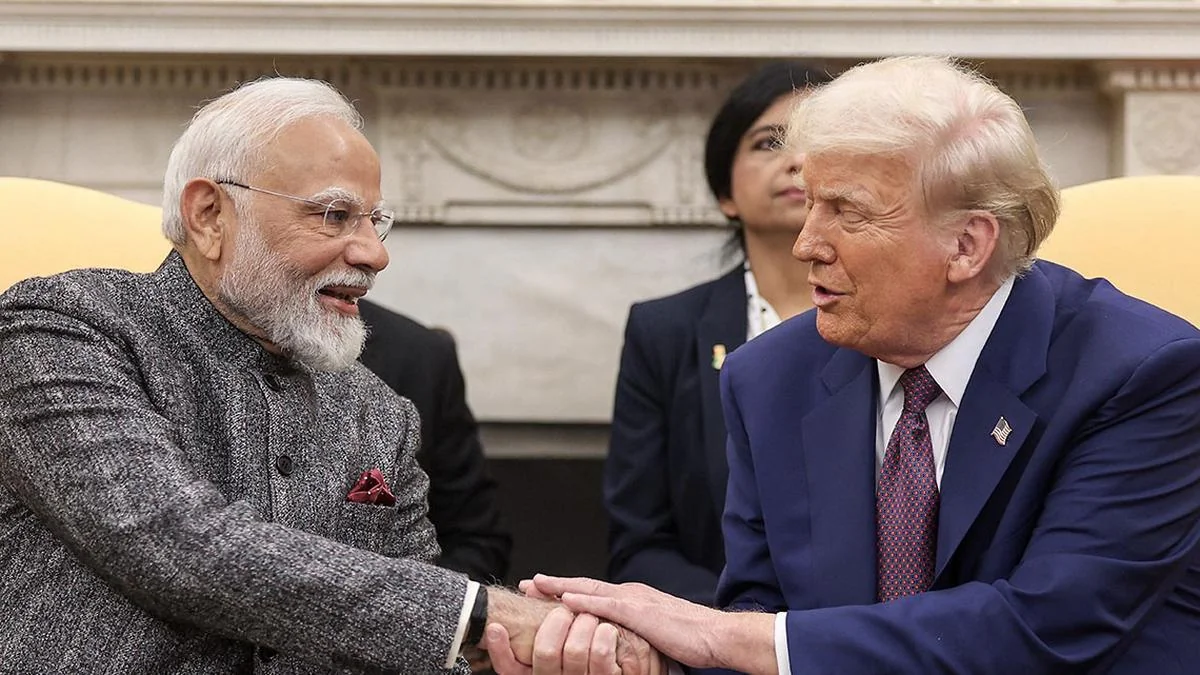
- The India–U.S. relationship, once hailed as a defining partnership of the 21st century, is currently facing turbulence.
- Despite sustained cooperation in areas such as defence, space, trade, and energy, recent developments have raised concerns about the future trajectory of this bilateral relationship.
- High-level initiatives like COMPACT continue, but deeper ideological and strategic differences have surfaced, particularly under recent U.S. leadership, highlighting potential structural challenges in the long-term partnership.
India-USA Relations Timeline
| Year | Event |
| 1962 | U.S. Universities Support Indian Technological Institute: Nine American universities and the U.S. Agency for International Development (USAID) help establish one of the first Indian Institutes of Technology. |
| Oct, 1962 | U.S. provides military aid during India–China war: Recognizes McMahon Line; begins U.S. security engagement in Asia. |
| 1974 | India’s first nuclear test (Pokhran I): Causes estrangement with the U.S.; begins nuclear tension. |
| 1978 | U.S. enacts Nuclear Nonproliferation Act: Cuts nuclear assistance to India after refusal to accept IAEA inspections. |
| 1991 | India launches economic reforms: Opens the door to expanded U.S. economic and trade ties. |
| 1998 | Pokhran-II nuclear tests: Damages India-U.S. ties; U.S. imposes sanctions. |
| 2000 | President Clinton visits India: Begins reconciliation post-nuclear estrangement. |
| 2002 | General Security of Military Information Agreement (GSOMA) |
| 2005 | US Defense Trade and Technology Initiative |
| 2016 | Logistics Exchange Memorandum of Agreement (LEMOA) |
| 2017 | QUAD revived – for free and open Indo-Pacific. Australia, Japan, India and the USA revived it. |
| 2018 | Communications Compatibility and Security Agreement (COMCASA) |
| 2020 | Basic Exchange and Cooperation Agreement (BECA) |
| 2023 | Defense Industry Cooperation Roadmap |
| 2023 | Initiative on Critical and Emerging Technology, or iCET.
Critical and Emerging Technologies are a part of advanced technologies which are potentially significant to the national security of a country. It includes: 1. Defence, Innovation and Technology cooperation 2. Resilient Semi-conductor supply chain 3. Space Technologies 4. Next Gen Telecom Communication 5. Strengthening the overall innovation system |
| 2025 | U.S.-India COMPACT (Catalyzing Opportunities for Military Partnership, Accelerated Commerce & Technology) initiative. |
Key Highlights
- Shifts in the U.S. Trade and Foreign Policy
- The S. administration recently imposed a 25% tariff on certain Indian imports and raised concerns about India’s trade relations with Russia.
- These actions have prompted discussions about the sustainability of the India-U.S. trade relationship.
- Experts have begun to question the strategic alignment of the two countries, noting differences in their global ambitions and approaches to international issues.
- Nationalism in both nations has contributed to growing mistrust, with India’s rise as a global power creating discomfort within certain U.S. circles.
- Rising Skepticism and Structural Tensions
- Some U.S. policymakers have voiced concerns over India’s domestic policies and its foreign relations, especially its continued engagement with Russia and Iran.
- India’s approach to strategic autonomy, pursuing independent foreign policies and responding assertively to regional security threats, has at times clashed with U.S. expectations, particularly around issues like terrorism and the Russia–Ukraine conflict.
- Protectionist measures aimed at boosting India’s domestic industries have strained trade relations, particularly with the U.S., where access to the Indian market is seen as limited due to regulatory barriers.
- Renewed Engagement Between U.S. and Pakistan
- The U.S. recently announced a trade agreement with Pakistan, including collaboration on oil exploration, a move that raised concerns in New Delhi, which viewed it as a shift in U.S. policy in South Asia.
- S. defense cooperation with Pakistan and other regional moves have affected the perception of India–U.S. relations, particularly as India seeks to maintain a leading role in the region.
- Possible Motivations Behind Recent U.S. Actions
- Analysts suggest that the U.S. government’s approach may be part of a broader negotiation strategy, with tariffs and diplomatic pressure used as tools in trade and foreign policy.
- Public disagreements over diplomatic issues, such as India’s stance on Kashmir and U.S. claims about brokering peace between India and Pakistan, have further complicated bilateral relations.
- Risk to Strategic Gains
- Indian diplomats have expressed concerns that recent policy shifts could undo years of progress in the relationship, which has evolved from post-Pokhran sanctions to the landmark Indo–U.S. Civil Nuclear Deal and increased defence cooperation.
- Some analysts worry that the renewed emphasis on regional security dynamics and shifting alliances could undermine the gains made in the past two decades of India–U.S. engagement.
Implications
- Erosion of Strategic Trust
- The earlier optimism surrounding the relationship, seen during the Clinton, Bush, and Obama administrations, has begun to fade.
- Intelligence sharing and defence technology transfers may face setbacks due to concerns about long-term alignment and the future of the partnership.
- Challenges to India’s Global Role
- India’s strategy of balancing relations between competing global blocs, like BRICS and QUAD, has raised concerns about whether India’s non-alignment approach is fully understood by the U.S. and other global players.
- India’s involvement in international forums like BRICS could reduce its influence in other strategic alliances, such as the Indo-Pacific Economic Framework (IPEF).
- Decline in Regional Influence
- Renewed engagement between the U.S. and Pakistan, coupled with shifting dynamics with China, has the potential to reduce India’s leverage in South Asia.
- India’s strategic balancing in the region may no longer yield the same diplomatic rewards it has in the past.
- Economic Implications
- Ongoing trade disagreements, especially over market access and data localization, are likely to stall progress in economic ties.
- The protectionist stance adopted by India could limit the potential for significant economic breakthroughs with the U.S., while American investors face challenges due to regulatory hurdles.
- Shifting Strategic Narrative
- The perception of India as a rising democratic power is evolving, with some voices questioning India’s strategic assertiveness and domestic policies.
- These concerns could affect India’s global ambitions, including its pursuit of a permanent seat on the UN Security Council and its involvement in nuclear technology and Western tech
Challenges and Way Forward
| Challenges | Way Forward |
| Ideological and nationalist divergence | Establish Track 1.5 dialogues to foster open dialogue between policymakers, academics, and think tanks |
| Strategic autonomy challenges | Develop frameworks that accommodate India’s need for non-alignment while maintaining regional stability |
| Regional security issues | Formulate joint protocols to address counterterrorism, regional conflicts, and maritime security |
| Trade disagreements and economic barriers | Focus on sectoral agreements in areas like semiconductors, green technology, and digital economy |
| Erosion of public and elite trust in bilateral ties | Invest in public diplomacy, strengthen academic exchange, and engage the Indian diaspora to rebuild confidence. |
Conclusion
The India–U.S. relationship, once seen as a natural alliance between two democratic powers, is now facing significant structural challenges. These challenges stem from diverging national interests, geopolitical strategies, and economic priorities. While cooperation remains important, there is a growing need for both nations to recalibrate their expectations and align on key issues to ensure the partnership remains effective. Going forward, both countries will need to embrace a more pragmatic and flexible approach to diplomacy, economic cooperation, and regional security to address the evolving global landscape.
| Ensure IAS Mains Question
Q. Discuss the structural challenges facing the India–U.S. relationship in the context of recent developments. How can both countries recalibrate their strategic partnership to overcome these challenges? (250 words) |
| Ensure IAS Prelims Question
Q. Consider the following statements regarding the India–U.S. relationship: 1. The India–U.S. relationship has recently faced challenges due to differences over trade policies and regional security issues. 2. India’s foreign policy has largely aligned with U.S. policy, particularly in its approach to Russia and Iran. Which of the statements given above is/are correct? a) 1 only b) 2 only c) Both 1 and 2 d) Neither 1 nor 2 Answer: a) 1 only Explanation: Statement 1 is correct: The relationship has faced challenges due to trade disputes, protectionism, and differences over regional security (especially concerning Pakistan and China). Statement 2 is incorrect: India has maintained strategic autonomy, especially regarding its ties with Russia and Iran, which are not fully aligned with U.S. policy. |